

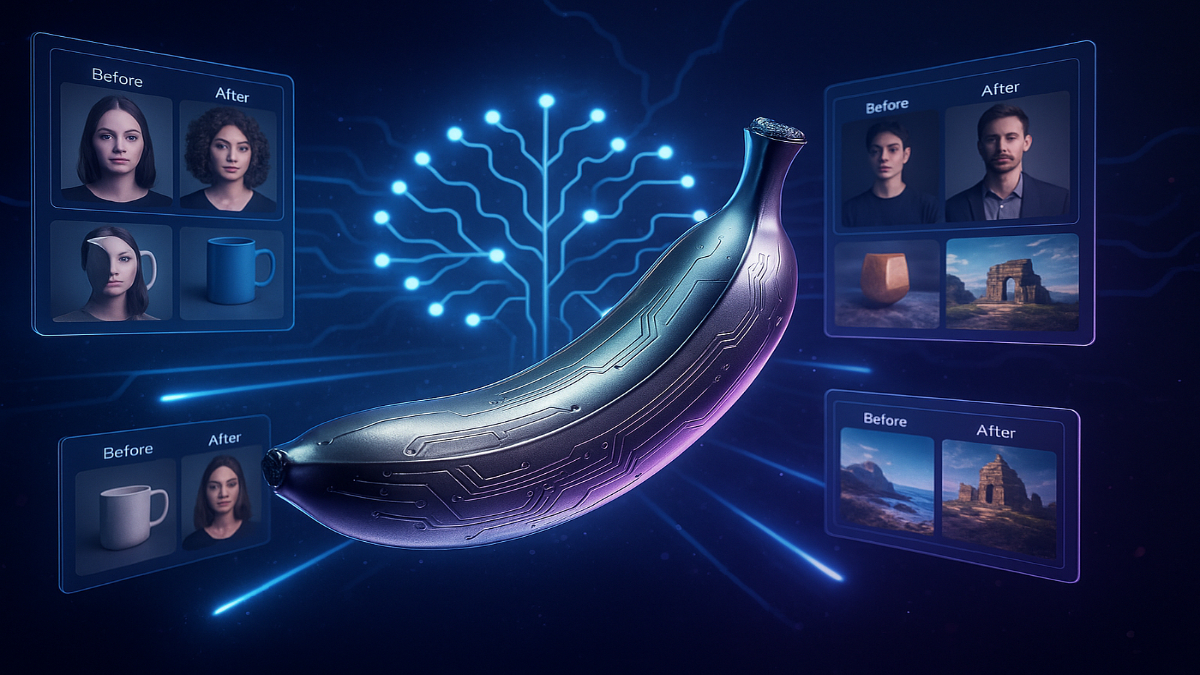
In a significant escalation of the generative AI wars, Microsoft has thrown down the gauntlet by unveiling its latest proprietary artificial intelligence model, MAI-Image-1. This new text-to-image generator is designed to directly challenge the market leaders in visual AI, specifically aiming at Google’s widely popular “Nano Banana” (formally known as Gemini 2.5 Flash Image) and OpenAI’s visual capabilities, like GPT-Image-1.
The launch marks a bold move by Microsoft to expand its own in-house AI ecosystem and reduce its strategic reliance on external partners, including OpenAI, in which it is a major investor. MAI-Image-1 joins a growing suite of proprietary Microsoft models, such as the speech generation model MAI-Voice-1 and the conversational MAI-1-preview, signalling a comprehensive shift toward AI independence.
Focus on Realism and Efficiency
Microsoft is positioning MAI-Image-1 as a solution for high-quality, professional-grade visual content. The company claims the model delivers exceptional photorealistic results, particularly excelling in rendering complex visual elements such as detailed landscapes, intricate textures, and realistic lighting, shadows, and reflections. This focus is an effort to address a common industry critique that many current AI tools can produce repetitive or generically stylized outputs.
Crucially, MAI-Image-1 is also being highlighted for its efficiency. Microsoft reports that the model is capable of generating images faster than many larger, slower existing models, without compromising on detail. This speed advantage could be a significant selling point, especially for enterprise users who require rapid content creation for marketing, presentations, and design workflows.
Going Head-to-Head on Benchmarks
The new model’s performance has already been validated on LMArena, a respected AI benchmarking platform where human evaluators compare the outputs of different AI systems. MAI-Image-1 secured a spot in the platform’s top ten image generators, placing it in direct competitive territory with Google and OpenAI’s models.
The current market is defined by intense innovation: Google’s “Nano Banana” has gained viral popularity for its speed, powerful editing capabilities, and remarkable character consistency across multiple images, while OpenAI’s models are known for their strong instruction fidelity, accurately interpreting complex and multi-layered prompts. Microsoft’s entry into the ring with a model focused on photorealism and speed suggests it is vying to capture both the high-end creative market and the efficiency-driven enterprise user base.
Microsoft has announced that MAI-Image-1 will be integrated into its core products, including Copilot and Bing Image Creator”very soon.” As the model becomes broadly available, the competition among the tech giants to dominate the AI-powered visual creation landscape is set to intensify, promising better, faster, and more versatile tools for users everywhere.