

New Delhi, December 18, 2025 — In a major move to modernize India’s energy sector, the Ministry of Coal has proposed a series of transformative amendments to the Mines and Minerals (Development and Regulation) (MMDR) Act, 1957. The proposed changes aim to scrap restrictive sale caps for captive mines and significantly extend the duration of mining leases, marking a strategic shift toward a more deregulated and efficient coal market.
The proposal, currently open for public consultation, is designed to bring coal mining regulations in line with the broader reforms recently enacted for non-coal minerals.
Scrapping the 50% Sale Cap
One of the most significant changes is the proposal to remove the 50% ceiling on the sale of coal and lignite produced from captive mines.
Under current laws, captive mine operators (those who mine coal for their own industrial use, such as power or steel plants) are allowed to sell only up to half of their annual production in the open market after meeting their internal requirements. The Ministry now intends to allow these mines to sell their entire surplus without any restrictions.
This move is expected to:
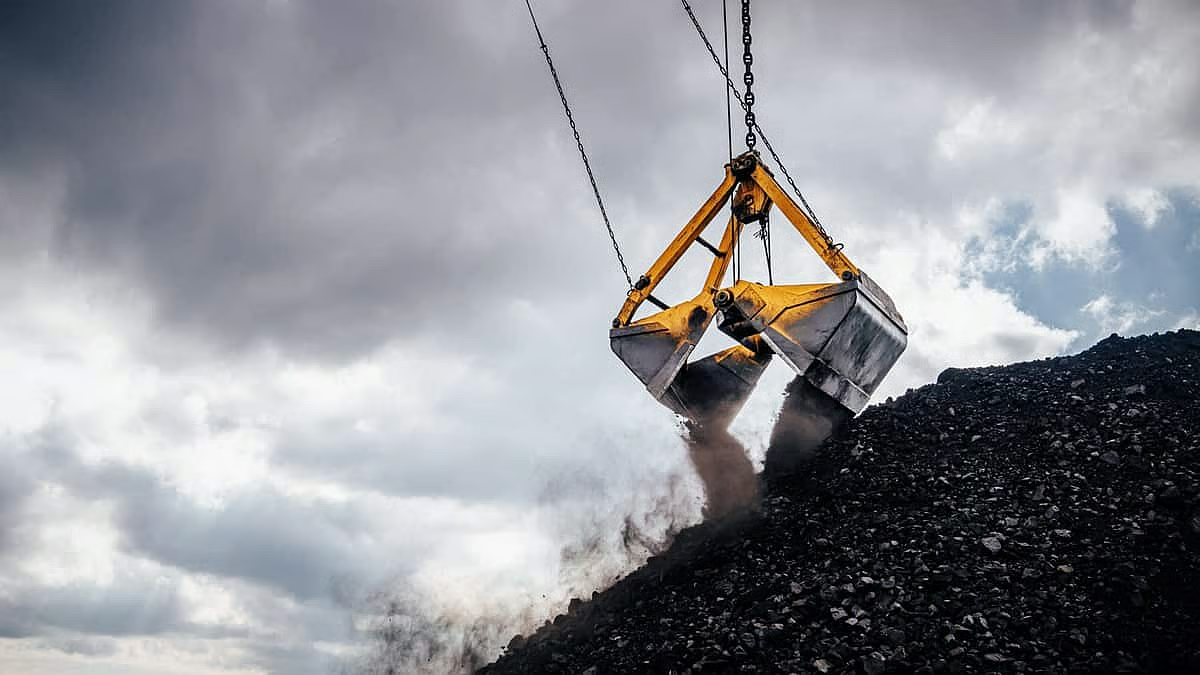
- Clear Stockpiles: Prevent the accumulation of “legacy dumps” that occupy valuable space and pose safety risks.
- Stabilize Prices: Increase the overall availability of coal in the open market, helping to stabilize domestic prices.
- Reduce Imports: Encourage domestic producers to maximize output, thereby reducing the nation’s reliance on expensive imported coal.
50-Year Mining Leases
To provide greater “ease of doing business,” the Ministry has proposed extending the maximum tenure of coal and lignite mining leases from 30 years to 50 years.
Currently, the 30-year limit often forces companies to undergo a cumbersome and uncertain renewal process just as a mine reaches its peak productivity. By aligning the lease period with the actual “life of the mine,” the government hopes to:
- Reduce Administrative Burden: Eliminate the need for frequent renewals and the red tape associated with them.
- Encourage Long-term Investment: Provide investors with the long-term certainty required for large-scale mechanization and infrastructure development.
Modernizing Mining Operations
The overhaul also addresses the physical and technological scale of modern mining. The Ministry has proposed increasing the area limits for prospecting licenses and mining leases, noting that the current caps (10 to 25 square kilometers) do not reflect the scale of modern, high-tech mining operations.
Additionally, coal gasification—the process of converting coal into syngas—is set to be officially recognized as a “mining operation.” This legal clarity is expected to unlock billions in investment for cleaner coal technologies.
Why Now?
These reforms come at a critical time. Despite India’s aggressive push toward renewable energy, coal remains the backbone of the national power grid. In 2025, domestic coal production breached the 1 billion tonne mark, yet industrial demand continues to soar.
By dismantling the “end-use” restrictions and lengthening lease terms, the government is betting that a more flexible, market-driven approach will ensure energy security while the country navigates its long-term green transition.
Next Steps
The Coal Ministry has invited stakeholders, including industry leaders and state governments, to submit their feedback on the draft proposals. If approved, these amendments will represent the most significant restructuring of India’s coal sector since the introduction of commercial coal mining auctions in 2020.