
 of green hydrogen)
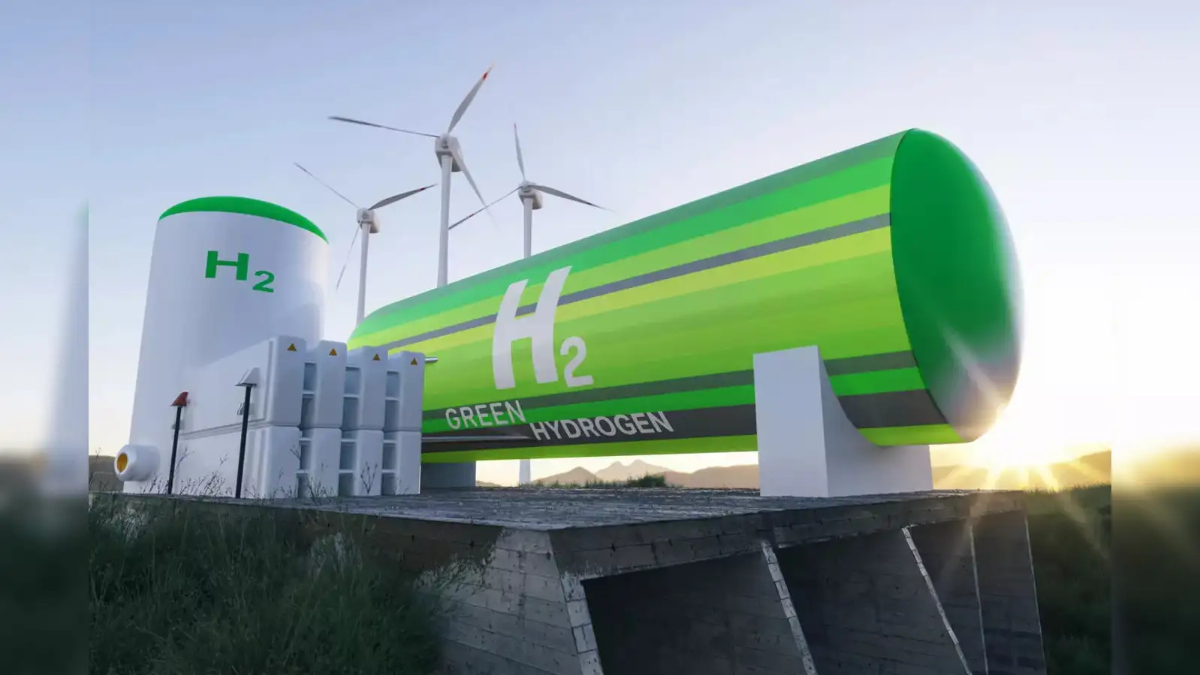
New Delhi, December 19, 2025 — As India accelerates its journey toward the ambitious goal of producing 5 million metric tonnes (MMT) of green hydrogen annually by 2030, a new focus is emerging: it’s not just about how much hydrogen we produce, but how we produce it.
Recent findings from IIT Madras and the National Green Hydrogen Mission highlight that the choice of electrolyzer technology—the heart of hydrogen production—will be the deciding factor in India’s industrial decarbonization and global export competitiveness.
The Technology Battle: PEM vs. Alkaline
At the center of India’s green energy revolution are two primary technologies: Alkaline and Proton Exchange Membrane (PEM) electrolyzers.
- Alkaline Electrolyzers: These are the “workhorses” of the industry. They are commercially mature, utilize low-cost materials like nickel, and are currently the most cost-effective option for large-scale plants.
- PEM Electrolyzers: While more expensive due to their use of precious metals like iridium, PEM systems are gaining favor because they can “ramp up” and “ramp down” quickly. This makes them perfectly suited to handle the fluctuating nature of India’s solar and wind power.
The Lifecycle Shift: Beyond Upfront Emissions
A landmark study released this week by researchers at IIT Madras, in collaboration with the Centre for Study of Science, Technology and Policy (CSTEP), suggests that India must look beyond the initial carbon footprint of manufacturing these machines.
The study found that certain high-performance PEM electrolyzers, despite having higher manufacturing emissions due to specialized coatings, actually deliver “cleaner” hydrogen over their 20-year lifespan. This is because they operate with higher efficiency and last longer, reducing the need for frequent replacements.
“Our research provides a roadmap for expanding green hydrogen production in India. Selecting the right technology based on full lifecycle assessments ensures we aren’t just shifting emissions from the tailpipe to the factory,” says Prof. Satyanarayanan Seshadri of IIT Madras.
Government Push and ‘Hydrogen Valleys’
The Indian government is not just watching from the sidelines. Under the National Green Hydrogen Mission, India has already allocated 3,000 MW of annual electrolyzer manufacturing capacity to 15 domestic firms.
Furthermore, the Ministry of Science and Technology recently announced the development of four “Hydrogen Valleys” across the country. These clusters will serve as living laboratories to test different technologies in real-world settings—from powering steel plants in Odisha to zero-emission shipping in Gujarat.
The Path Ahead: A Tiered Future
To bring transparency to the market, experts are now proposing a tiered classification system for hydrogen: Platinum, Gold, Silver, and Bronze. This would allow buyers to know exactly how “green” their fuel is, considering the technology used and its total environmental impact.
As India positions itself as a global hub, the message from 2025 is clear: the transition to green hydrogen is no longer just a dream—it is a sophisticated technological race where efficiency and lifecycle sustainability will determine the winners.