

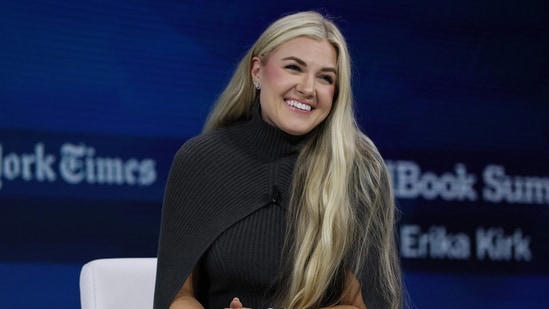
New Delhi, January 10, 2026: The social media landscape was set ablaze this week following the emergence of a startling conspiracy theory involving Erika Kirk. On January 9, 2026, a series of posts began circulating on platforms like X and TikTok, claiming that the prominent digital figure could be seen in a declassified CIA training video from several decades ago. The “discovery” has triggered a massive wave of debate, with many users expressing shock and fear, while others have dismissed the theory as a sophisticated piece of digital manipulation.
Dissecting the “Evidence” and the “Worse” Narrative
The viral claim is centered around a grainy, black-and-white film snippet that allegedly shows a woman with a striking resemblance to Kirk participating in a government experiment. As the video gained momentum, the phrase “it keeps getting worse” began trending, used by theorists to suggest that Kirk’s public persona is merely a facade for a deeper, state-sponsored agenda. It was argued by anonymous accounts that the facial proportions and mannerisms in the old footage are “too identical” to be a mere coincidence, fueling a frenzy of unverified accusations.
Also Read: Kashmiri Cab Driver’s Honesty Wins Global Praise
The Role of AI and Deepfake Technology
The truth behind the viral claim has been scrutinized by several independent fact-checking organizations. It was revealed through digital forensic analysis that the “CIA video” is likely a product of advanced AI generation or a “deepfake” overlay. Experts have noted that such videos are often created by mapping a celebrity’s face onto historical footage to create a sense of mystery and distrust. It was emphasized that no such record exists in the official CIA archives, and the timeline of Kirk’s actual life does not align with the era of the footage shown.
Public Reaction and the “Crisis of Truth”
As of January 10, 2026, the Erika Kirk controversy has become a case study for the “crisis of truth” in the digital age. While many fans have come to her defense, the rapid spread of the conspiracy highlights how easily misinformation can take root when combined with high-quality visual “proof.” It was remarked by social media analysts that the “rabbit hole” nature of these claims often targets individuals with high visibility to generate engagement through fear. The phrase “it keeps getting worse” was identified as a tactical hook used to keep viewers searching for non-existent connections.
A Call for Digital Literacy and Skepticism
The incident has prompted a wider discussion on the need for increased digital literacy among internet users. It has been stated by security experts that as AI tools become more accessible, the barrier between reality and fiction will continue to blur. Users are being urged to verify the source of such “leaked” videos before sharing them, as the reputational damage to individuals like Erika Kirk can be permanent. For now, the “CIA connection” remains a baseless myth, serves as a stark reminder of the power—and the danger—of modern digital storytelling.