

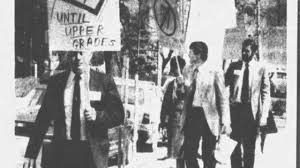
New Delhi, January 17, 2026: A fascinating historical narrative has resurfaced online, detailing a time when the introduction of handheld calculators was met with fierce resistance from the academic community. Approximately four decades ago, a significant movement was led by mathematics educators who feared that the advent of digital computation would lead to the erosion of mental arithmetic skills. This viral throwback has sparked a modern debate on the evolution of technology in education and how past anxieties often mirror contemporary concerns regarding artificial intelligence.
The Rise of the Resistance
During the late 1970s and early 1980s, organized protests were staged by teachers’ unions and mathematical associations across various regions. It was argued by these professionals that the reliance on electronic devices would render students “mathematically illiterate.” Concerns were voiced that the fundamental understanding of numerical concepts would be sacrificed for the sake of speed and convenience.
Public demonstrations and heated board meetings were utilized as platforms to voice these grievances. In some instances, a total ban on the devices was implemented within classroom settings to preserve the traditional methods of long-form division and manual multiplication. The calculator was viewed not as a tool for empowerment, but as a crutch that would ultimately weaken the intellectual rigor of the youth.
Also Read: Amul Addresses Viral “Empty Wrapper” Chocominis Concern
A Shift in Pedagogical Thought
As the devices became more affordable and portable, the inevitability of their presence was eventually recognized by the educational system. A transition was made from a stance of total prohibition to one of controlled integration. It was discovered that when calculators were used appropriately, more time could be dedicated to complex problem-solving and higher-order thinking rather than repetitive manual calculations.
New curricula were developed that emphasized the “how” and “why” of mathematical theories, while the “what” was handled by the silicon chips. The role of the teacher was redefined from a human calculator to a guide in logical reasoning. This era marked the birth of modern STEM education, as the focus shifted toward data analysis and the application of mathematics in real-world scenarios.
Reflections on Modern Technology
The viral nature of this story is attributed to its striking resemblance to the current discourse surrounding the use of AI in schools. Parallels are being drawn by historians between the 1980s calculator protests and the modern apprehension toward large language models and automated essay generators. It is suggested that the cycle of fear and eventual adoption is a recurring theme in the history of human progress.
The retrospective has served as a reminder that the definition of “essential skills” is constantly being reshaped by innovation. What was once considered a threat to learning is now a standard requirement in every student’s backpack. Through this lens, the protests of forty years ago are seen not as an act of futility, but as a necessary phase of skepticism that ensured technology was integrated with a sense of purpose.