

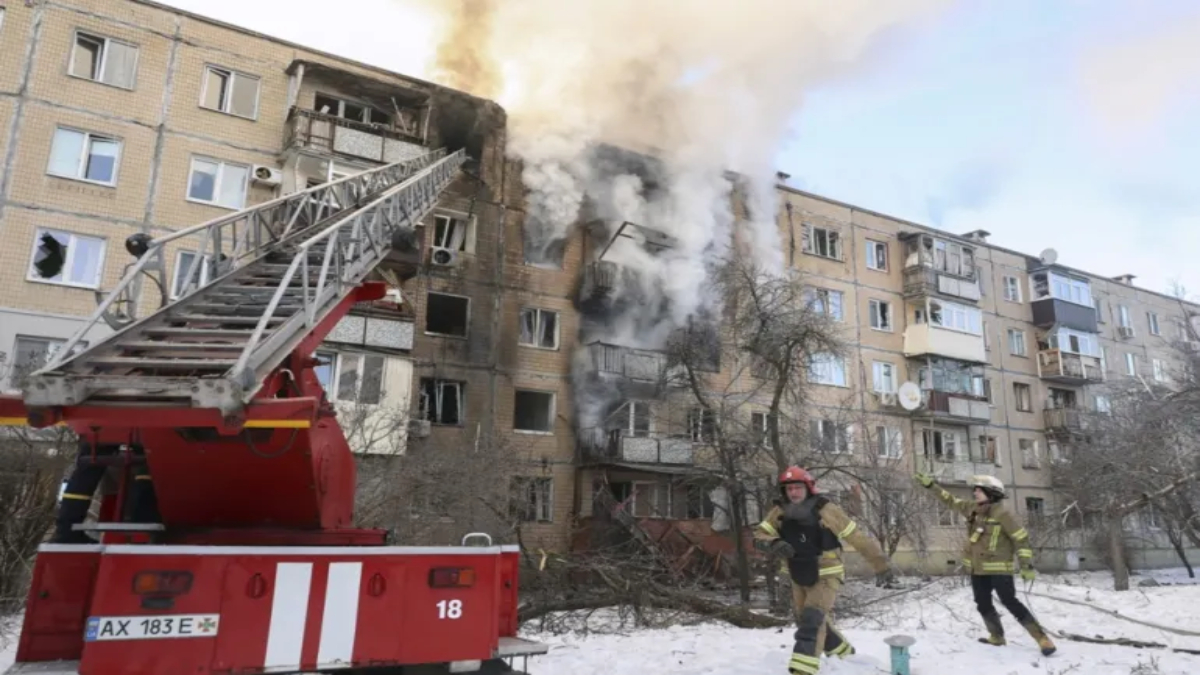
New Delhi, February 4, 2026: As the Russia-Ukraine war reaches its 1,441st day on February 4, 2026, the conflict sits at a volatile crossroads between a devastating winter air campaign and a high-stakes diplomatic push in the Middle East.
The State of Play: Diplomacy vs. Destruction
While the world watches Abu Dhabi, where a second round of trilateral peace talks involving the U.S., Russia, and Ukraine begins today, the situation on the ground remains brutal. A brief “energy ceasefire”—which had seen a temporary pause in strikes on Kyiv—collapsed earlier this week, leading to some of the most intense aerial bombardments of the entire winter.
Key Events: Day 1,441
- Massive Aerial Assaults: Russia launched a “top-tier” attack involving over 70 missiles and 450 drones targeting Ukraine’s energy infrastructure. Kyiv and Kharkiv bore the brunt, with temperatures plummeting to -25°C, leaving hundreds of thousands without heating.
- The Abu Dhabi Summit: U.S. special envoy Steve Witkoff and Jared Kushner have arrived in the UAE to mediate between Ukrainian and Russian negotiators. While President Trump has signaled optimism, Ukrainian officials remain cautious, citing the recent strikes as proof that Moscow is not negotiating in good faith.
- Frontline Shifts: On the ground, Ukraine’s Armed Forces successfully regained positions in Kupiansk, a strategic city in the Kharkiv region. However, Russian forces continue a heavy push in the Pokrovsk direction, launching nearly 50 assaults in a single 24-hour period.
- NATO Reinforcements: During a visit to Kyiv, NATO Secretary General Mark Rutte pledged continued support, emphasizing that European allies are prepared to provide solid security guarantees and potential troop deployments to backstop any future peace deal.
- Civilian Toll: Recent strikes have been particularly lethal for non-combatants. A drone strike on a bus in the Dnipropetrovsk region killed 12 miners earlier this week, and a maternity hospital in Zaporizhzhia was recently targeted, drawing international condemnation.
Analysis: The “Winter Freeze” Strategy
Russia’s current strategy appears twofold: maximize leverage at the negotiating table by “weaponizing the cold” and testing the resolve of the new U.S. administration. By targeting thermal power plants during extreme sub-zero temperatures, Moscow aims to break Ukrainian civilian morale while its diplomats engage in “constructive” talks abroad.
Ukraine, meanwhile, is lobbying for an additional $15 billion in military aid for 2026 to bolster its air defenses, which are currently stretched thin. The interception rate remains high (intercepting over 400 drones in the latest raid), but the sheer volume of Russian munitions means that “leaking” missiles continue to cause catastrophic damage to the power grid.
What’s Next?
The outcome of the next 48 hours in Abu Dhabi will likely determine if the war enters a period of de-escalation or if the spring will bring a renewed, larger-scale offensive.