

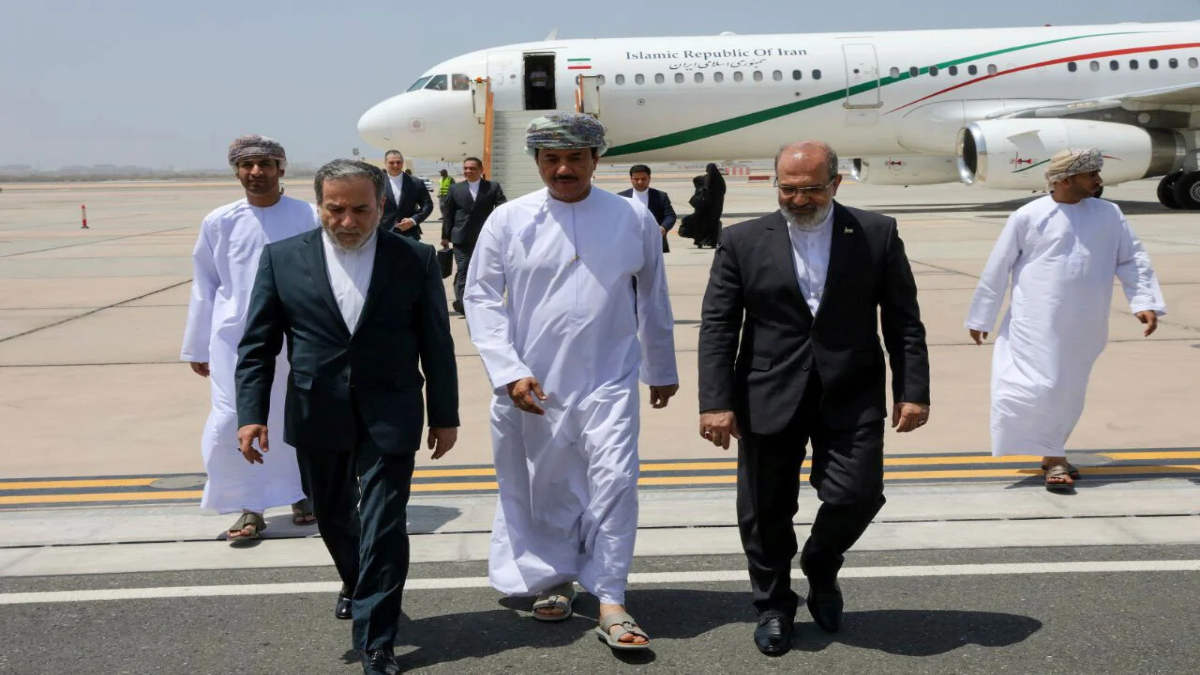
New Delhi, February 5, 2026: In a pivotal moment for Middle East stability, the United States and Iran are scheduled to engage in high-stakes diplomatic talks this Friday, February 6, 2026. The meeting, set to take place in the Omani capital of Muscat, comes at a time of extreme regional tension, following a series of military escalations and a massive buildup of U.S. naval and air power in the Persian Gulf.
The Sultanate of Oman, a long-standing neutral interlocutor, will once again serve as the bridge between the two adversaries. The announcement was confirmed by Iranian Foreign Minister Abbas Araghchi, who noted that the sessions are expected to begin around 10:00 AM local time.
A Shifting Venue and Narrowing Window
The road to Friday’s meeting has been fraught with diplomatic friction. Originally, negotiations were proposed for Istanbul, Turkey, but Tehran pushed for a move to Muscat—a venue where previous rounds of “quiet diplomacy” have historically been more successful.
The White House initially resisted the change of location and format, leading to a brief collapse in communication earlier this week. However, after mediation from several Arab and Muslim nations, the Trump administration relented, signaling a cautious willingness to explore a diplomatic off-ramp before military options are further escalated.
The Agenda: A Gulf of Difference
Despite the agreement to meet, both sides remain fundamentally at odds over what will actually be discussed:
- Iran’s Position: Tehran insists the talks be confined strictly to its nuclear program and the lifting of biting Western sanctions. Iranian officials have characterized their ballistic missile program and regional defense posture as “red lines” that are non-negotiable.
- The U.S. Position: Secretary of State Marco Rubio and other administration officials have made it clear that Washington seeks a “comprehensive” deal. This would include not only the total cessation of uranium enrichment but also strict limits on Iran’s ballistic missile arsenal and an end to its support for regional proxy groups.
Tensions on the Brink
The backdrop for these talks is one of the most volatile periods in recent history. Tensions spiked following a 12-day conflict last June, during which U.S. and Israeli forces conducted strikes on Iranian nuclear targets. More recently, the U.S. military reported shooting down an Iranian drone that “aggressively” approached the USS Abraham Lincoln in the Arabian Sea just days ago.
Domestic pressure is also mounting on the Iranian leadership. Following a series of violent crackdowns on anti-government protests last month, reports suggest that Tehran may be seeking a “fair and equitable” deal to prevent further economic collapse and potential internal instability.
What’s at Stake?
For President Trump, the goal is a definitive “No Nuclear Weapons” agreement that surpasses the 2015 accord. For the Iranian leadership, the priority is survival and the removal of sanctions that have ravaged the national economy.
International observers warn that if Friday’s talks fail to produce a credible path toward de-escalation, the risk of a regional war—one that could draw in multiple neighboring states—becomes significantly higher.