

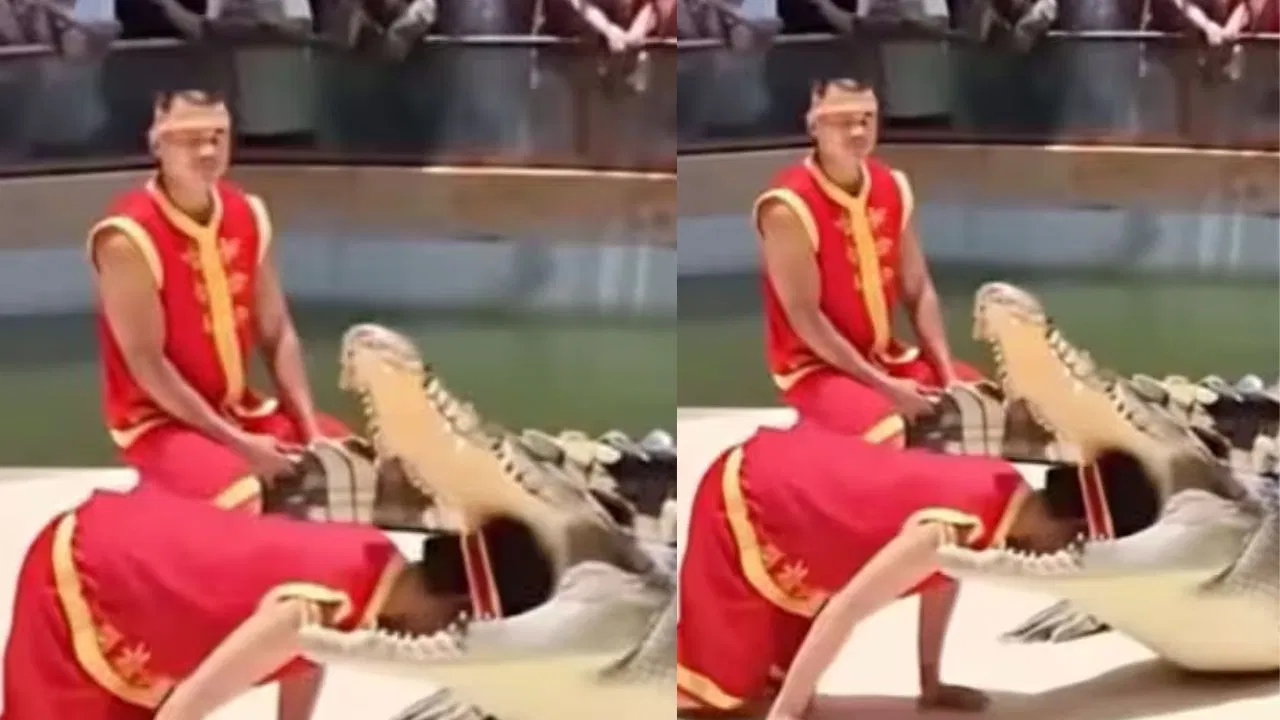
New Delhi, February 5, 2026: A massive wave of shock and horror has been triggered across digital platforms following the emergence of a terrifying viral video involving a high-risk animal stunt. In the footage, which gained significant traction on February 5, 2026, a man is observed performing a life-threatening act by placing his head directly inside the open jaws of a large crocodile. It is noted that the demonstration, presumably intended for a crowd or a social media audience, took a horrifying turn when the predator’s natural instincts were suddenly activated. This chilling incident has been widely shared as a primary example of the extreme and often fatal risks associated with treating dangerous wildlife as entertainment props.
The Mechanics of a Heart-Stopping Accident
The specifics of the incident and the immediate aftermath are being meticulously discussed by wildlife experts and concerned netizens as the clip continues to trend globally. It is observed in the viral footage that the crocodile remained deceptively still for several seconds before its jaws were snapped shut with immense force. It is reported by several digital observers that the man was seen struggling desperately as the animal began to thrash, leading to a scene that has been described as “soul-shaking.” The visual of the predator’s sudden aggression has provided a grounding narrative for the inherent unpredictability of apex predators, regardless of how “tame” they may appear during a performance.
Also Read: Founder’s Gift of 4 Tata Nexon EVs to Employees Goes Viral
The Internet Reacts to the “Stunt Gone Wrong”
A massive conversation regarding animal ethics and the recklessness of “stunt culture” has been ignited by this interaction. It is noted that the video was met with a mixture of disbelief and stern criticism, with many netizens remarking that such acts are an unnecessary provocation of nature. The safety protocols at wildlife parks and roadside shows are being widely discussed, with many calling for a total ban on performances that involve physical contact with dangerous animals. Thousands of comments have been left by users who expressed their trauma, stating that such videos serve as a stark reminder that nature’s laws cannot be rewritten for the sake of a viral “reel.”
Impact on Wildlife Tourism and Public Safety Awareness
The impact of the video has extended beyond simple views to influence a broader discussion on the regulation of wildlife-based entertainment industries. It is frequently mentioned by animal rights advocates that these stunts often involve the mistreatment or sedation of animals, which can lead to unpredictable outbursts of violence. A renewed sense of vigilance is being observed among local authorities, who are now being urged to shut down unregulated shows that prioritize thrill-seeking over human and animal safety. It is believed that the viral nature of this specific “Crocodile Head Stunt” video will prompt a dialogue on the urgent need for a more respectful and distant approach to wildlife observation.
A Stark Reminder of Primal Power
As the footage continues to accumulate millions of views in early February 2026, it serves as a powerful and resilient reminder that the boundary between humans and predators must be respected. It is believed that the “Crocodile Attack” story will remain a primary highlight of the month’s most discussed and cautionary nature-related features. The legacy of this viral event is expected to be a heightened public awareness of the devastating consequences that can arise from a single moment of misplaced confidence. Until such dangerous practices are eliminated, this video remains a stark testament to the fact that when dealing with the wild, the price of a mistake is often paid in blood.