

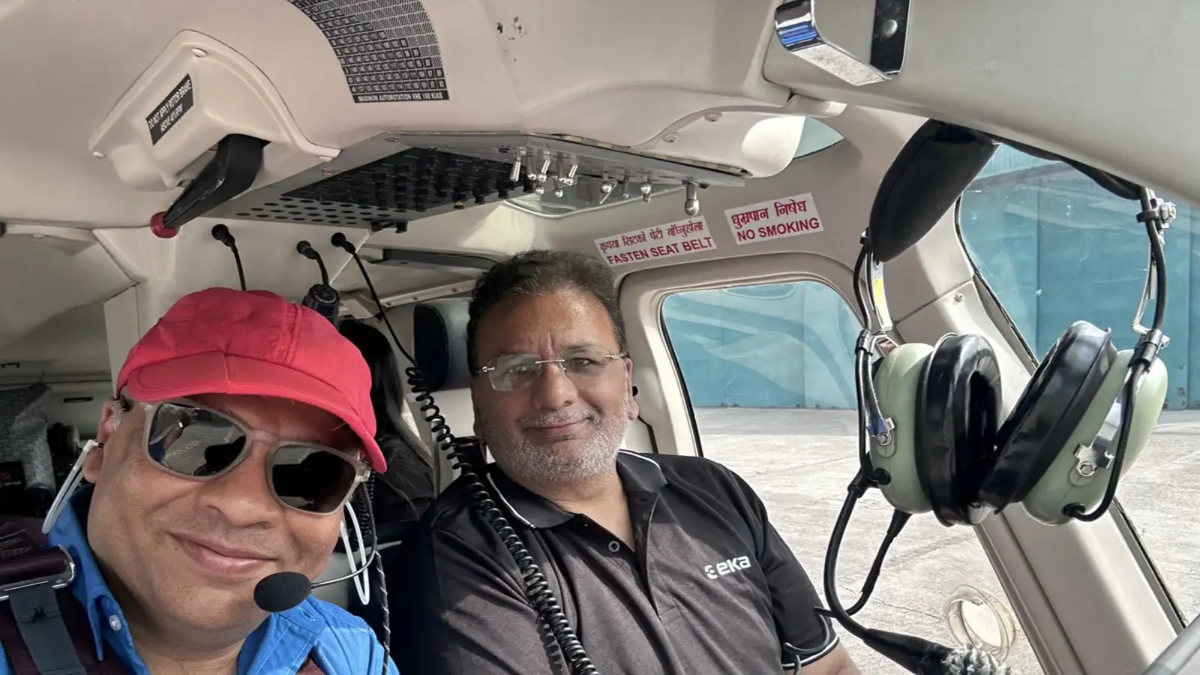
New Delhi, February 5, 2026: In a dramatic highlight of the massive gridlock that paralyzed the Mumbai-Pune Expressway this week, a prominent Pune-based industrialist opted for an aerial exit after being stuck in his car for over eight hours.
Dr. Sudhir Mehta, Chairman of Pinnacle Industries and EKA Mobility, was among thousands of commuters caught in a “highway prison” that lasted more than 30 hours. The chaos began on the evening of Tuesday, February 3, 2026, when a tanker carrying 21 tonnes of highly flammable propylene gas overturned near the Adoshi Tunnel in the Khandala Ghat section.
The Great Escape
As the sun rose on Wednesday morning and traffic remained at a total standstill, Dr. Mehta realized the situation was not going to resolve anytime soon. Taking to social media platform X (formerly Twitter), he shared aerial footage of the bumper-to-bumper queue stretching over 20 kilometers.
“Lacs of people are stuck on the Mumbai-Pune expressway… for ‘one gas tanker’. Traveling on the same is playing roulette on one’s life,” Mehta posted.
With the help of aviation consultant and Air Force veteran Nitin Welde, Mehta managed to arrange a helicopter to airlift him from the site, allowing him to bypass the 33-hour nightmare and return to Pune. While his escape was swift, it sparked a national conversation about the stark divide between those who can afford such “emergency exits” and the thousands left behind.
A Nightmare for Common Commuters
While the “chopper escape” made headlines, the reality for others was harrowing. Families with children, senior citizens, and patients in ambulances remained trapped without access to food, water, or toilets.
- The Cause: A gas tanker traveling from Kochi to Surat lost control on a slope due to alleged speeding.
- The Risk: A persistent leak of flammable propylene gas meant that authorities could not move the vehicle or allow engines to run nearby, fearing a massive explosion.
- The Duration: Traffic towards Mumbai only began to move after 1:00 AM on Thursday, nearly 33 hours after the initial crash.
A Call for Infrastructure Reform
Dr. Mehta used his experience to advocate for systemic changes. He proposed that the government mandate the construction of small helipads and emergency exit points every few kilometers along the expressway.
“Helipads cost less than ₹10 lakhs to make and require less than one acre of open area,” Mehta suggested, arguing that such infrastructure is vital for medical emergencies and rapid evacuations during disasters.
Official Response
Maharashtra Chief Minister Devendra Fadnavis has ordered a high-level inquiry into the incident. The Maharashtra State Road Development Corporation (MSRDC) is under fire for the lack of “Plan B” options when a single point of failure—like a tipped tanker—effectively severs the connection between India’s financial capital and its neighboring IT hub.
Traffic has since returned to normal, but for the thousands who spent a night on the asphalt, the memory of the “Expressway Parking Lot” remains.