

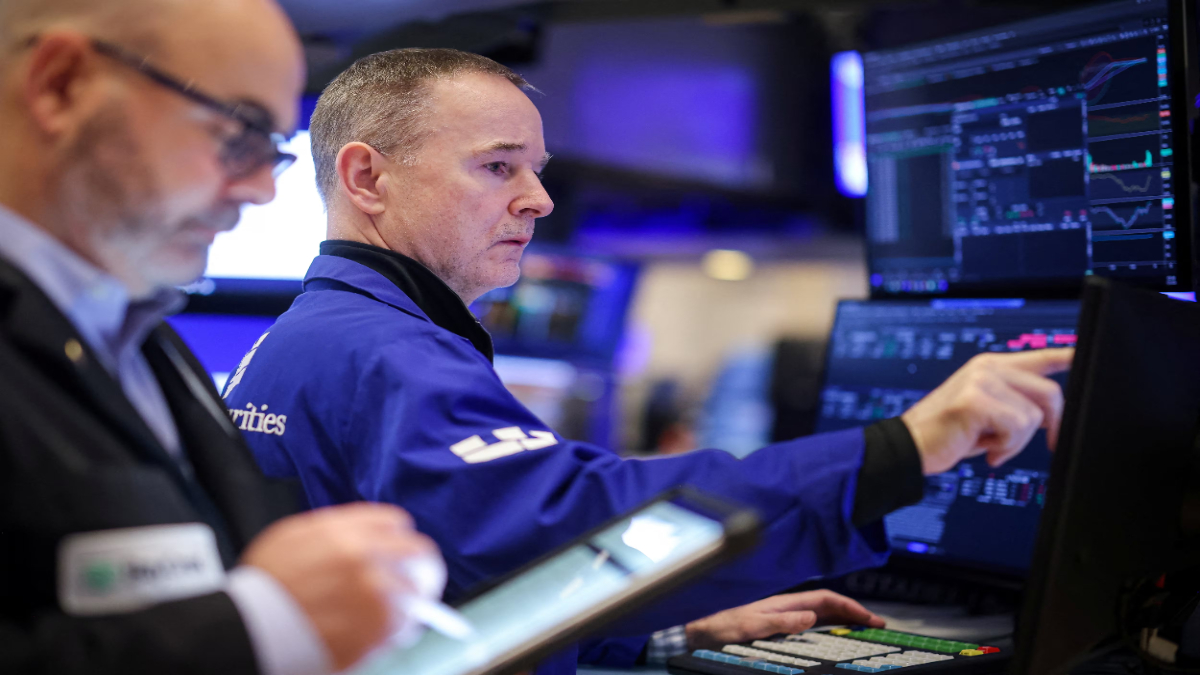
New Delhi, February 5, 2026: In early 2026, the software sector is weathering what many on Wall Street have dubbed “Software-mageddon.” A brutal sell-off has wiped out nearly $830 billion in market value in just one week, leaving the S&P 500 software and services index down 26% from its recent highs.
While the broader market remains near record peaks, the software industry—the former darling of the bull market—has hit a wall of skepticism. Investors are now trapped between two worlds: the desire to hunt for “bargain” prices and a paralyzing fear that artificial intelligence is making traditional software business models obsolete.
The Catalyst: Anthropic’s “Wake-Up Call”
The latest wave of panic was triggered on February 3, 2026, when AI startup Anthropic released a suite of workplace productivity tools. Unlike previous AI bots, these “agents” are designed to automate routine coding, legal research, and data management tasks—the very “bread and butter” services that enterprise giants like Salesforce, Adobe, and Intuit have built their empires on.
The market reaction was swift and merciless:
- Salesforce (CRM): Slumped nearly 7% in a single day.
- Adobe (ADBE): Fell 7%, as investors worried AI-generated design could eat its lunch.
- Microsoft (MSFT): Despite its own AI leadership, shares dropped 3.7% due to the sheer scale of its capital expenditures.
Bargain Hunting vs. “Falling Knives”
For value investors, the current valuations are enticing. Many top-tier software companies are trading at their lowest price-to-earnings multiples in years. Analysts at Morningstar suggest that “the babies are being thrown out with the bathwater,” arguing that established giants still hold the keys to proprietary data, security, and deep customer trust—things a startup AI cannot replicate overnight.
However, the “dip-buying” reflex that usually saves tech routs has been noticeably absent. The fear isn’t just a temporary dip in earnings; it’s a secular shift. If code becomes a “commodity” produced for free by AI, the per-seat licensing model that fueled the SaaS (Software as a Service) revolution could crumble.
The New Market Map
The carnage hasn’t hit everyone equally. A new hierarchy is emerging in 2026:
- The Laggards: Legacy firms slow to pivot, currently facing double-digit YTD losses.
- The High-Flyers: “New-age” platforms like Figma (which IPO’d in 2025) and Palantir are being watched closely. While Figma has seen a 75% slide from its peak, some see it as an underestimated winner due to its 131% revenue retention rate.
- The Infrastructure Kings: Chipmakers like Nvidia and Broadcom initially slipped in the software wake but remain the “landlords” of the AI era, benefiting from the massive hardware spend required to run these disruptive tools.
Outlook: A “Regime Shift”
As we move further into February 2026, the software sector is no longer a “buy everything” play. Investors are becoming surgical, looking for companies with “mission-critical” workflows that AI enhances rather than replaces.
Until the industry can prove it can monetize AI as effectively as the startups trying to disrupt it, the “Software-mageddon” label is likely to stick. For now, the motto on the trading floor is simple: Look for value, but watch your back.