

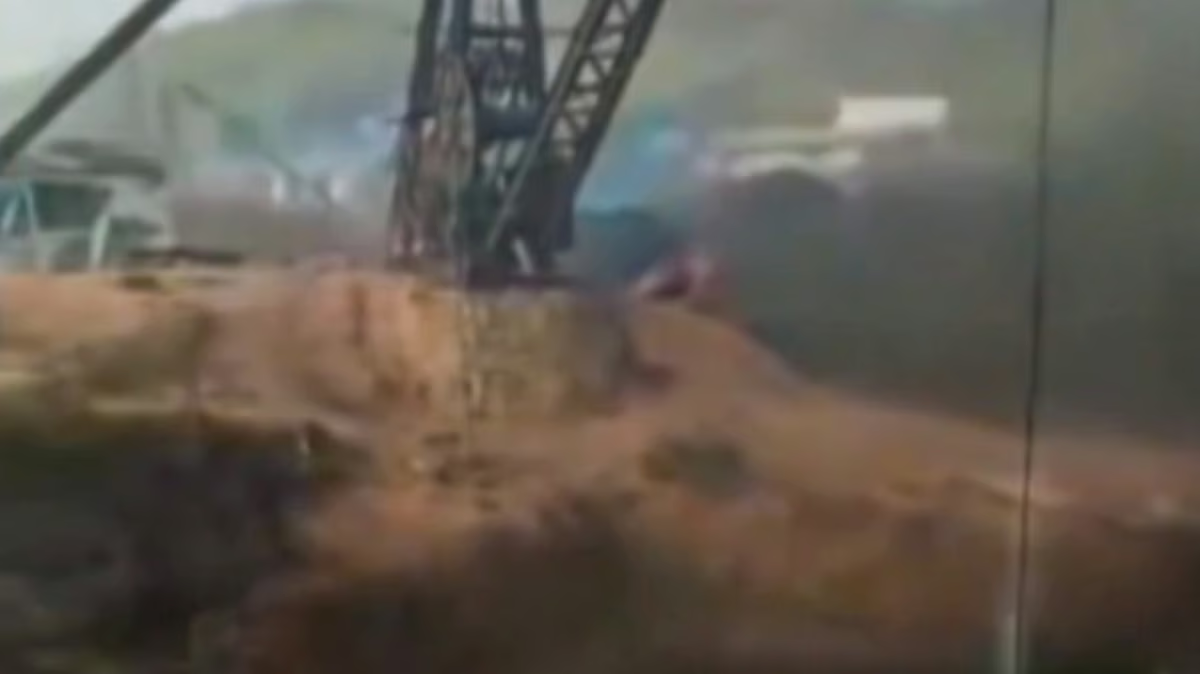
SHILLONG, February 6, 2026 — A devastating explosion at an illegal coal mine in Meghalaya’s East Jaintia Hills has claimed the lives of at least 18 workers, marking one of the deadliest mining disasters in the region in over a decade. The incident, which occurred on Thursday morning in the remote Mynsyngat-Thangskai area, has once again exposed the thriving underbelly of “rat-hole” mining—a hazardous practice officially banned for nearly twelve years.
The Incident: A Deadly Chain Reaction
Preliminary reports from the district police suggest that the tragedy was triggered by a dynamite blast used to break coal seams deep underground. The explosion reportedly ignited a pocket of trapped toxic gases—likely methane—leading to a massive fire and the subsequent collapse of several adjoining shafts.
Search and rescue operations, involving the National Disaster Response Force (NDRF) and state agencies, recovered 18 bodies from the debris by Friday morning. At least eight others were injured, while officials fear more workers may still be trapped in the narrow, unventilated tunnels.
What is Rat-Hole Mining?
The term “rat-hole” refers to the narrow horizontal tunnels, often no more than 3 to 4 feet high, dug into hillsides. Because these tunnels are too small for machinery, workers—including many migrants and sometimes children—must crawl inside to extract coal manually using pickaxes.
Despite a 2014 ban by the National Green Tribunal (NGT) and a subsequent 2019 Supreme Court ruling upholding the prohibition, the practice continues in the shadows. Activists argue that “old stock” coal transport permits are frequently used as a loophole to move freshly, illegally mined coal.
The Cost of Silence: Why It Persists
The persistence of illegal mining in Meghalaya is driven by a complex mix of economic necessity and lack of oversight:
- High Wages: Workers can earn between ₹1,500 and ₹2,000 per day, a significant sum that attracts laborers despite the extreme risks.
- Geographic Isolation: Many mines are located in rugged, forested terrain that is difficult for authorities to monitor regularly.
- Economic Dependence: For many local communities, coal remains the primary source of income in the absence of viable industrial alternatives.
A State in Mourning
Prime Minister Narendra Modi expressed his deep condolences and announced an ex-gratia of ₹2 lakh for the families of the deceased. Meghalaya Chief Minister Conrad Sangma has ordered a “comprehensive inquiry,” vowing that those responsible for the illegal operation will face strict legal action.
However, for environmentalists and safety advocates, these promises feel like a recurring script. “Until the nexus between the coal mafia and enforcement agencies is broken, these ‘holes’ will continue to be graves for the poor,” said one local activist.
As rescue teams continue to comb through the unstable rubble, the 18 deaths serve as a grim reminder that in the hills of Meghalaya, the “black gold” still comes at a human cost.