

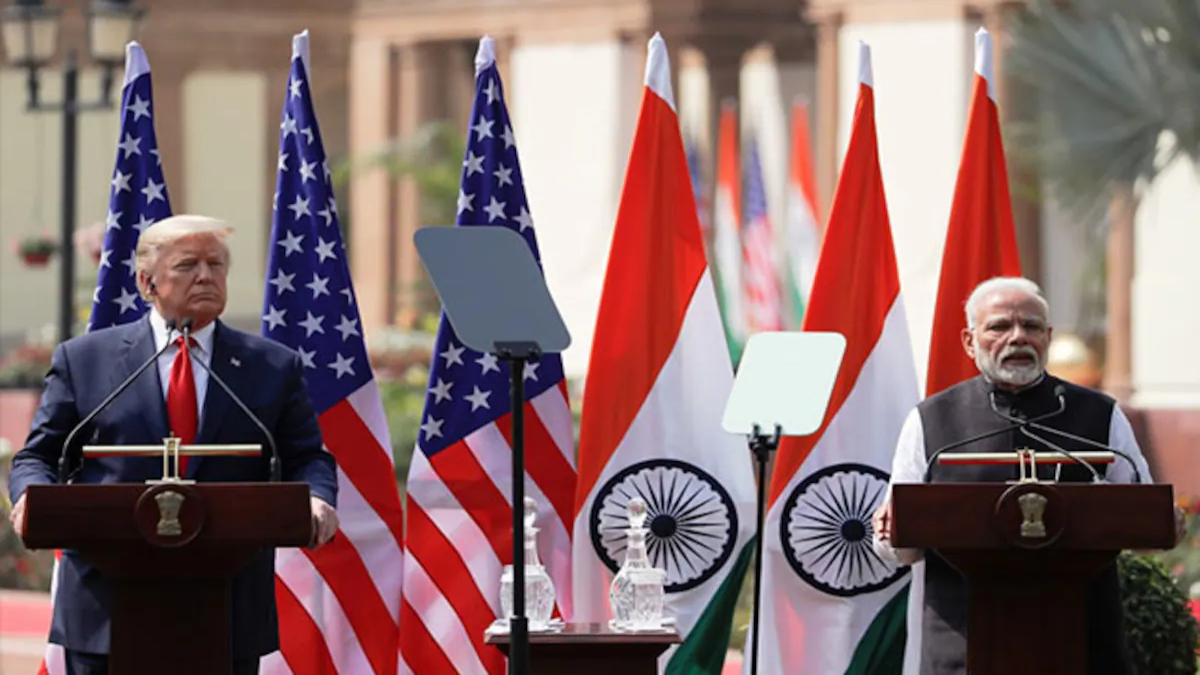
New Delhi, February 10, 2026: In a significant de-escalation of trade tensions, the White House has released a detailed factsheet outlining the contours of a new India-US “Interim Agreement.” This follows a high-stakes call between President Donald Trump and Prime Minister Narendra Modi, during which the US President made bold claims regarding a shift toward “zero tariffs” and a massive $500 billion purchase commitment from New Delhi.
The factsheet serves as the formal roadmap for what the administration describes as a “historic milestone” in bilateral relations, balancing aggressive trade reciprocity with strategic national security goals.
The “Zero Tariff” Ambition vs. The 18% Reality
While President Trump’s social media posts and public remarks highlighted a vision for “zero tariffs,” the White House factsheet clarifies the immediate technical adjustments.
- Total Tariff Reduction: Effective immediately, the United States is slashing the total tariff burden on Indian goods from a peak of 50% down to 18%.
- Removal of the “Oil Penalty”: A specific 25% punitive tariff, imposed in August 2025 due to India’s continued purchase of Russian crude, has been entirely rescinded via Executive Order.
- The 18% Reciprocal Rate: The base “reciprocal tariff” has been lowered from 25% to 18%. This moves India into a more favorable trading bracket than regional competitors like Vietnam (20%) and China (30-35%).
The “zero tariff” goal remains an aspirational target for the broader Bilateral Trade Agreement (BTA), with the US pledging to phase out duties on specific sectors—including generic pharmaceuticals, gems, and aircraft parts—as the interim deal is finalized.
India’s Major Concessions: Energy and Agriculture
The White House factsheet emphasizes “reciprocal” benefits, highlighting several major commitments from the Indian side:
- The $500 Billion Commitment: India has pledged to purchase over $500 billion in American energy (crude oil and LNG), technology, and agricultural products over the next five years.
- Market Access for US Farmers: New Delhi will reduce or eliminate tariffs on a wide array of US agricultural goods, including tree nuts, fresh fruits, soybean oil, and wine.
- Industrial Goods: Tariffs on all US industrial goods will be systematically reduced, a move Washington claims will “open up a market of 1.4 billion people” to American manufacturers.
- Digital Services Tax: In a move to appease US tech giants, India has agreed to remove its Digital Services Taxes and move toward a bilateral framework for digital trade rules.
The “Russian Factor” and Strategic Re-alignment
A central pillar of the deal—and a major point of Trump’s “America First” diplomacy—is India’s shift in energy policy. The White House claims that the tariff rollback was directly contingent on India’s commitment to stop or significantly reduce purchases of Russian oil.
According to the factsheet, India will pivot its energy procurement toward the US and potentially Venezuela. This alignment is viewed by Washington as a critical step in “defunding” the conflict in Ukraine while securing a long-term customer for US shale oil and LNG exporters.
Key Sectoral Gains
The agreement provides a “clear tariff differential” that favors Indian exports in several high-employment sectors:
- Textiles & Apparel: Immediate relief for Indian garment exporters.
- Technology: Significant increases in trade for GPUs (Graphics Processing Units) and data center equipment.
- Pharmaceuticals: A roadmap to resolve long-standing disputes over generic drug ingredients.
Comparison of Regional US Tariff Rates (Feb 2026)
| Country | Current US Tariff Rate |
| India | 18% |
| Vietnam | 20% |
| Bangladesh | 20% |
| China | 35% (Base) |
Looking Ahead: The Road to the BTA
The White House has characterized this as an Interim Agreement. Both nations are expected to begin implementation in the coming weeks, with a view toward concluding a full Bilateral Trade Agreement (BTA) by the end of the year.
While critics point out that a 900% increase in trade (to reach the $500 billion mark) is highly ambitious, the deal marks a “smooth landing” for New Delhi, which had faced the threat of a full-scale trade war throughout late 2025.