


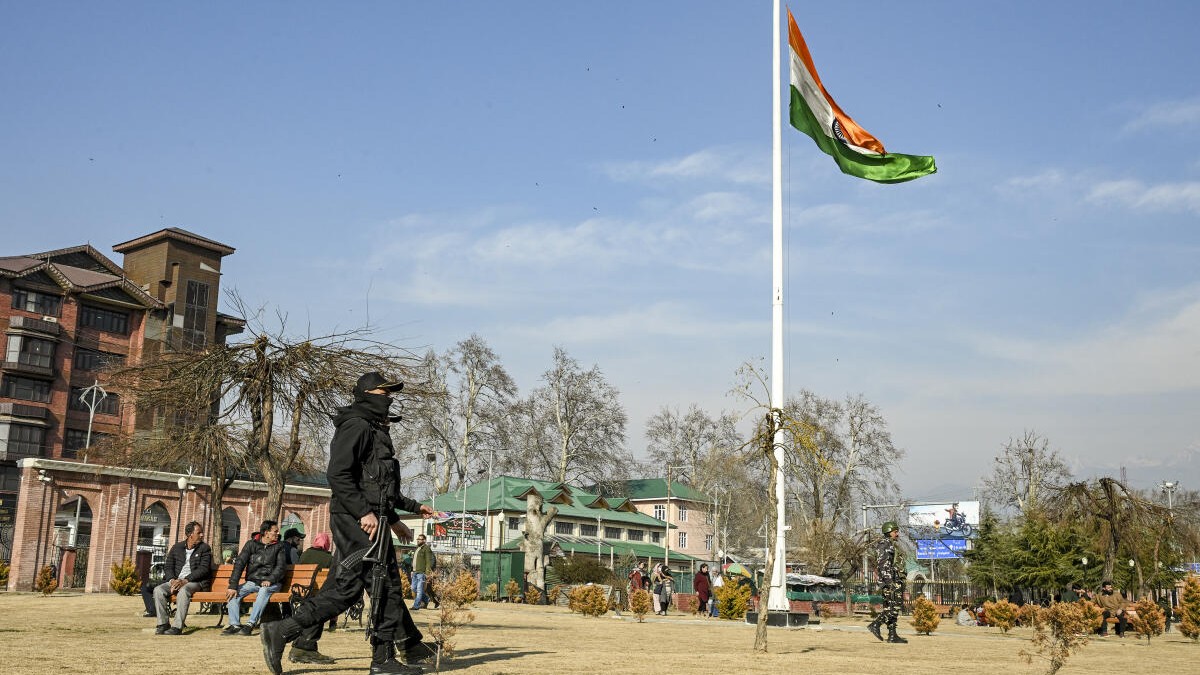
New Delhi, February 14, 2026: February 14 is a date etched in the collective memory of India, marking one of the darkest chapters in the history of Jammu and Kashmir. Today marks the anniversary of the 2019 Pulwama attack, a moment that not only resulted in the tragic loss of 40 CRPF personnel but also acted as a catalyst for a total transformation of the region’s security, political, and social fabric.
The Event That Shook the Nation
On this day in 2019, a convoy of the Central Reserve Police Force (CRPF) traveling on the Jammu-Srinagar National Highway was targeted by a suicide bomber in the Lethpora area of Pulwama district. An explosive-laden vehicle rammed into one of the buses, causing a massive blast that echoed far beyond the valley.
The attack, claimed by the Pakistan-based terror outfit Jaish-e-Mohammad (JeM), triggered nationwide outrage and led to an immediate escalation in cross-border tensions. Within days, India responded with the Balakot airstrikes, signaling a shift in the country’s defense policy toward “proactive deterrence.”
A Paradigm Shift in Security
The Pulwama attack forced a complete overhaul of security protocols in Jammu and Kashmir. The movement of security convoys was restricted, and new Standard Operating Procedures (SOPs) were implemented. Civil traffic is now frequently regulated during troop movements to prevent similar vulnerabilities.
Furthermore, the intelligence apparatus underwent a massive upgrade. Technology-driven surveillance, better coordination between the Army, CRPF, and Jammu & Kashmir Police, and a “zero-tolerance” policy toward terror financing have significantly altered the security dynamics on the ground.
The Political Aftermath: From Statehood to Union Territory
While the attack was a security crisis, its long-term impact was deeply political. Many analysts believe the Pulwama tragedy and the subsequent national sentiment provided the momentum for the Union Government’s decision on August 5, 2019.
Just six months after the attack, the special status of Jammu and Kashmir under Article 370 was revoked, and the state was bifurcated into two Union Territories: Jammu & Kashmir and Ladakh. The government argued that this move was essential to integrate the region fully with India and to end the cycle of separatism and violence that had fostered incidents like Pulwama.
The Changing Face of the Valley
Years later, the landscape of Jammu and Kashmir looks vastly different. The government highlights an era of “Naya Kashmir,” characterized by:
- Infrastructure Growth: Massive investments in tunnels, railways, and highways to ensure year-round connectivity.
- Tourism Boom: A record-breaking influx of tourists, signaling a return to normalcy and a desire for peace among the local population.
- Grassroots Democracy: The conduct of District Development Council (DDC) elections and the recent assembly elections have sought to shift power from traditional political dynasties to a newer generation of leaders.
However, challenges remain. While large-scale encounters and stone-pelting incidents have drastically reduced, “targeted killings” of minorities and off-duty security personnel have emerged as a new security concern that the administration continues to battle.
Legacy of the Martyrs
Every year, tributes are paid at the memorial built at the Lethpora camp in Pulwama. The names of the 40 bravehearts serve as a reminder of the cost of peace. For the families of the fallen, the day is one of mourning, but for the nation, it is a day of resolve.
The Pulwama attack was undoubtedly a tragedy, but in the annals of history, it will be remembered as the “day that changed everything” for Jammu and Kashmir—setting off a chain of events that continues to shape the destiny of the region today.