

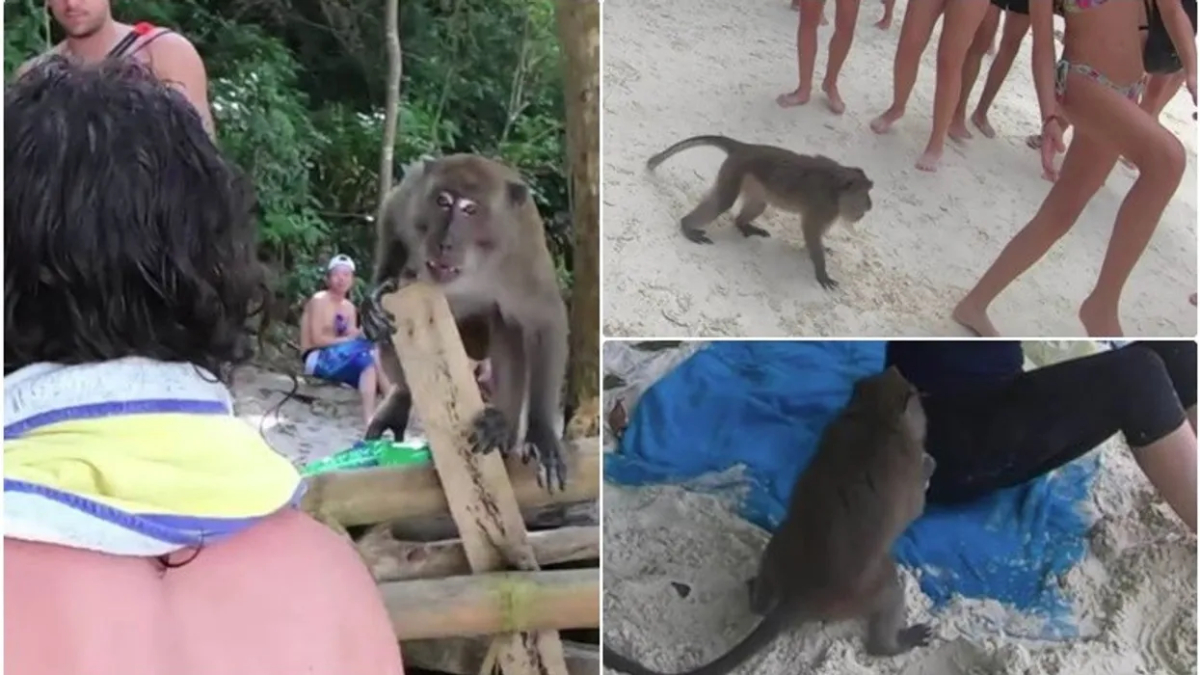
New Delhi, February 19, 2026: What was supposed to be a scenic mountain ride turned into a terrifying ordeal earlier this month when a wild macaque ambushed a local couple, causing a high-speed crash in Khao Yai National Park.
The incident, captured on a pillion passenger’s camera on February 2, 2026, has once again highlighted the growing tension between Thailand’s urban expansion and its aggressive primate populations.
The Ambush: “It Happened in Seconds”
Mod Wisuda and her boyfriend were navigating a winding mountain road when they spotted a lone long-tailed macaque standing defiantly in the center of the lane. As they slowed to pass, the primate didn’t retreat. Instead, it lunged forward with startling speed, leaping directly onto the motorcycle.
The sudden weight and aggression of the animal caused the rider to lose his balance. The bike wobbled before crashing onto the asphalt, sending both riders sliding across the road.
“It took the food we had for our picnic and then ran off into the forest,” Wisuda told local reporters. “I suffered a minor wound on my hand from the fall, but it could have been much worse.”
While the riders escaped with scrapes and bruises, the monkey successfully made off with their “loot”: a bag of crisps and two packets of sticky rice.
A Growing National Crisis
This latest attack is part of a spike in primate-related violence across Thailand in early 2026. From the “monkey city” of Lopburi to the tourist beaches of Phuket and Krabi, macaques are becoming increasingly bold.
Experts point to several factors driving this behavior:
- Habitat Loss: Deforestation is pushing troops closer to human settlements.
- Food Dependency: Years of being fed by tourists have caused monkeys to lose their fear of humans and associate vehicles with food.
- Population Surge: Despite sterilization efforts, some areas have seen macaque numbers nearly double over the last decade.
Government and Safety Response
In response to the “monkey menace,” the Thai Department of National Parks (DNP) has accelerated plans to relocate aggressive “alpha” males to large forest enclosures. In Lopburi alone, officials hope to capture over 2,500 monkeys to restore peace to the downtown area.
Health officials have also issued stern warnings. Monkey bites are not just painful; they carry significant risks of rabies and the Herpes B virus, which can be fatal to humans if not treated immediately.
Tips for Travelers
If you find yourself on a motorcycle in a “monkey zone,” authorities recommend the following:
- Never Stop to Feed: Feeding is often illegal and encourages aggressive “highway robberies.”
- Hide Your Goods: Keep all food and shiny objects (like sunglasses or keys) inside closed bags or under the seat.
- Maintain Distance: If a monkey is in the road, slow down but do not stop; they often perceive a halt as an invitation to board the vehicle.
The clash between humans and macaques remains a delicate balance for Thailand—a country that views the animals as both a cultural symbol and, increasingly, a public safety hazard.