

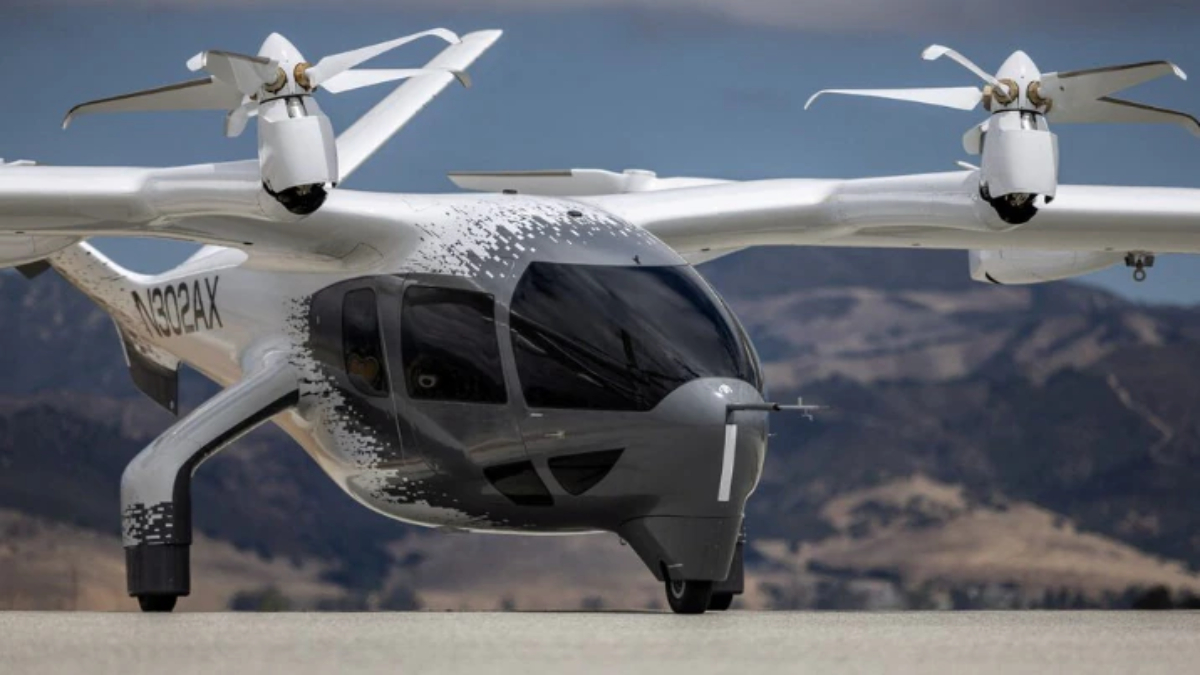
New Delhi, February 20, 2026: In a move that sounds like it was ripped straight from a sci-fi blockbuster, India is preparing to launch its first electric air taxi service. Promising to cover a distance of 36 kilometers in just 8 minutes, this homegrown innovation aims to solve one of India’s most persistent urban nightmares: soul-crushing traffic congestion.
The project, spearheaded by The ePlane Company, an IIT-Madras incubated startup, is not just a concept—it is a rapidly materializing reality. With the recent announcement of a technical partnership with global AI giant NVIDIA, the startup is using advanced “Digital Twin” technology to perfect the aircraft’s safety and performance before it officially takes to the skies.
The Tech Specs: No Runway, No Fuel, No Noise
The flagship aircraft, known as the e200x, is designed specifically for the unique challenges of Indian cities. Unlike traditional planes or helicopters, it operates on three revolutionary principles:
- eVTOL Technology: It is an Electric Vertical Takeoff and Landing vehicle. This means it lifts off like a helicopter but flies with the efficiency of a plane.
- Zero Fuel Consumption: Powered entirely by electricity, the air taxi produces zero emissions. It’s a sustainable answer to the carbon-heavy aviation industry.
- The “No Runway” Advantage: Because it takes off vertically, it doesn’t need sprawling airports. It can land on rooftops, parking lots, or “vertiports” integrated into existing metro stations and office hubs.
Faster Than a Formula 1 Car (in Traffic)
To put the performance in perspective, a 36-km journey in a city like Bengaluru or Mumbai can easily take 60 to 90 minutes during peak hours. The e200x aims to slash that time to a mere 8 minutes, cruising at speeds of up to 160 kmph.
“We are not just building an aircraft; we are building an ecosystem,” says Prof. Satya Chakravarthy, Founder and CTO of The ePlane Company. “By validating our flight operations in a digital world first, we ensure absolute safety in the physical one.”
How Safe Is It?
Safety is the primary concern for any new mode of transport. The e200x is being built with NVIDIA’s Omniverse and IGX platforms, which allow engineers to simulate “millions of flight hours” in various weather conditions and emergency scenarios. This “Digital Twin” approach acts as a “time machine for safety,” perfecting the AI-driven flight algorithms long before a human passenger ever boards.
| Feature | Specification |
| Capacity | 2-seater (1 Pilot + 1 Passenger / Cargo) |
| Speed | Up to 160 kmph |
| Range | 110 km (on a single charge) |
| Footprint | Compact (8m x 10m) for rooftop landings |
| Target Launch | Certification and testing through 2026 |
Why This Matters for India
While global giants like Joby and Archer are developing air taxis, the ePlane Company’s design is uniquely compact. This is crucial for India’s dense urban geography where space for landing pads is limited.
Beyond commuting, these air taxis are set to revolutionize:
- Air Ambulances: Transporting patients across congested cities in minutes rather than hours.
- Middle-Mile Logistics: Fast-tracking the delivery of high-value cargo and medical supplies.
- Regional Connectivity: Linking satellite towns to city centers without the need for expensive new highway infrastructure.
The Road (or Sky) Ahead
The company has already received Design Organisation Approval (DOA) from the Directorate General of Civil Aviation (DGCA)—a first for a private electric aircraft startup in the region. With manufacturing facilities already operational in Chennai, the next few months will see rigorous ground testing and the development of further prototypes.
As we move toward a future where the sky becomes the ultimate shortcut, India is positioning itself not just as a consumer of this technology, but as a global leader in its development.