

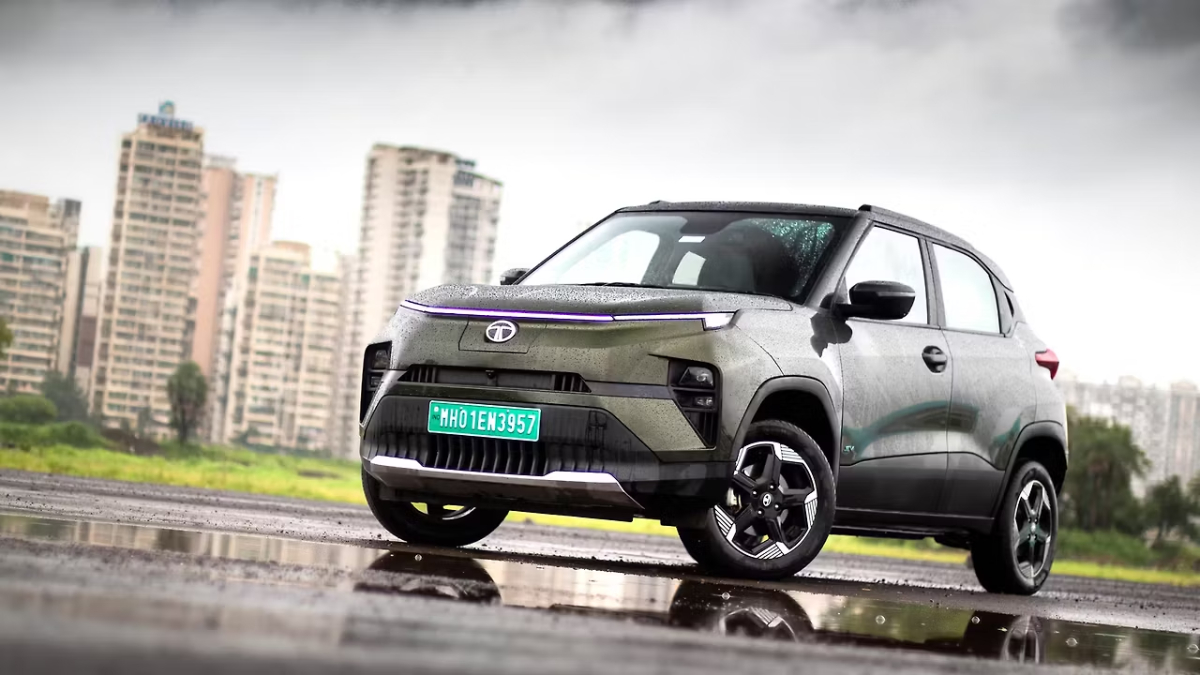
New Delhi, February 20, 2026: Tata Motors has officially disrupted the entry-level EV segment with the launch of the 2026 Tata Punch.ev facelift. In a strategic move to achieve price parity with internal combustion engine (ICE) vehicles, the homegrown automaker has introduced the Battery-as-a-Service (BaaS) model, bringing the effective starting price down to a staggering ₹6.49 lakh (ex-showroom).
The new Punch.ev isn’t just about affordability; it boasts a significantly upgraded range of 468 km and a suite of premium features that align it with Tata’s “New Gen” electric vehicle identity.
Pricing and the BaaS Revolution
The 2026 Punch.ev is available under two distinct ownership structures. This flexibility is designed to convert traditional petrol-car buyers by eliminating the “EV premium” barrier.
- Full Ownership: Prices start at ₹9.69 lakh and go up to ₹12.59 lakh (ex-showroom).
- BaaS Model: By opting for the battery rental service, the upfront cost drops to ₹6.49 lakh. Owners then pay a battery usage fee starting at ₹2.60 per km.
This “twin-EMI” financing strategy allows customers to pay for the car and the battery separately, mirroring the way one would pay for a petrol car and then spend on fuel monthly.
Performance: More Power, Better Range
Tata has updated the powertrain options, offering two battery configurations that cater to both city dwellers and highway travelers.
| Feature | Standard Range | Long Range (New) |
| Battery Capacity | 30 kWh | 40 kWh |
| ARAI Range | 365 km | 468 km |
| Real-World Range (C75) | ~300 km | 355 km |
| Power Output | – | 129 PS / 200 Nm |
| 0-100 km/h | – | < 9 Seconds |
Ultra-Fast Charging
The 2026 model supports 65 kW DC fast charging, allowing the battery to go from 20% to 80% in just 26 minutes. For those in a hurry, a quick 15-minute charge can add up to 135 km of real-world range.
Design and Interior Upgrades
The facelift brings the Punch.ev closer to the design language of the Nexon.ev and the upcoming Harrier.ev.
- Exterior: The front fascia is now cleaner, featuring a fully sealed grille and a redesigned bumper. The signature “connected” LED DRL strip spans the width of the car, and new 16-inch aero-optimized alloy wheels help improve efficiency.
- Interior: The cabin adopts the “Udaipur” theme with premium dual-tone upholstery. Tech-savvy drivers will appreciate the 10.25-inch HD infotainment system by Harman and a matching 10.25-inch digital cockpit with full-map navigation.
- New Colors: Three vibrant shades have been added: Fearless Yellow, Bengal Rouge, and Caramel, all available with a contrasting black roof.
Safety First
Safety remains a cornerstone for Tata Motors. The 2026 Punch.ev comes equipped with a comprehensive safety net as standard:
- 6 Airbags (standard across all variants)
- Electronic Stability Control (ESC) and Hill Hold Assist
- i-High Beam Assist: Automatically manages high beams to avoid blinding oncoming traffic.
- 360-Degree Camera: For effortless parking in tight urban spots.
- Lifetime Battery Warranty: Tata offers an industry-leading lifetime warranty with unlimited kilometers for the first owner.
The Verdict
With the introduction of BaaS, the Tata Punch.ev has effectively removed the price gap between electric and petrol micro-SUVs. By offering a 468 km range and high-end features like ventilated seats and a 360-degree camera, Tata is positioning the Punch.ev as a primary vehicle for Indian households rather than just a secondary city car.