

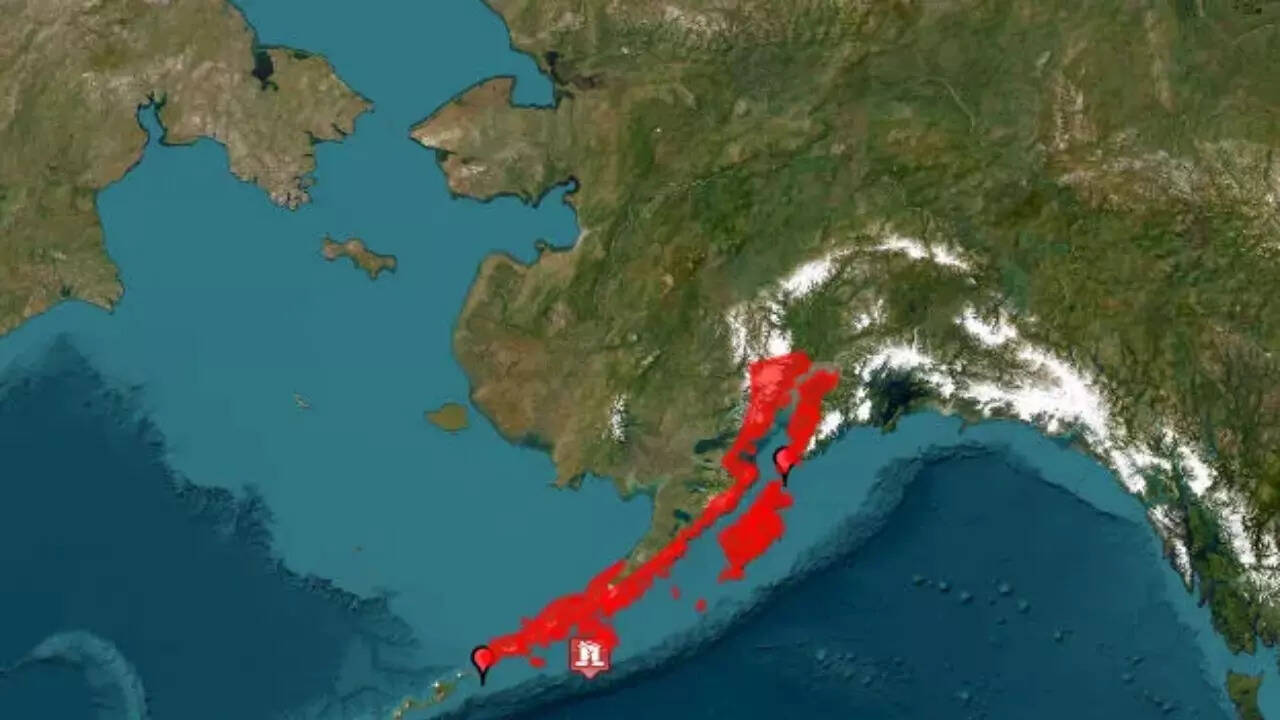
February 23, 2026 — Seismic activity flared up across two distinct regions of the Pacific “Ring of Fire” over the last 24 hours. A significant magnitude 6.3 earthquake struck near Alaska’s remote Aleutian Islands on Sunday evening, while residents in Southern California’s South Bay were jolted by a separate, lighter tremor later that night.
Alaska: 6.3 Magnitude Strike Near Nikolski
At approximately 7:11 p.m. local time on Sunday, February 22, a powerful 6.3 magnitude earthquake occurred near Nikolski, Alaska, in the Aleutians West region. According to the United States Geological Survey (USGS), the quake was notably shallow, with a depth of just 0.6 miles (1 km).
While shallow earthquakes often result in more intense surface shaking, the remote location of the epicenter—situated in the Fox Islands—limited its impact on populated areas.
- Tsunami Status: The U.S. Tsunami Warning System quickly evaluated the event and confirmed that no tsunami warning, advisory, or threat was issued for the Alaska coast or the wider Pacific.
- Damage Reports: There have been no immediate reports of significant structural damage or injuries. Seismologists noted that while the quake was strong enough to be felt by residents in nearby islands like Unalaska, the lack of infrastructure in the immediate vicinity prevented a major emergency.
Alaska remains the most seismically active state in the U.S., sitting atop the Aleutian Megathrust where the Pacific plate subducts beneath the North American plate.
California: South Bay Residents Jolted by 3.5 Tremor
Hours after the Alaskan event, a separate and unrelated earthquake occurred in Southern California. At 9:40 p.m. PST on Sunday, a magnitude 3.5 earthquake (preliminarily measured at 3.4 by some agencies) struck approximately 14 miles southwest of Rancho Palos Verdes.
The tremor was felt distinctly across coastal communities in Los Angeles County, specifically in:
- Torrance
- Redondo Beach
- San Pedro
- Manhattan Beach
Residents in Torrance and Redondo Beach reported a “short, sharp jolt” or “brief rattling” of windows and household items. Because the quake occurred at a depth of roughly 6.8 miles (11 km), its reach was localized. Local authorities have confirmed there are no reports of injuries or utility disruptions following the event.
A Reminder of Regional Risks
While these two earthquakes occurred on the same day, seismologists clarify they are not geologically linked. The Alaska quake was a result of plate subduction, whereas the Southern California tremor likely originated from one of the many local fault lines that crisscross the Los Angeles basin.
Experts use these moments to remind the public that seismic readiness is essential.
“Even small tremors like the 3.5 we saw in Torrance serve as a vital ‘natural alarm clock’ for residents to review their emergency kits and earthquake plans,” noted local safety officials.