

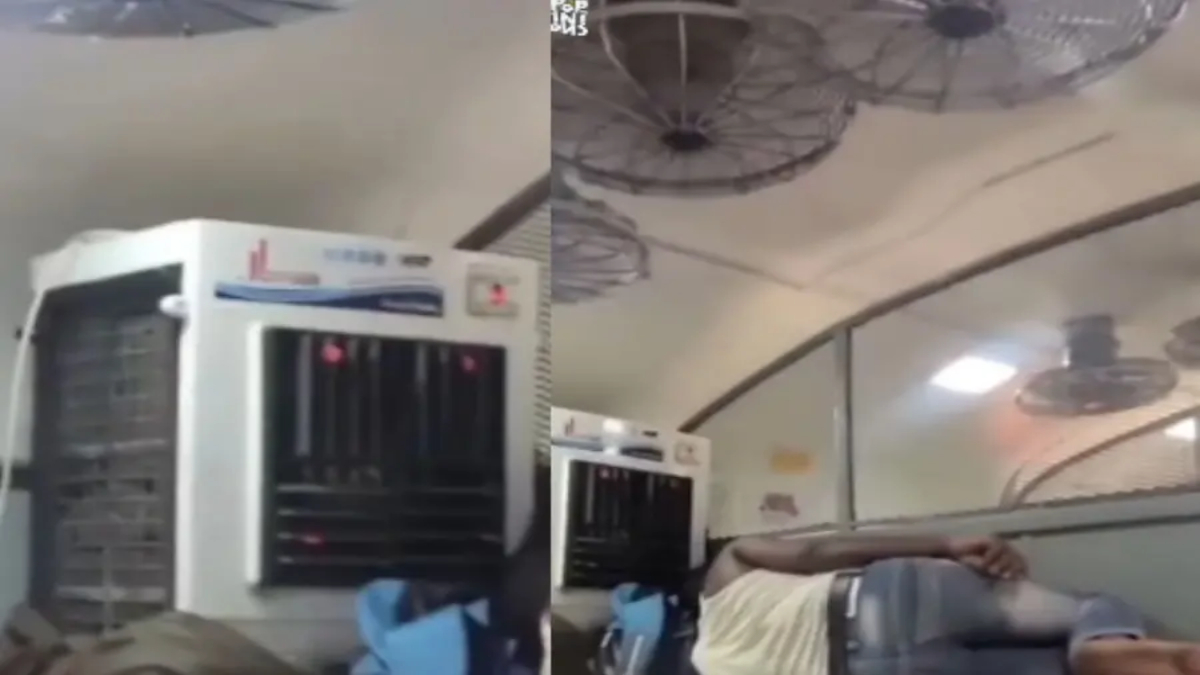
New Delhi, February 24, 2026: It was only a matter of time before “summer survival hacks” met the reality of railway safety protocols. The video of a passenger hooking up a full-sized desert cooler inside a non-AC sleeper coach has certainly set the internet—and the Indian Railways’ safety departments—on fire.
While we can all empathize with the sweltering heat of a cross-country train journey, this particular “innovation” sits right at the intersection of clever and dangerous.
The Core Issues: Why It’s Not Just “Cooling Off”
The debate isn’t just about someone being extra; it’s about the technical and legal risks involved in modifying a public transport environment.
- Electrical Overload: Train coaches have specific voltage and load capacities. Plugging in a high-wattage appliance like a cooler can lead to short circuits, potentially causing a fire in a moving vehicle—a nightmare scenario for emergency services.
- Safety Hazards: An unsecured, water-filled heavy metal box is essentially a projectile if the train brakes suddenly. Furthermore, water spillage near electrical points in a vibrating carriage is a recipe for disaster.
- Legal Ramifications: Under the Railways Act, unauthorized use of electricity or carrying bulky items that obstruct passengers is a punishable offense. It can lead to heavy fines or even imprisonment.
Public Reaction: Two Sides of the Coin
The viral debate has split social media into two very distinct camps:
| The “Jugaad” Supporters | The Safety Advocates |
| Argue that extreme heat makes non-AC travel unbearable and “inhumane.” | Point out that one person’s comfort shouldn’t risk the lives of 70+ others in the coach. |
| View it as a creative solution to a systemic problem (lack of affordable cooling). | Highlight the risk of fire and the precedent it sets for others to bring heaters or stoves. |
The Official Stance
Indian Railways generally maintains a zero-tolerance policy toward such modifications. Officials often remind passengers that coach sockets are designed for low-power devices like mobile phones and laptops, not heavy machinery.
It’s a classic case of “just because you can, doesn’t mean you should.” The heat is a real problem, but turning a sleeper coach into a makeshift laboratory for electrical experiments usually ends with a visit from the RPF (Railway Protection Force).