

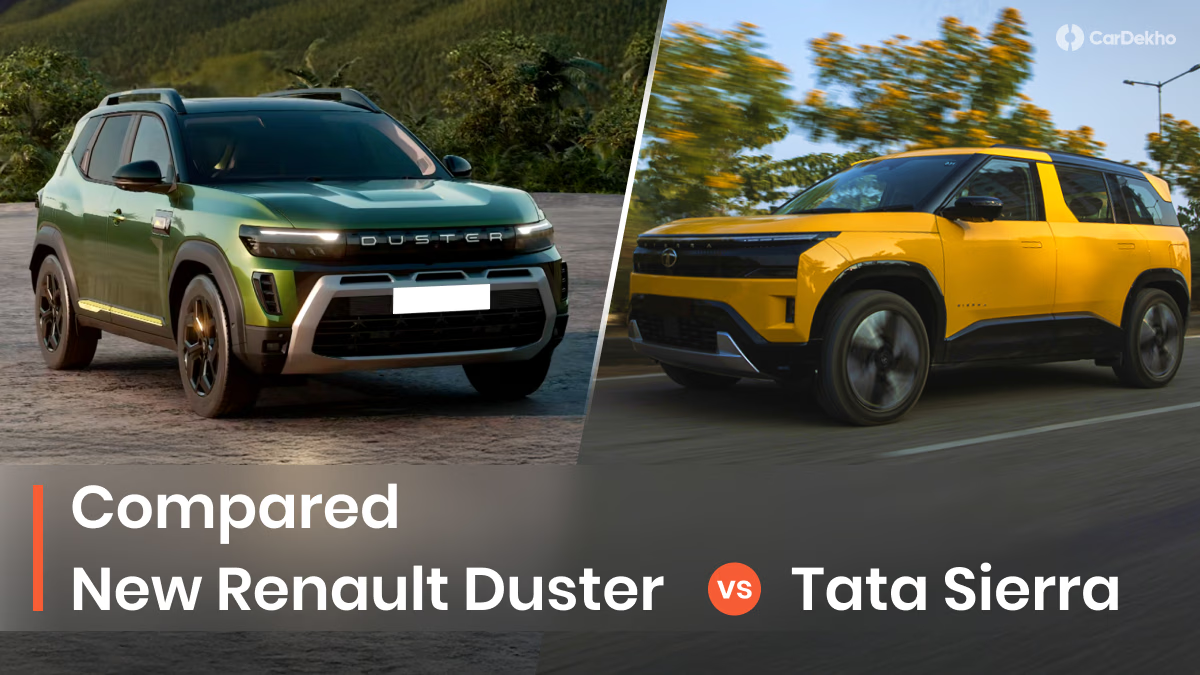
New Delhi, February 26, 2026: The Indian SUV market is heating up in 2026 as two of the most iconic nameplates—the Tata Sierra and the Renault Duster—battle for supremacy. While the Sierra has recently hit the showrooms with a blend of nostalgia and high-tech luxury, the all-new 2026 Renault Duster is making its grand comeback with a focus on rugged utility and hybrid efficiency.
For buyers caught between these two heavyweights, here are the five critical differences you need to know.
1. Design Philosophy: Retro-Modern vs. Rugged Tech
The aesthetic appeal of these two SUVs couldn’t be more different.
- Tata Sierra: Tata has leaned heavily into “nostalgia-tech.” The Sierra pays homage to the 1991 original with its signature curved rear glass and boxy silhouette, but balances it with futuristic elements like flush door handles, sleek connected LED light bars, and massive 19-inch alloy wheels. It feels like a premium lifestyle vehicle meant for the urban elite.
- Renault Duster: The Duster sticks to its “tough-guy” roots. It features a squared-off stance, chunky body cladding, and Y-shaped LED signatures. It is designed to look like it belongs on a mountain trail, emphasizing a “no-nonsense” utilitarian vibe with 18-inch wheels and a more muscular, flared-fender design.
2. Powertrain Options: The Diesel vs. Hybrid Debate
This is perhaps the biggest “make or break” point for Indian buyers.
- Tata Sierra: In a win for high-mileage drivers, the Sierra continues to offer a 1.5L Kryojet Diesel engine alongside its 1.5L Turbo-petrol variants. Tata is also positioning a full EV version (slated for later in 2026) for those ready to ditch the fuel pump entirely.
- Renault Duster: Renault has abandoned diesel. Instead, it introduces a sophisticated 1.8L Strong Hybrid powertrain. This system allows for significant city driving on pure electric mode, offering a high-tech alternative to diesel efficiency. For those wanting pure power, the Duster also offers a 1.3L Turbo-petrol engine with a healthy 163 PS.
3. Interior Tech: Screens Galore vs. Driver Focus
Step inside, and the difference in “vibe” is immediate.
- Tata Sierra: The Sierra is a “mobile lounge.” Higher trims feature a massive triple-screen setup, including a dedicated 12.3-inch entertainment screen for the front passenger. With a 12-speaker JBL sound system and “Boss Mode” for the rear seats, it is clearly aimed at those who prioritize luxury and entertainment.
- Renault Duster: The Duster’s cabin is functional and driver-centric. It features a 10.1-inch floating touchscreen and a 10.25-inch digital cluster. While it includes modern essentials like ventilated seats and a panoramic sunroof, the layout is simpler, using more physical controls that are easier to operate while driving on bumpy roads.
4. Dimensions and Space: Ground Clearance vs. Wheelbase
While both sit in the mid-size SUV segment, their footprints offer different advantages.
- Tata Sierra: The Sierra boasts a longer 2,730 mm wheelbase, which translates to superior legroom in the second row. It also offers a massive 622-liter boot (measured to the roof), making it the better choice for large families who travel heavy.
- Renault Duster: The Duster wins on “go-anywhere” geometry. It features a class-leading unladen ground clearance of 212 mm, compared to the Sierra’s 205 mm. If your daily commute involves broken roads or water-logged streets, the Duster’s extra height provides more peace of mind.
5. ADAS and Safety Implementation
Both SUVs come with 6 airbags as standard and Level 2 Advanced Driver Assistance Systems (ADAS), but the technology behind them differs.
- Tata Sierra: Uses a dual-sensor approach (Camera + Radar). This typically allows for more reliable performance in low-visibility conditions like heavy rain or fog, making features like Adaptive Cruise Control and Autonomous Emergency Braking more robust.
- Renault Duster: Relies on a camera-only setup for its ADAS. While very capable in clear conditions, camera-based systems can sometimes be more sensitive to lighting and weather variations. However, Renault compensates with a 360-degree 3D camera system that is highly praised for its clarity during tight parking maneuvers.