

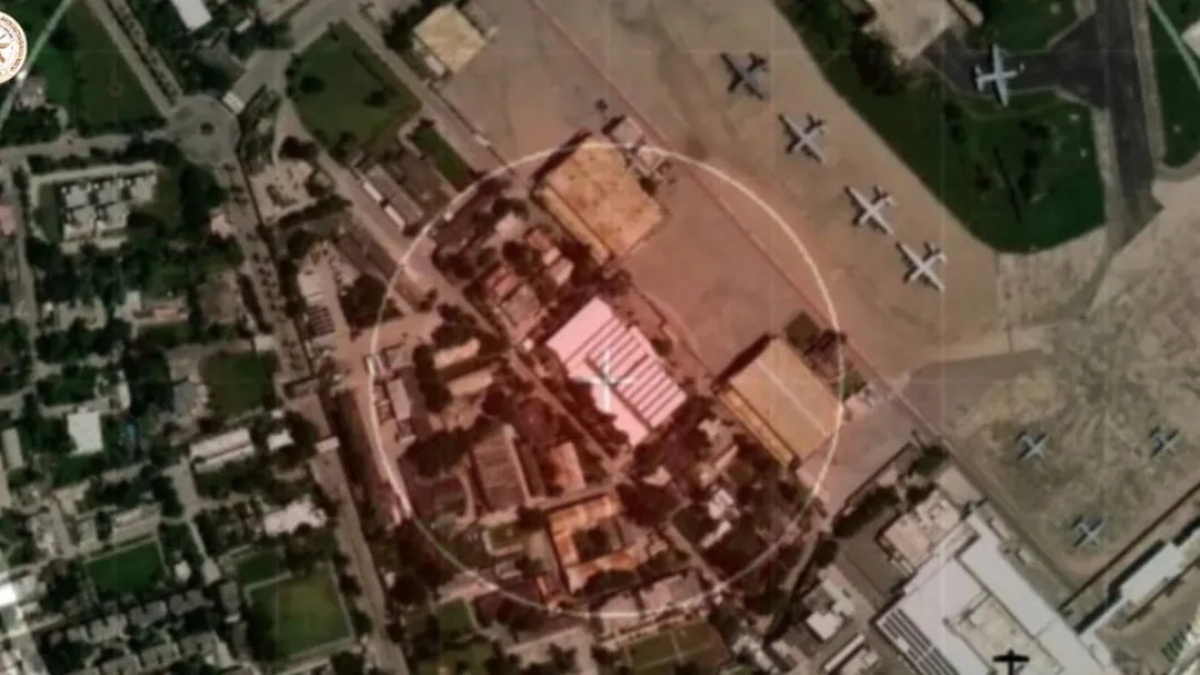
New Delhi, March 2, 2026 — In a dramatic and unprecedented escalation of cross-border hostilities, the Afghan Taliban’s Ministry of Defense announced on Monday, March 2, 2026, that its air force conducted a series of “precise and coordinated” drone strikes against several high-value military installations deep inside Pakistan. The primary target was the strategic Nur Khan Airbase in Rawalpindi, located just miles from the capital, Islamabad.
The strikes represent a significant shift in the conflict, moving beyond border skirmishes and into the heart of Pakistan’s military infrastructure.
Strategic Targets and Damage Reports
According to a statement released by the Taliban on the social media platform X, the operation targeted four major locations across three different provinces:
- Nur Khan Airbase (Rawalpindi): A critical hub for Pakistan Air Force (PAF) logistics and VIP transport.
- 12th Division Headquarters (Quetta): A key command center for operations in Balochistan.
- Khwazai Camp (Mohmand Agency): A significant military outpost in the tribal districts of Khyber Pakhtunkhwa.
- Ghulni Military Base: Strategic facilities housing command and control centers.
Preliminary reports from Kabul claim “significant damage” to these targets. Afghan authorities also claimed that at least 32 Pakistani soldiers were killed during broader operations over the last 48 hours. While Pakistan has yet to confirm the full extent of the damage at Nur Khan, local residents in Rawalpindi reported hearing loud explosions and seeing smoke rising from the vicinity of the base early Monday morning.
“Open War”: The Context of Escalation
The drone strikes are a direct retaliation for “Operation Ghazab Lil Haq,” a large-scale military offensive launched by Islamabad last Friday. Tensions reached a boiling point after Pakistan’s Defense Minister declared the two nations were in a state of “open war,” following months of tit-for-tat clashes over the Tehreek-e-Taliban Pakistan (TTP) militants.
- Pakistani Airstrikes: On February 27, Pakistan bombed major Afghan cities, including Kabul and Kandahar, targeting what it described as “terrorist hideouts.”
- Border Clashes: Fighting has been intense along the 2,600 km Durand Line, with Pakistan claiming to have killed over 415 Taliban personnel in recent days.
- Airspace Violations: Kabul has accused Pakistan of violating its sovereignty, while Islamabad maintains that the Taliban government has become a “proxy” for regional rivals by harboring the TTP.
Regional Instability and Global Impact
This escalation occurs against a backdrop of wider regional chaos. Following the reported death of Iran’s Supreme Leader and subsequent US-Israeli strikes in the Middle East, the Afghanistan-Pakistan conflict threatens to create a massive “instability arc” across South and Central Asia.
“Any further breach of Afghan airspace or acts of aggression will invite a swift, decisive, and proportionate response,” warned the Afghan Ministry of Defense.
The international community, including Saudi Arabia and Qatar, has called for an immediate ceasefire. However, with both sides dug in—and the Taliban now demonstrating the capability to strike major airbases near the Pakistani capital—the prospect of a diplomatic resolution remains dim.