

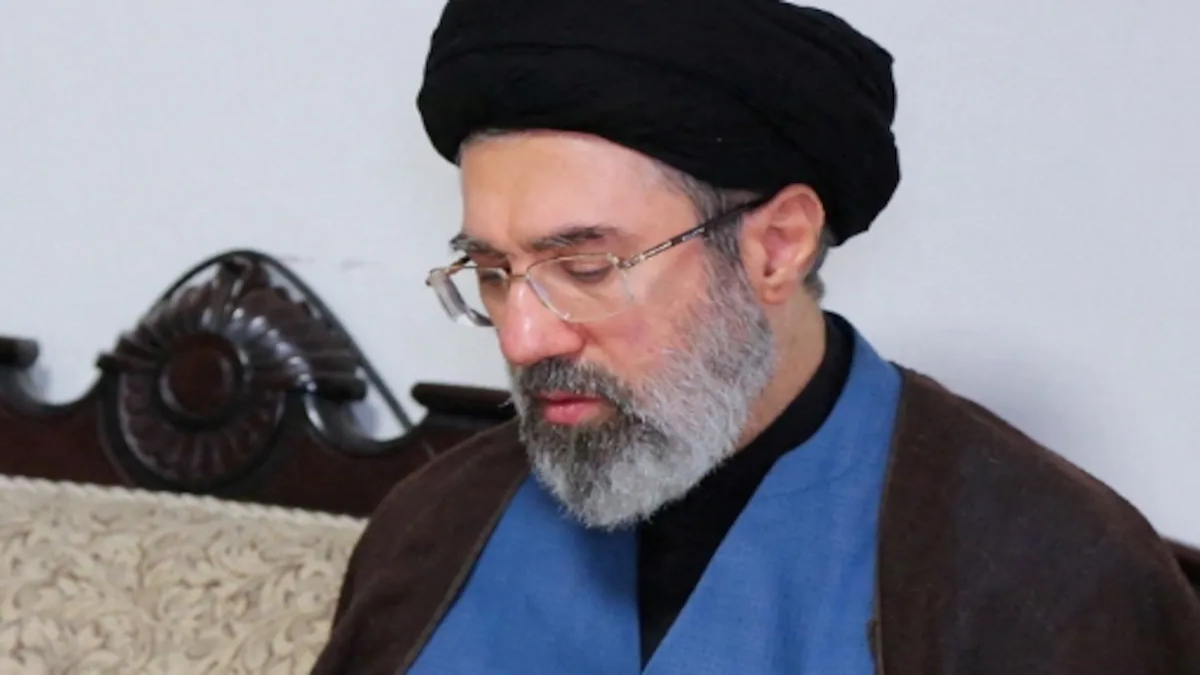
New Delhi, March 9, 2026: The appointment of Mojtaba Khamenei as Iran’s third Supreme Leader on March 8, 2026, has brought renewed global attention to his controversial past and his standing with Western powers. While he has long been a shadowy figure within the Iranian establishment, the United States officially targeted him years ago. In November 2019, the U.S. Department of the Treasury’s Office of Foreign Assets Control (OFAC) placed Mojtaba Khamenei under sanctions, a move that signaled Washington’s recognition of his immense “behind-the-scenes” authority.
Here is a detailed look at the specific reasons and context behind the 2019 U.S. sanctions against the man who now holds Iran’s highest office.
1. Representation Without Election
One of the primary reasons cited by the U.S. Treasury was Mojtaba’s role as an unelected representative of his father, the late Ayatollah Ali Khamenei. The U.S. government argued that Mojtaba exercised significant state authority despite never being elected by the Iranian people or holding a formal, constitutional government position.
The Treasury stated that Ali Khamenei had “delegated a part of his leadership responsibilities” to his second son, effectively making him a “gatekeeper” and a key decision-maker within the Office of the Supreme Leader.
2. Deep Ties to the IRGC and Basij
The 2019 sanctions were specifically linked to Mojtaba’s close collaboration with Iran’s most powerful military and paramilitary wings:
- The IRGC-Qods Force: The U.S. accused Mojtaba of working closely with the Qods Force (then led by Qasem Soleimani) to advance “destabilizing regional ambitions.” This included supporting proxy militias and expanding Iranian influence across the Middle East.
- The Basij Resistance Force: Domestically, Mojtaba was linked to the Basij, a volunteer militia used to enforce social codes and suppress internal dissent. The U.S. Treasury highlighted his role in “oppressive domestic objectives,” including the violent crackdown on peaceful protesters.
3. Role in the 2009 “Green Movement” Suppression
While the sanctions were issued in 2019, the U.S. justification pointed back to his historical involvement in domestic repression. Following the disputed 2005 and 2009 presidential elections, reformist leaders like Mehdi Karroubi openly accused Mojtaba of orchestrating election interference and leading the brutal response to the “Green Movement” protests.
The U.S. viewed his influence over the security apparatus as a primary driver of the human rights abuses that occurred during these periods of unrest.
4. Execution of the “Maximum Pressure” Policy
The sanctions were enacted under Executive Order 13876, signed by President Donald Trump. This order targeted the “inner circle” of the Supreme Leader as part of a “Maximum Pressure” campaign. By sanctioning Mojtaba, the U.S. aimed to:
- Block Financial Assets: Freeze any property or interests he might have held in U..S jurisdictions.
- Deter International Partners: Warn global financial institutions that doing business with Mojtaba or his network could result in secondary sanctions.
- Signal Succession Concerns: Even in 2019, U.S. intelligence viewed Mojtaba as a potential successor. Sanctioning him was a preemptive move to delegitimize his potential rise to power and highlight his record of hardline extremism.
Impact and the 2026 Context
In light of his recent elevation to Supreme Leader following the death of Ali Khamenei on February 28, 2026, these 2019 sanctions take on new significance. They establish Mojtaba as a leader already designated by Washington for “malign behaviors,” including terrorism and civilian repression.
President Trump has recently described Mojtaba as an “unacceptable” choice, reinforcing the reality that the new leader begins his tenure under the same heavy international restrictions that have defined his career for the last seven years.