

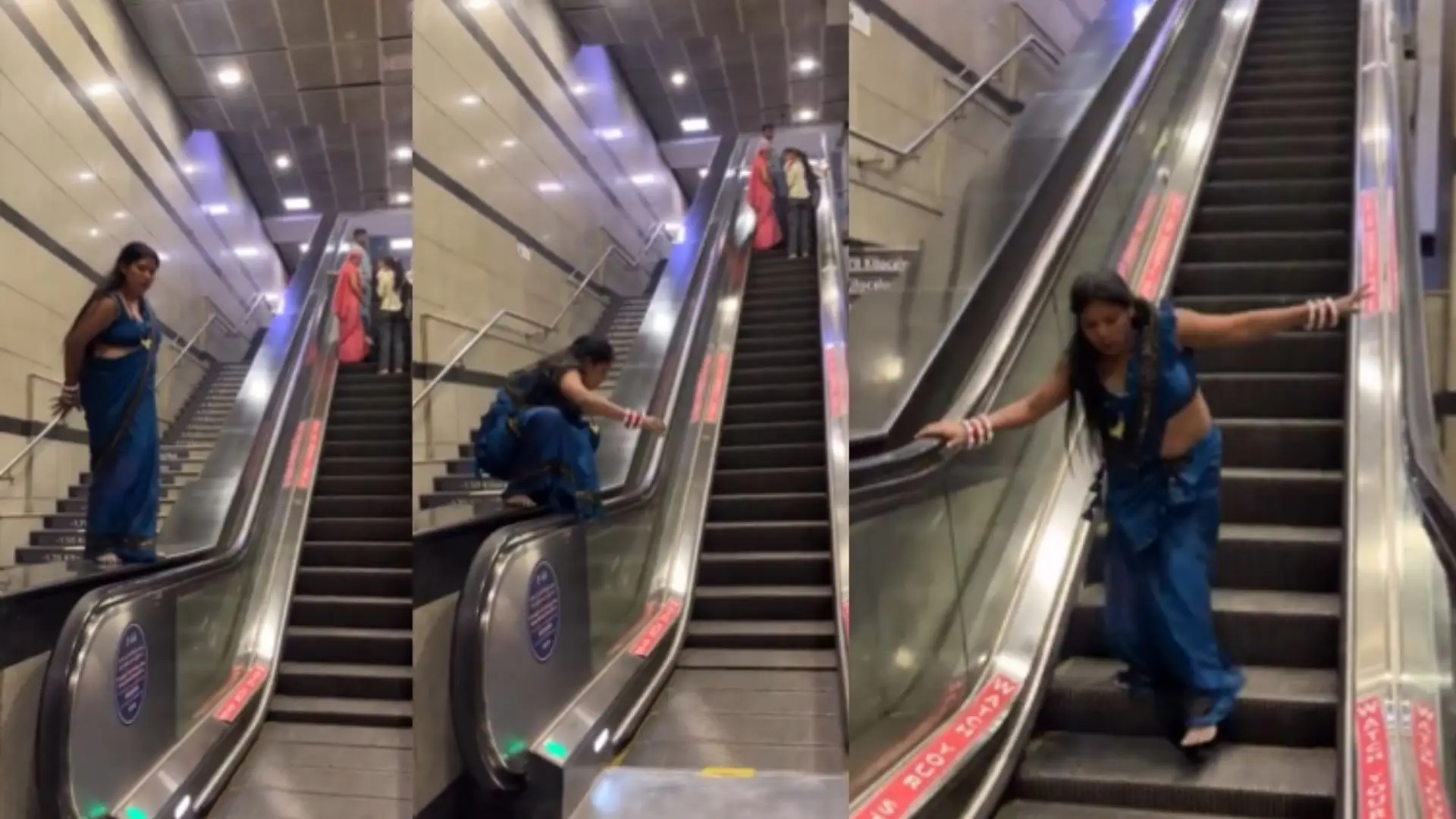
New Delhi, March 14, 2026: A significant wave of public condemnation and digital alarm has been triggered across social media platforms following the emergence of a highly controversial viral video. In the footage, which gained massive traction in mid-March 2026, a woman dressed in a traditional saree is observed performing a series of dangerous maneuvers on a moving escalator in a crowded public space. It is noted that the inherent risks associated with wearing flowing garments near heavy machinery were seemingly ignored in favor of capturing a “perfect” social media moment. This startling visual has been widely shared as a primary example of the increasing disregard for personal safety in the pursuit of online fame.
The Mechanics of the Risky Act
The specifics of the stunt and the potential for a catastrophic accident are being meticulously discussed by safety experts and concerned netizens. It is observed in the viral reports that the woman was seen balancing precariously on the handrail and moving against the direction of the stairs while her long saree trailed near the escalator’s mechanism. It is reported by several digital observers that the fabric was dangerously close to being caught in the moving parts, an incident that could have resulted in severe injury or a complete shutdown of the transit system. The visual of the performer’s nonchalance in such a high-risk environment has provided a grounding narrative for the ongoing debate concerning the limits of “content creation” in public infrastructure.
Also Read: Rapido Driver Assisting Visually Impaired Student in Assam
Social Media Reacts: A Symphony of Anger and Concern
A massive conversation regarding the “infotainment crisis” and the normalization of reckless behavior has been ignited by this digital revelation. It is noted that the video was met with an outpouring of furious comments, with many netizens remarking that “this is not talent, but a blatant invitation to tragedy.” The woman is being widely discussed as a symbol of the “clout-chasing” culture that puts both the performer and innocent bystanders at risk. Thousands of analytical comments have been left by users who expressed their outrage, stating that such videos serve as a stark reminder of the urgent need for stricter monitoring of social media trends that encourage life-threatening acts.
Impact on Public Safety Guidelines and Mall Security
The impact of this viral event has extended beyond simple internet gossip to influence a broader discussion on the enforcement of safety protocols in shopping malls and metro stations. It is frequently mentioned by facility managers that escalators are high-maintenance machines that require strict adherence to usage guidelines to prevent “clothing-trap” accidents. A renewed sense of vigilance is being observed among security personnel, many of whom are now reportedly being instructed to intervene immediately when social media filming interferes with public safety. It is believed that the viral nature of this specific “Saree Escalator Stunt” will prompt a dialogue on the necessity of banning high-risk filming in sensitive public zones.
A Stark Reminder of Common Sense
As the footage continues to accumulate millions of views in late March 2026, it serves as a powerful and resilient reminder that safety should never be sacrificed for a few seconds of digital attention. It is believed that the story of the “Escalator Saree Stunt” will remain a primary highlight of the month’s most discussed and socially impactful news features. The legacy of this viral event is expected to be a heightened public awareness of the dangers posed by improper use of public utilities. Until more responsible digital habits are adopted, this video remains a stark testament to the fact that when common sense is discarded, the result is often an “outrage” that resonates far beyond the screen.