

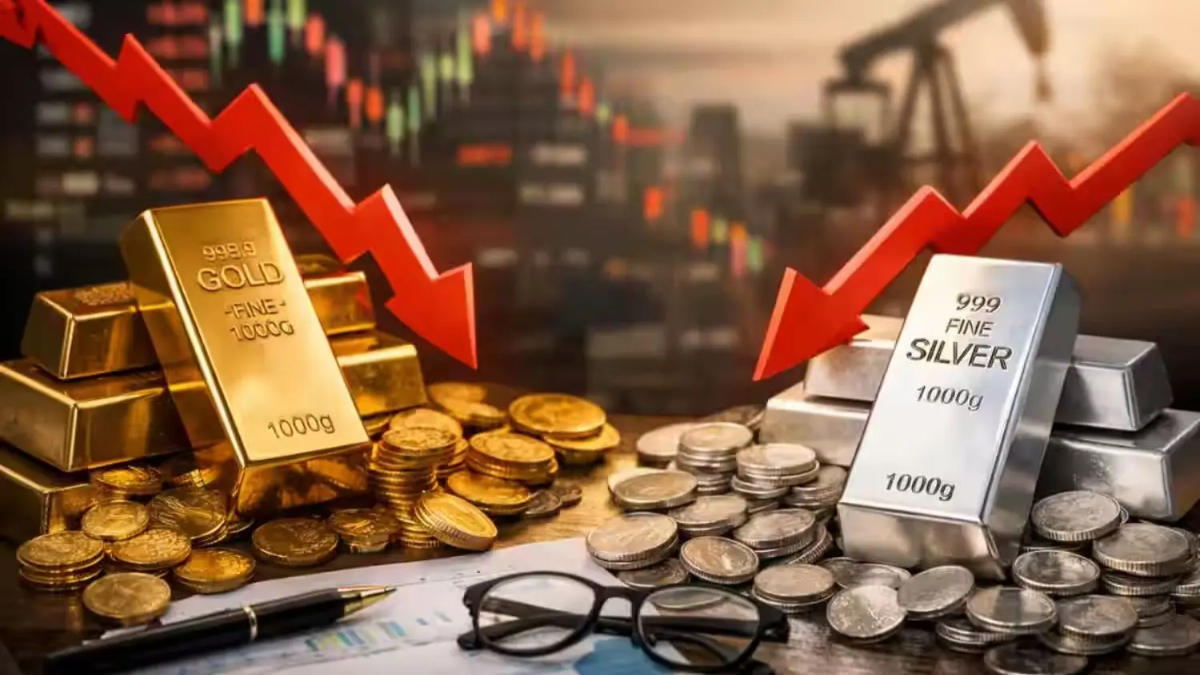
March 19, 2026 — The historic rally in precious metals has hit a significant roadblock. After months of soaring to unprecedented heights, both gold and silver are witnessing a sharp retreat as a “perfect storm” of a strengthening U.S. Dollar and hawkish interest rate signals reshapes the global commodity landscape.
On international bourses, gold has slipped toward the critical psychological support level of $5,000 per ounce, while silver has tumbled to approximately $76 per ounce—a far cry from the record peaks seen earlier this year.
The Dominant Driver: A Resurgent U.S. Dollar
The primary antagonist for bullion bulls this week has been the U.S. Dollar Index (DXY), which recently reclaimed the 100 level. Because gold and silver are denominated in dollars, a stronger greenback makes these metals more expensive for holders of other currencies, naturally dampening global demand.
This currency strength isn’t happening in a vacuum. It is being fueled by:
- Sticky Inflation: Recent Producer Price Index (PPI) data came in “hotter” than expected, suggesting that the battle against inflation in the U.S. is far from over.
- Safe-Haven Rotation: While gold is traditionally the go-to safe haven, the dollar often acts as a primary liquidity refuge during periods of extreme market volatility.
Interest Rates: The “Higher for Longer” Shadow
The Federal Reserve’s latest policy stance has further soured the mood for non-yielding assets. In its mid-March meeting, the Fed held benchmark rates steady in the 3.5% to 3.75% range. More importantly, the central bank struck a hawkish tone, signaling that only one or two modest rate cuts might be on the table for the entirety of 2026.
“The opportunity cost of holding gold rises when interest rates remain elevated,” explains a senior commodity analyst. “When investors can get a 4% yield on virtually risk-free Treasury bonds, the appeal of a non-interest-bearing metal like gold diminishes.”
Domestic Impact: Indian Markets Feel the Pinch
The global correction has filtered directly into Indian markets, though the decline is partially cushioned by a fluctuating Rupee.
| Metal | Current Rate (Approx.) | Change from March Peak |
| 24K Gold (10g) | ₹1,57,750 | -₹15,000+ |
| Silver (1 kg) | ₹2,64,900 | -₹50,000+ |
In major cities like Delhi and Mumbai, 24K gold is now testing support near the ₹1.57 lakh mark, down from its March opening of over ₹1.73 lakh. Silver has seen an even more dramatic slide, falling nearly 10% this month as industrial demand fluctuations add to its inherent volatility.
Geopolitics and Profit Taking
Beyond the macroeconomics, two other factors are at play:
- Profit Taking: After gold nearly doubled in value between 2025 and early 2026, institutional investors are “selling the news” to lock in historic gains.
- De-escalation Hopes: Reports suggesting that shipping routes in the Middle East—specifically the Strait of Hormuz—are remaining largely functional despite regional tensions have slightly lowered the “risk premium” that was previously baked into metal prices.
The Road Ahead: Support or Further Slide?
Technicians are closely watching the $5,000 level for gold and $75 for silver. A decisive break below these points could trigger a deeper correction toward $4,800. However, many analysts remain bullish for the long term, citing continued central bank buying and the metal’s role as a hedge against potential “stagflation” (low growth combined with high inflation).
For retail investors in India, the current dip is being viewed by some as a strategic entry point ahead of the festive season, provided they can stomach the ongoing volatility.