

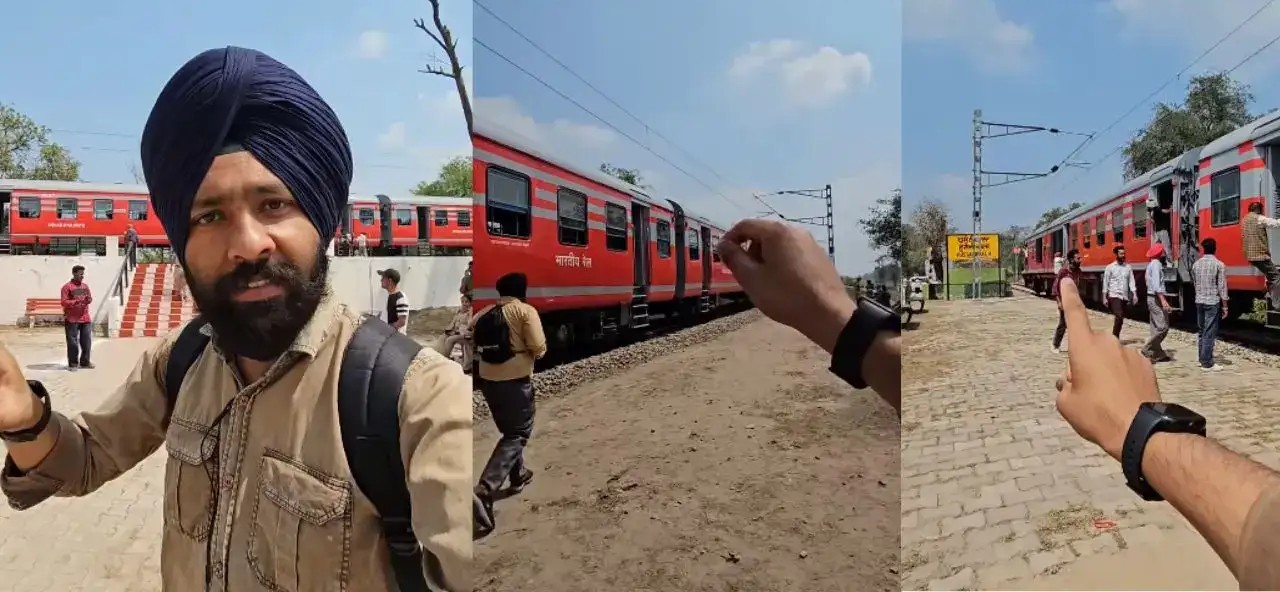
New Delhi, March 25, 2026: A significant wave of digital curiosity and national pride has been triggered across India following the emergence of a truly unique railway story. In a video that gained massive traction on March 25, 2026, a station was observed sitting in complete silence, surrounded by overgrown tracks and empty platforms. It is noted that the Hussainiwala Railway Station, located near the Indo-Pak border in Punjab’s Firozpur district, remains deserted for 363 days of the year. This startlingly quiet landmark has been widely shared as a primary example of a station that exists not for daily commerce, but for historical remembrance.
The Mechanics of the “Two-Day” Schedule
The specifics of the train schedule are being meticulously discussed by travel enthusiasts who were stunned to learn the reason behind the station’s inactivity. It is observed in the viral reports that a special train is operated by Northern Railways to this station on only two specific dates: March 23 and April 13. It is reported by several digital observers that March 23 marks “Shaheedi Diwas” (Martyrs’ Day), while April 13 coincides with the festival of Baisakhi. The visual of a lone train arriving at a “dead-end” track—where the rails literally stop near the border—has provided a grounding narrative for the station’s role as a gateway to India’s revolutionary history.
Also Read: The Truth Behind Michelle Duggar’s Confrontation with a Reporter
Honoring the Legends: Bhagat Singh, Rajguru, and Sukhdev
A massive conversation regarding “patriotism” and “sacrifice” has been ignited by the historical significance of the March 23 service. It is noted that the Hussainiwala border is the site where the mortal remains of legendary freedom fighters Bhagat Singh, Rajguru, and Sukhdev were unceremoniously cremated by the British in 1931. Thousands of analytical comments have been left by citizens who expressed that the special train allows thousands of pilgrims and patriots to reach the National Martyrs Memorial. It is believed that the viral nature of this specific “Hussainiwala Video” will prompt a dialogue on preserving such sacred sites within the railway network.
Baisakhi: A Celebration of Harvest and Faith
The impact of this viral event has extended to highlight the spiritual and cultural importance of the April 13 service. It is frequently mentioned by local historians that Baisakhi holds deep significance in the Punjab region, and the special train service ensures that the local community can gather at the border for traditional celebrations. A renewed sense of interest in “last-mile” connectivity to border regions has been observed among younger viewers who were previously unaware of this rare rail route. It is noted that for the rest of the year, the station master’s cabin and the ticket counters remain locked, serving as a silent witness to the peaceful border landscape.
A Stark Reminder of India’s Resilient History
As the footage continues to accumulate millions of views in late March 2026, it serves as a powerful and resilient reminder that some journeys are measured by emotion rather than distance. It is believed that the account of the “Two-Day Train” will remain a primary highlight of the month’s most discussed and socially impactful travel features. The legacy of this viral event is expected to be a heightened public awareness of the quiet sacrifices that define the nation’s borders. Until the next March 23 rolls around, the Hussainiwala station remains a stark testament to the fact that even a deserted platform can hold the weight of a billion hearts.