

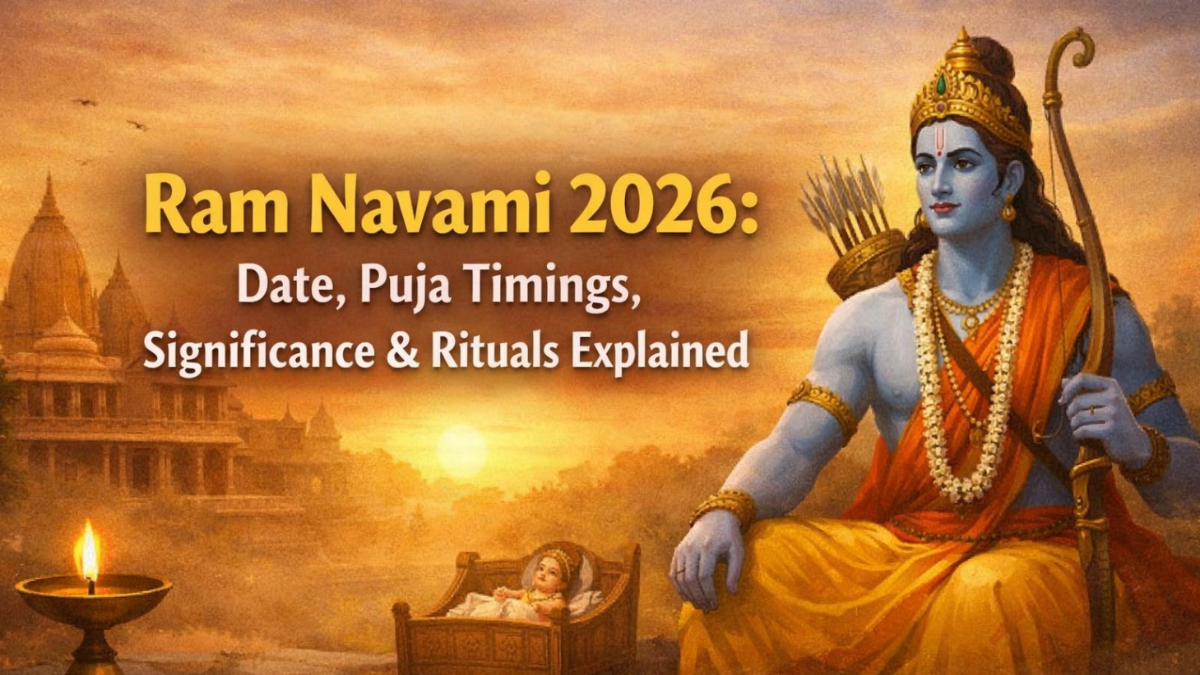
New Delhi, March 25, 2026: The auspicious festival of Ram Navami, celebrating the birth of Lord Shri Ram, the seventh avatar of Lord Vishnu, is set to be observed with grand fervor across the globe in 2026. As the concluding day of Chaitra Navratri, this day holds immense spiritual significance for millions of devotees.
In 2026, there is a slight overlap in the lunar calendar, leading to discussions about the exact date. Here is your comprehensive guide to the confirmed dates, auspicious timings, and traditional rituals.
Ram Navami 2026: Confirmed Date and Tithi
According to the Hindu Panchang, Ram Navami falls on the Navami Tithi of the Shukla Paksha in the month of Chaitra.
- Primary Date of Celebration: Thursday, March 26, 2026
- Vaishnava Ram Navami: Friday, March 27, 2026
While the Tithi begins on March 26, it extends into the morning of March 27. However, since Lord Ram was born during the Madhyahna (midday) period, the majority of devotees and households will observe the festival on March 26, as the crucial birth muhurat falls on this day.
Shubh Muhurat and Puja Timings
For those performing the puja at home or visiting temples, the Madhyahna Muhurat is the most sacred window. It is believed that the Sun is at its peak during this time, symbolizing the divine radiance of Shri Ram.
| Event | Date | Timing |
| Navami Tithi Begins | March 26, 2026 | 11:48 AM |
| Navami Tithi Ends | March 27, 2026 | 10:06 AM |
| Ram Navami Puja Muhurat | March 26, 2026 | 11:13 AM to 01:41 PM |
| Madhyahna (Birth) Moment | March 26, 2026 | 12:27 PM |
Ritual Guide: How to Celebrate Ram Navami
The celebration of Ram Navami is a blend of devotion, discipline, and charity. Here is a step-by-step ritual guide:
1. Morning Purification
Devotees wake up before sunrise (Brahmamuhurta), take a holy bath, and clean their puja room. Wearing clean, preferably yellow or white attire is considered auspicious.
2. Shodashopachara Puja
Place an idol or frame of the Ram Darbar (Lord Ram, Sita Mata, Lakshman, and Hanuman) on a decorated pedestal. Perform the puja by offering:
- Flowers: Specifically yellow flowers or lotus.
- Incense & Diya: Light a ghee lamp to signify the removal of darkness.
- Abhishek: Ceremonially bathe the idol with Panchamrit (a mix of milk, curd, honey, sugar, and ghee).
3. Recitation of Holy Texts
Reading the Ramcharitmanas or the Valmiki Ramayana is a core tradition. Many households organize a Sunderkand Path or chant the Ram Raksha Stotra to seek protection and peace.
4. Kanya Pujan
Since Ram Navami marks the end of Chaitra Navratri, many families perform Kanya Pujan. Nine young girls (representing the nine forms of Goddess Durga) are invited home, their feet are washed, and they are served a traditional meal of Halwa, Poori, and Chana.
5. Bhog and Prasad
The traditional prasad for Ram Navami often includes:
- Panakam: A cooling drink made of jaggery, pepper, and cardamom (popular in South India).
- Neer Mor: Spiced buttermilk.
- Kosambari: A lentil-based salad.
- Sattvic Meals: Food prepared without onion or garlic.
Significance of the Festival
Lord Ram is revered as Maryada Purushottam, the supreme man who lived a life of perfect adherence to Dharma (righteousness) despite facing immense personal hardships.
Celebrating his birth is not just a religious ritual but a reminder to uphold truth, fulfill one’s duties, and practice compassion. In Ayodhya, the birthplace of Lord Ram, the celebrations are particularly spectacular, featuring grand processions (Shobha Yatras) and a divine “Surya Tilak” ceremony where sunlight is directed onto the forehead of the idol.