

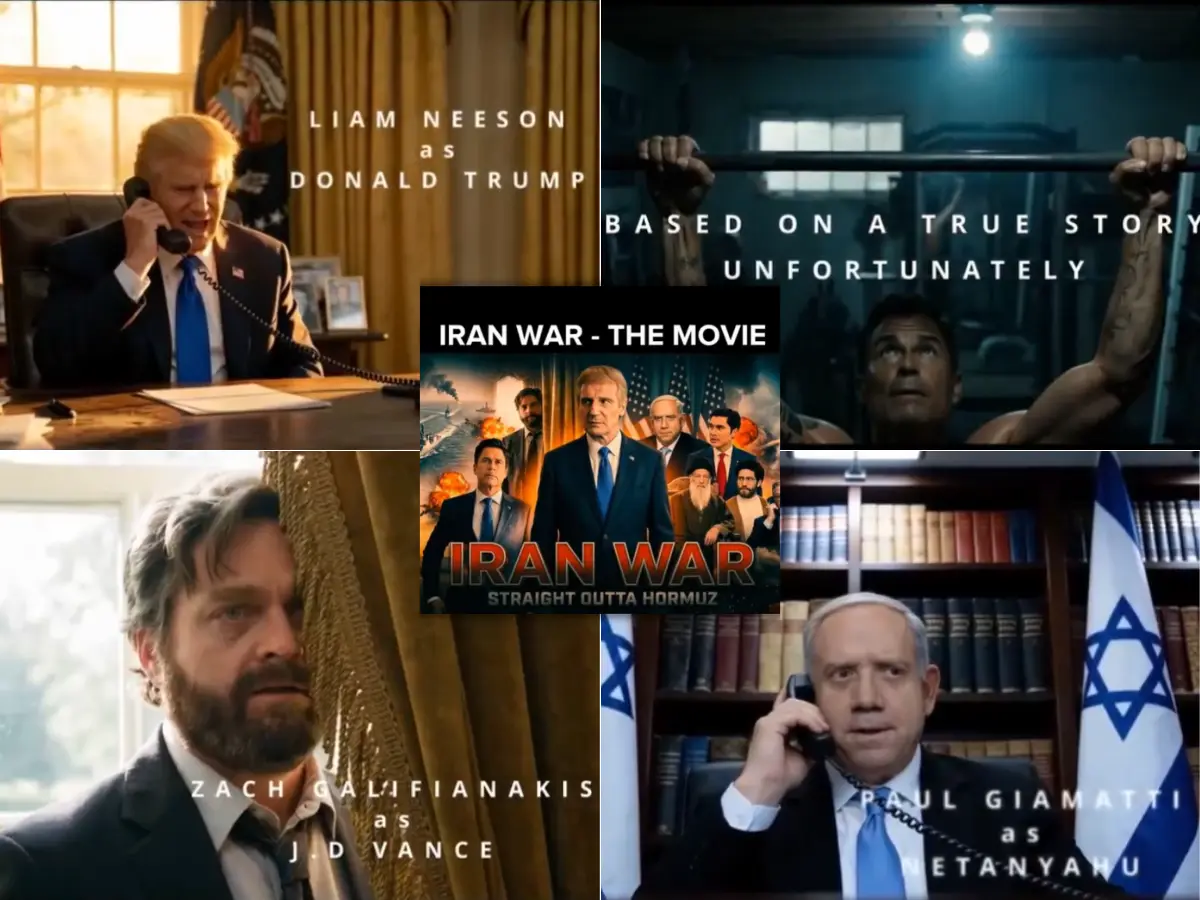
New Delhi, March 26, 2026: A significant wave of digital confusion and high-octane propaganda has been triggered across social media platforms following the emergence of “war promo” style videos. In several clips that gained massive traction by March 26, 2026, real-life combat footage from the ongoing U.S.-Iran conflict is observed being spliced with cinematic action sequences. It is noted that these videos often feature Hollywood-style editing, fast-paced music, and even voiceovers that mimic movie trailers. This startlingly stylized portrayal of violence has been widely shared as a primary example of how modern warfare is being “gamified” for a digital-first audience.
The Mechanics of “Epic” Misinformation
The specifics of the trend involve the heavy use of declassified military imagery mixed with clips from popular video games like Call of Duty and Grand Theft Auto. It is reported by several digital observers that even official channels, including White House social media feeds, have been observed releasing “pumped-up” montages that combine missile strikes with movie hero icons. It is noted in the viral reports that this “fiction-meets-reality” approach is specifically designed to resonate with younger, tech-savvy demographics. The visual of real explosions being treated as “level-ups” in a digital game has provided a grounding narrative for a heated debate on the ethics of war promotion.
Also Read: Security Guard Grooving to ‘Baby Doll’ Wins the Internet
Experts Warn of the “SpongeBob” Effect
A massive conversation regarding “sensationalism” and “trivialization” has been ignited by the inclusion of bizarre pop-culture references in combat videos. In one widely critiqued clip, the cartoon character SpongeBob SquarePants was observed being spliced between images of buildings being struck by bombs. It is frequently mentioned by media critics that this “entertainment-first” approach treats human suffering as a mere backdrop for social media content. Thousands of analytical comments have been left by netizens who expressed that the line between a serious geopolitical crisis and a “viral movie” has been dangerously blurred by these AI-enhanced edits.
Impact on the 2026 Information Black Box
The impact of this viral event has extended beyond the screens to influence a broader discussion on the 2026 “Black Box” of wartime reporting. It is observed that due to internet blackouts in Iran and military censorship in the West, the public is often left with only these “action-movie” snippets to understand the conflict. A renewed sense of scrutiny is being observed toward social media “super-spreaders” who use AI to fabricate evidence of sinking aircraft carriers or downed fighter jets. It is believed that the viral nature of “Iran War – The Movie” will prompt a dialogue on the necessity of independent, non-sensationalized journalism in an age where algorithms prioritize drama over truth.
A Stark Reminder of Real-World Costs
As the footage continues to accumulate millions of views in late March 2026, it serves as a powerful and resilient reminder that behind the “special effects” are real lives and global stability at stake. It is believed that the account of the “Social Media War Promo” will remain a primary highlight of the month’s most discussed and socially critical media news features. The legacy of this viral event is expected to be a heightened public awareness regarding the manipulation of combat data for entertainment. Until the “play” button is replaced by a focus on peace, these videos remain a stark testament to the fact that in 2026, the first casualty of war is often the reality of the war itself.