

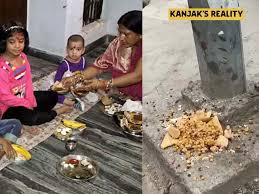
New Delhi, March 27, 2026: A significant wave of digital introspection and cultural concern has been triggered across India following the circulation of a deeply unsettling video during the Chaitra Navratri 2026 celebrations. In the footage, which gained massive traction on March 27, 2026, several young girls were observed discarding traditional “Prasad” into dustbins and street corners immediately after leaving devotees’ homes. It is noted that the food, consisting of sacred puri, chana, and halwa, was reportedly abandoned in favor of the monetary offerings, or “Dakshina,” received during the ritual. This startlingly wasteful display has been widely shared as a primary example of how ancient traditions are being impacted by a modern shift toward materialism.
The Mechanics of “Monetary-First” Worship
The specifics of the incident were meticulously documented by a frustrated devotee who was observed questioning the children about their behavior. It is reported by several digital observers that the kids were seen openly admitting they “only came for the money” and had no interest in the sanctified meal provided. It is observed in the viral reports that the ritual of Kanya Pujan, which is meant to honor young girls as embodiments of Goddess Durga, was reduced to a transactional exchange in this specific instance. The visual of heaps of fresh, untouched food lying in the dirt has provided a grounding narrative for the thousands of “spiritual decay” comments currently dominating the internet.
Also Read: Viral Video of ₹9000 School Stationery Bill
A Debate on Parenting and Values
A massive conversation regarding “upbringing” and “the loss of Sanskar” has been ignited by the viral nature of this specific encounter. It is frequently mentioned by netizens that the greed observed in such young children is often a direct reflection of the values being taught—or ignored—at home. Thousands of analytical comments were left by viewers who argued that the sanctity of the festival is being diluted by parents who encourage their children to treat the ritual as a “money-making opportunity.” The act is being widely discussed as a sobering reminder that without the teaching of respect and gratitude, the physical ritual becomes an empty, and even disrespectful, gesture.
Impact on the 2026 Navratri Discourse
The impact of this viral event has extended beyond social media to influence a broader discussion on the 2026 “Mindful Celebration” movement. It is observed by cultural scholars that the excessive focus on cash offerings is creating a disconnect from the actual intent of feeding the needy and honoring the feminine divine. A renewed sense of scrutiny is being observed toward how “Dakshina” is distributed, with many suggesting that gifts should be shifted toward books, stationery, or clothes to discourage a purely cash-driven mindset. It is believed that the viral nature of this specific “Food Waste” video will prompt a dialogue on the necessity of returning to the core values of devotion and humility.
A Stark Reminder of Wasted Blessings
As the footage continues to accumulate millions of views on March 27, 2026, it serves as a powerful and resilient reminder that true worship cannot be bought with a ten-rupee note. It is believed that the account of the “Discarded Prasad” will remain a primary highlight of the month’s most discussed and socially critical religious news features. The legacy of this viral event is expected to be a heightened public awareness regarding the ethical responsibilities of both the giver and the receiver during sacred festivals. Until a shift in perspective occurs, this video remains a stark testament to the fact that when greed takes center stage, the soul of the tradition is often left in the trash.