

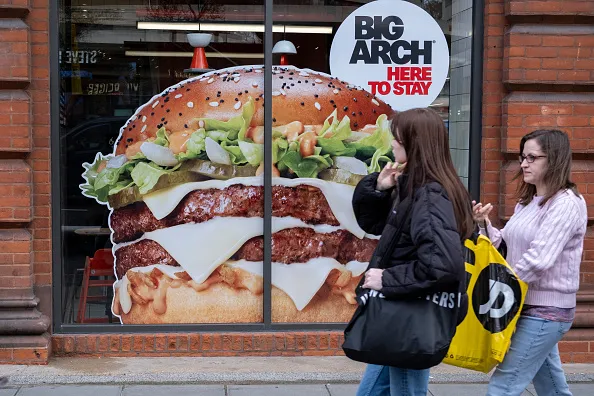
New Delhi, March 28, 2026: The internet has recently been dominated by a peculiar video of McDonald’s CEO Chris Kempczinski, whose attempt to “humanize” the brand’s newest menu item, the Big Arch burger, has become an unintended masterpiece of corporate awkwardness. In the clip, the executive is seen taking a notably small, hesitant bite of the 1,000-calorie “product”—a term he used repeatedly to describe the food. While the video was immediately seized upon by meme-makers and rival brands for its perceived lack of authenticity, it has raised a serious question in the marketing world: Can mockery actually drive revenue?
The “stiffness” of the delivery was quickly parodied by TikTok creators and comedians, turning what was meant to be a polished advertisement into a viral comedy sketch. It is observed that social media audiences, particularly Gen Z, have a high sensitivity to “corporate-speak.” When a burger is referred to as a “product” rather than a meal, the resulting backlash is often swift. However, this wave of digital ridicule has inadvertently provided McDonald’s with a level of organic reach that a traditional campaign could rarely achieve.
The Multimillion-Dollar Mockery
While the CEO’s demeanor was labeled as a “red flag” by some critics, the financial metrics tell a much more optimistic story for the Golden Arches. It is estimated by advertising analysts at Apex Marketing that the viral buzz surrounding the video has generated over $18 million in brand value within the month of March 2026 alone. This “earned media” is effectively free advertising, as millions of people who might have ignored a standard commercial were drawn into the conversation to see what the fuss was about.
The impact on actual sales is also being reported as a net positive, despite the cynical online commentary. Early data from the week of the Big Arch’s U.S. launch on March 3 suggests that foot traffic increased by approximately 2.2%. McDonald’s spokespeople have confirmed that early sales of the new burger are “beating expectations,” proving that a consumer doesn’t necessarily need to like the CEO to want to try the cheese-laden “product” he was holding.
Also Read: Rishab Shetty Unfollows Kantara Co-Stars; Rift Rumors Swirl in Sandalwood
A New Era of “Unintentional” Marketing
The success of the Big Arch launch is being compared to the 2023 Grimace Shake trend, where “absurdist humor” was leveraged to drive record-breaking quarterly sales. It is argued by industry experts that in the current attention economy, being “cringey” is often more effective than being invisible. Even as rival fast-food chains joined in the trolling, they were inadvertently helping to keep the McDonald’s brand at the forefront of the consumer’s mind.
The takeaway for corporate leadership in 2026 is clear: perfection is no longer the goal for social media content. While the “Big Arch” video may not have been a masterclass in charisma, it successfully turned a routine product launch into a global cultural moment. As long as the burgers continue to sell, the memes are simply a delicious side order for the company’s bottom line.