

New Delhi, April 6, 2026 — In a society where divorce is often whispered about in hushed tones or viewed through a lens of communal pity, a retired judge in Meerut has turned the tide by celebrating his daughter’s legal separation with the same pomp and grandeur usually reserved for weddings.
The event, complete with a brass band, firecrackers, and the distribution of sweets, has gone viral, sparking a nationwide conversation about reclaiming dignity after a failed marriage.
A “Homecoming” to Remember
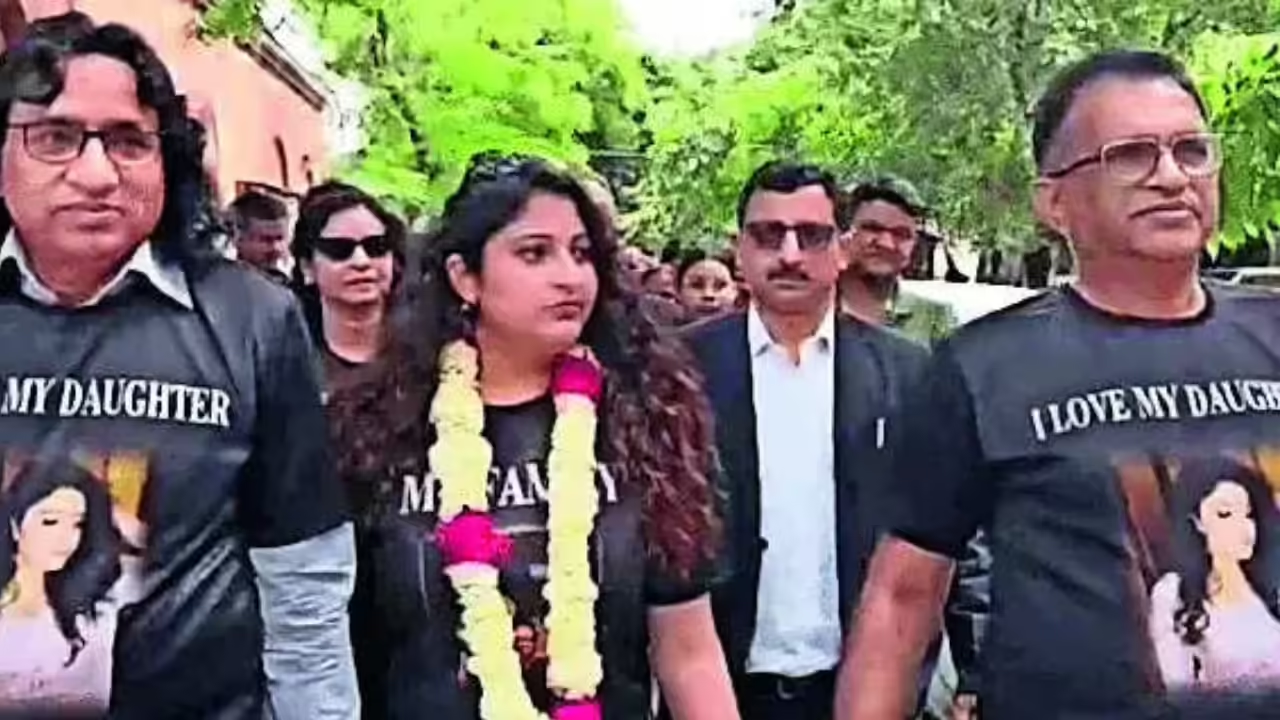
Prem Chandra Gupta, a retired judge, made headlines when he decided that his daughter’s return to her paternal home should not be a moment of mourning, but a celebration of her liberation. As his daughter, Dr. Anshu, walked back into her childhood home after finalizing her divorce, she was greeted by the rhythmic beats of a traditional dhol and a shower of flower petals.
“If we celebrate our daughters’ weddings with such joy, why should we hide them in shadows when they escape a toxic or unhappy situation?” Gupta remarked to local reporters. “A daughter’s happiness is more important than ‘what people will say.'”
Choosing Dignity Over “Log Kya Kahenge”
The marriage, which reportedly faced significant challenges, had become a source of distress for the family. Rather than encouraging his daughter to “compromise” or “endure”—advice often given to women in traditional setups—Gupta supported her legal battle for independence.
The “Divorce Baraat” featured:
- A Grand Procession: A musical band led the way as the family walked through the neighborhood.
- Sweet Distribution: Neighbors and relatives were given boxes of laddoos to mark the “new beginning.”
- Public Pride: The family stood tall, signaling to the community that there is no shame in choosing one’s mental health over a broken contract.
Redefining Social Norms
Social media has reacted with overwhelming support for the retired judge’s bold stance. While India has seen a gradual shift in how divorce is perceived, the “celebration” aspect is a radical departure from the norm.
For Dr. Anshu, the gesture was more than just a party; it was a powerful affirmation of her worth. By treating her return as a “Ghar Wapsi” (homecoming), her father has provided a blueprint for other parents on how to provide emotional scaffolding for their children during life’s most difficult transitions.
A Message to Society
The image of a father dancing in front of his daughter’s divorce procession serves as a poignant critique of the “Log Kya Kahenge” (What will people say?) culture that often traps individuals in abusive or stagnant relationships.
As the video continues to circulate, it stands as a testament to a changing India—one where the sanctity of an individual’s well-being is beginning to outweigh the rigid, often suffocating, expectations of tradition. In Meerut, at least for one family, the end of a marriage wasn’t the end of a life; it was the exuberant start of a brand-new chapter.