
 continue to be a cornerstone of the Indian household)
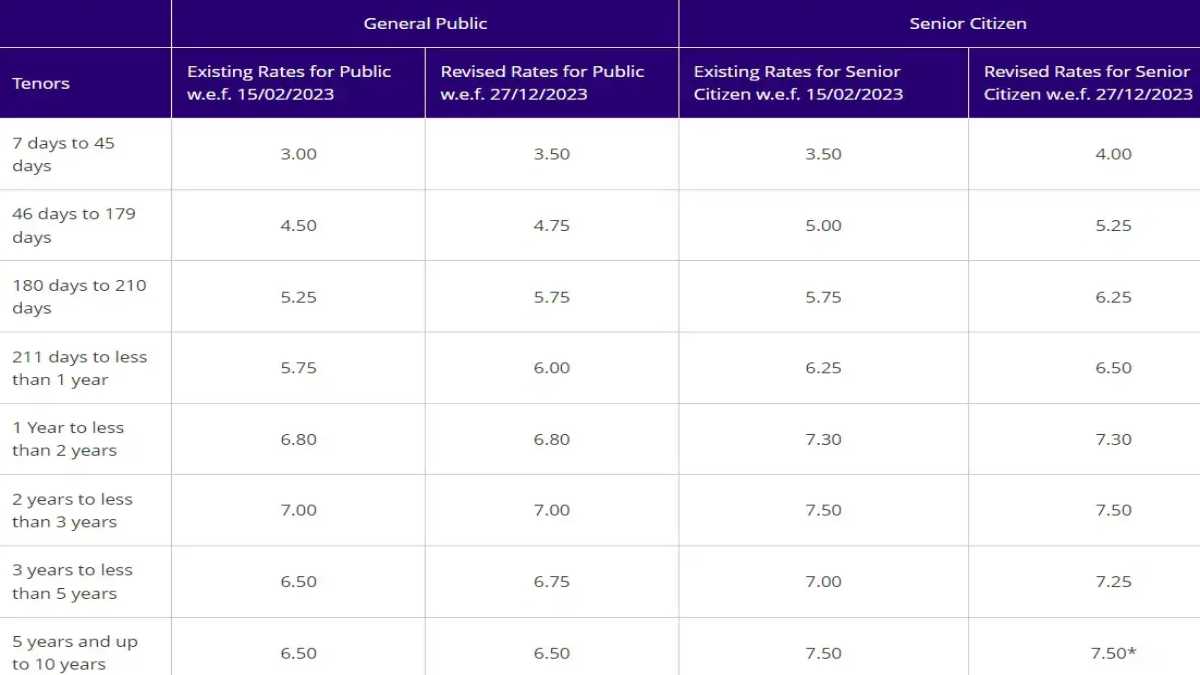
New Delhi, April 9, 2026: As we enter the first quarter of the 2026-27 financial year, fixed deposits (FDs) continue to be a cornerstone of the Indian household’s investment strategy. Following the Reserve Bank of India’s (RBI) Monetary Policy Committee meeting in April 2026, where the repo rate was held steady at 5.25%, banks have calibrated their interest offerings to balance liquidity needs with investor expectations.
While the aggressive rate hikes seen in previous years have stabilized, several banks are still offering competitive “special tenures” to attract retail depositors. Here is a comprehensive look at the FD interest rates for eight major banks as of April 2026.
1. State Bank of India (SBI)
India’s largest lender continues to offer stable returns, particularly through its popular “Amrit Vrishti” scheme.
- General Public: 3.05% to 6.45%
- Senior Citizens: 3.55% to 7.05%
- Highlight: The 444-day tenure remains the highest-yielding slab for retail investors at 6.45%.
2. HDFC Bank
HDFC Bank has maintained its rates after a slight revision earlier this year, focusing on the 18-month to 5-year brackets.
- General Public: 3.00% to 6.50%
- Senior Citizens: 3.50% to 7.10%
- Highlight: The bank offers its peak rate of 6.50% on tenures ranging from 3 years to 5 years.
3. ICICI Bank
ICICI Bank remains a top choice for digital-first savers, with competitive rates for mid-term deposits.
- General Public: 3.00% to 6.50%
- Senior Citizens: 3.50% to 7.10%
- Highlight: Deposits for tenures of 15 months to less than 2 years are currently seeing the most traction.
4. Axis Bank
Axis Bank has aligned its rates closely with its private-sector peers but offers slightly better incentives for long-term “tax-saver” FDs.
- General Public: 3.00% to 6.60%
- Senior Citizens: 3.50% to 7.35%
- Highlight: Senior citizens can avail of a premium rate of 7.35% on specific mid-term tenures.
5. Punjab National Bank (PNB)
Among public sector banks, PNB is offering some of the most aggressive rates to shore up its deposit base.
- General Public: 3.50% to 6.40%
- Senior Citizens: 4.00% to 6.90%
- Highlight: The 390-day special tenure offers the best return for regular depositors at 6.40%.
6. Bank of Baroda (BoB)
Bank of Baroda’s “bob Square Drive” scheme is a standout for those looking for a tenure of approximately 14 months.
- General Public: 4.25% to 6.45%
- Senior Citizens: 4.75% to 6.95%
- Highlight: The 444-day tenure offers a competitive 6.45% for the general public.
7. Kotak Mahindra Bank
Kotak is focusing on the “sweet spot” of 390 days to 23 months to compete with larger private players.
- General Public: 2.75% to 6.70%
- Senior Citizens: 3.25% to 7.20%
- Highlight: It offers a robust 6.70% for regular citizens on tenures of 390 days to less than 2 years.
8. Yes Bank
Yes Bank continues to offer slightly higher yields compared to the “Big Three” to attract retail liquidity.
- General Public: 3.25% to 7.00%
- Senior Citizens: 3.75% to 7.50%
- Highlight: One of the few private banks still offering 7.00% to the general public on tenures of 18 months and above.
Summary Table: At a Glance
| Bank | Highest Rate (General) | Highest Rate (Seniors) |
| SBI | 6.45% | 7.05% |
| HDFC Bank | 6.50% | 7.10% |
| ICICI Bank | 6.50% | 7.10% |
| Axis Bank | 6.60% | 7.35% |
| PNB | 6.40% | 6.90% |
| Bank of Baroda | 6.45% | 6.95% |
| Kotak Mahindra | 6.70% | 7.20% |
| Yes Bank | 7.00% | 7.50% |
Investor Takeaway
With inflation remaining a key concern, investors should look beyond the headline rates. Factors such as compounding frequency, premature withdrawal penalties, and DICGC insurance (which covers up to ₹5 lakh per bank) should guide your decision. For those in higher tax brackets, the post-tax yield on these FDs may be lower, making tax-saving FDs under Section 80C (with a 5-year lock-in) a viable alternative.