

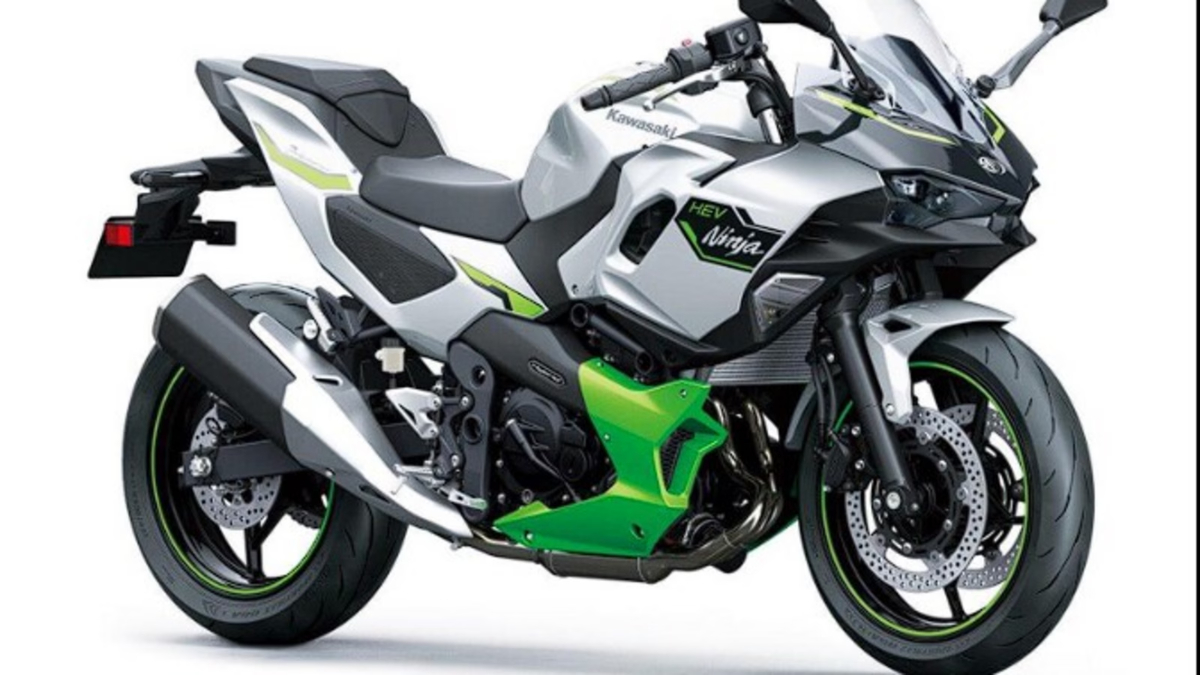
New Delhi, April 9, 2026: Kawasaki has officially announced a series of strategic updates for its pioneering strong-hybrid lineup, the Ninja 7 Hybrid and the Z7 Hybrid. While these motorcycles already made history as the first mass-produced strong hybrids in the world, the 2026 updates focus on “real-world practicality”—addressing specific feedback from riders and media to make the transition between electric and internal combustion power more seamless and intuitive.
Bridging the Urban Gap: Enhanced EV Transition
The most significant update concerns the EV Mode speed threshold. Previously, riders were limited to a maximum speed of 25 km/h (approx. 16 mph) when switching from the all-electric EV mode to Hybrid mode while on the move. Many users found this ceiling too restrictive for modern urban environments, where average traffic flow often exceeds these speeds even in congested areas.
In response, Kawasaki has recalibrated the ECU (Electronic Control Unit) to raise this limit to 60 km/h (approx. 37 mph). This change is a game-changer for city commuting. It allows riders to stay in whisper-quiet, zero-emission EV mode through residential zones and slow-moving traffic, then seamlessly engage the 451cc parallel-twin engine as they merge into faster city lanes without having to slow down or navigate complex menus.
Automated Performance: Sport Mode Evolution
Kawasaki’s hybrid system is unique for its 6-speed Automated Manual Transmission (AMT), which eliminates the traditional clutch lever and foot shifter. In earlier versions, the high-performance Sport-Hybrid Mode was strictly tied to manual shifting via the handlebar-mounted paddles.
The 2026 update introduces Automatic Transmission (AT) functionality to the Sport Mode. This means riders can now enjoy the aggressive throttle response and full combined power of the electric motor and petrol engine—including the famous e-boost feature—without the need to manually toggle gears. Whether you are navigating a series of quick corners or simply want a hands-off, high-performance highway experience, the bike’s proprietary logic now handles the shifts automatically even in its most potent setting.
Core Technology Remains Solid
While the software and usability have been polished, the core mechanical foundation remains unchanged. Both bikes continue to utilize:
- A 451cc Parallel-Twin Engine: Derived from the Ninja 500/Eliminator platform.
- A 9kW Traction Motor: Powered by a 48V lithium-ion battery pack.
- e-boost Technology: A temporary power surge that provides acceleration comparable to a 1,000cc-class machine from a standing start.
- Walk Mode with Reverse: A crucial feature for maneuvering the 227kg machines in tight parking spaces.
Availability and Implementation
Perhaps the best news for current owners is that these improvements are primarily software-driven. Kawasaki has indicated that while the new 2026 models will come with these features pre-installed, existing owners can visit authorized dealerships to have their motorcycle’s ECU updated to the latest specifications.
By refining the logic behind the “Strong Hybrid” system, Kawasaki is moving beyond the “novelty” phase of hybrid motorcycling. These updates transform the Ninja 7 and Z7 Hybrid from technological showcases into highly practical, versatile machines capable of handling both the eco-conscious requirements of the city and the performance demands of the open road.