
 has always prided itself on being a "party with a difference," but recent internal tremors suggest it is grappling)
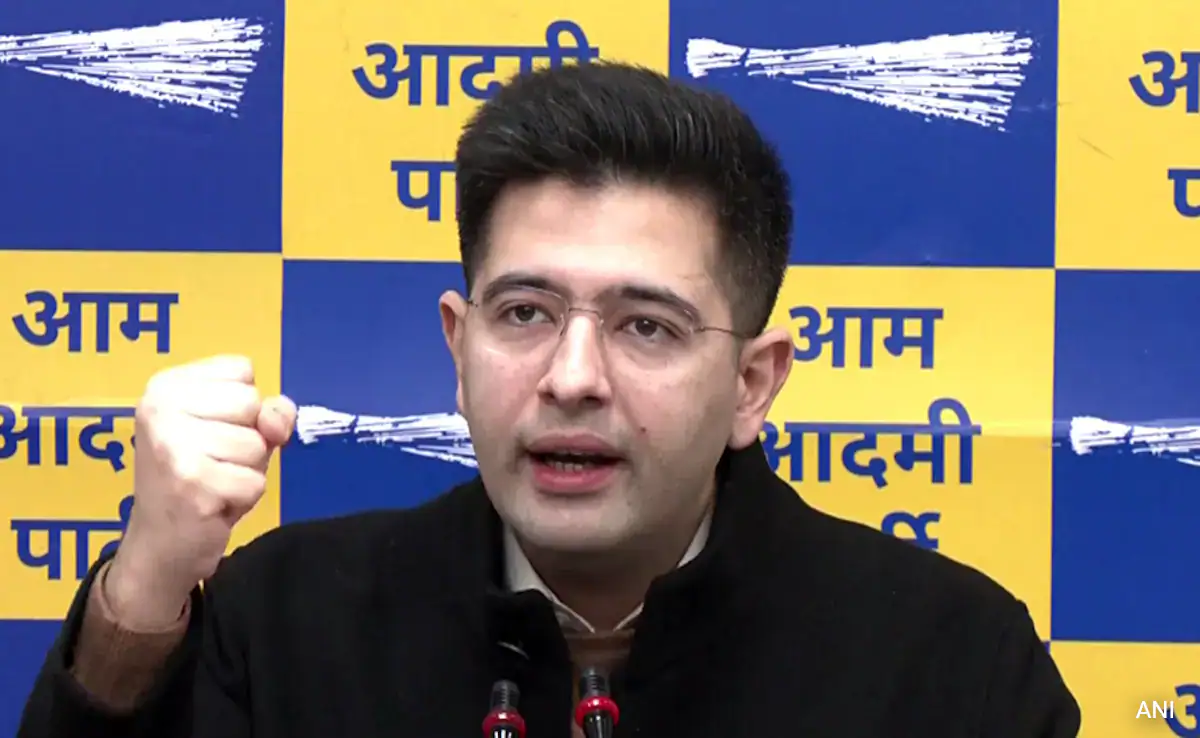
New Delhi, April 9, 2026: The Aam Aadmi Party (AAP) has always prided itself on being a “party with a difference,” but recent internal tremors suggest it is grappling with the same old-school power dynamics it once vowed to disrupt. At the center of this storm is Raghav Chadha—the young, articulate face of the party’s national aspirations—who now finds himself at a precarious political crossroads.
The recent decision by the AAP leadership to replace Chadha as its Deputy Leader in the Rajya Sabha with Ashok Mittal is more than just a routine organizational shuffle. It is a loud, symbolic demotion. Coupled with the party’s request to the Rajya Sabha Secretariat to deny Chadha speaking time from the party’s quota, the message is clear: the “blue-eyed boy” of the AAP has been effectively silenced within the halls of Parliament.
The Friction of Success
For years, Raghav Chadha was the quintessential AAP success story. A chartered accountant by profession, he brought a level of suave, data-driven advocacy to a party often defined by street protests. His fingerprints were all over the AAP’s historic 2022 victory in Punjab, where he was widely viewed as the de-facto architect of the campaign.
However, in politics, proximity to power often breeds friction. Reports from Punjab suggest that his perceived influence over the state administration—often described by critics as acting as a “Super CM”—created unease within the local leadership. When a leader becomes as visible as the party’s founder, the internal ecosystem often reacts with a “correction.”
A Silence That Speaks Volumes
The cracks began to show during the 2024 Lok Sabha elections. When Arvind Kejriwal and other top leaders were arrested in the Delhi excise policy case, Chadha’s absence—later attributed to an emergency eye surgery in London—raised eyebrows. In politics, perception is reality; his delayed response was seen by some as a tactical distancing from the party’s legal woes.
More telling was the silence that followed. In early 2026, when a Delhi court cleared Kejriwal and Manish Sisodia in the excise case, Chadha remained notably quiet on social media. While the rest of the party celebrated a “victory for truth,” their most articulate spokesperson was missing from the victory parade.
The “Common Man” vs. The National Face
The AAP’s current strategy appears to be a return to its grassroots, “common man” roots, focusing on governance in Delhi and Punjab. Meanwhile, Chadha has been focusing on high-level parliamentary interventions—raising issues like paid paternity leave, stock market erosion, and the “scam” of 28-day mobile recharge cycles.
While these issues resonate with the urban middle class, they seem increasingly disconnected from the party’s current defensive posture. By stripping him of his parliamentary role, the AAP leadership may be trying to ensure that no individual brand outshines the collective struggle of the party’s top brass.
What Lies Ahead?
Raghav Chadha now stands at a junction where every move will be scrutinized. He remains a member of the powerful Political Affairs Committee (PAC), but his wings have been clipped. History shows that the AAP has a low tolerance for internal dissent or perceived “over-ambition,” as seen in the exits of founding members like Yogendra Yadav and Prashant Bhushan.
Is Chadha being prepared for a different role, or is this the beginning of a final exit? For a party that is constantly evolving, the “Chadha case” is a test of its internal democracy. For Chadha, it is a test of his political resilience. Whether he can reinvent himself within the party or will eventually seek a new political home remains the most intriguing question in Indian politics today.