

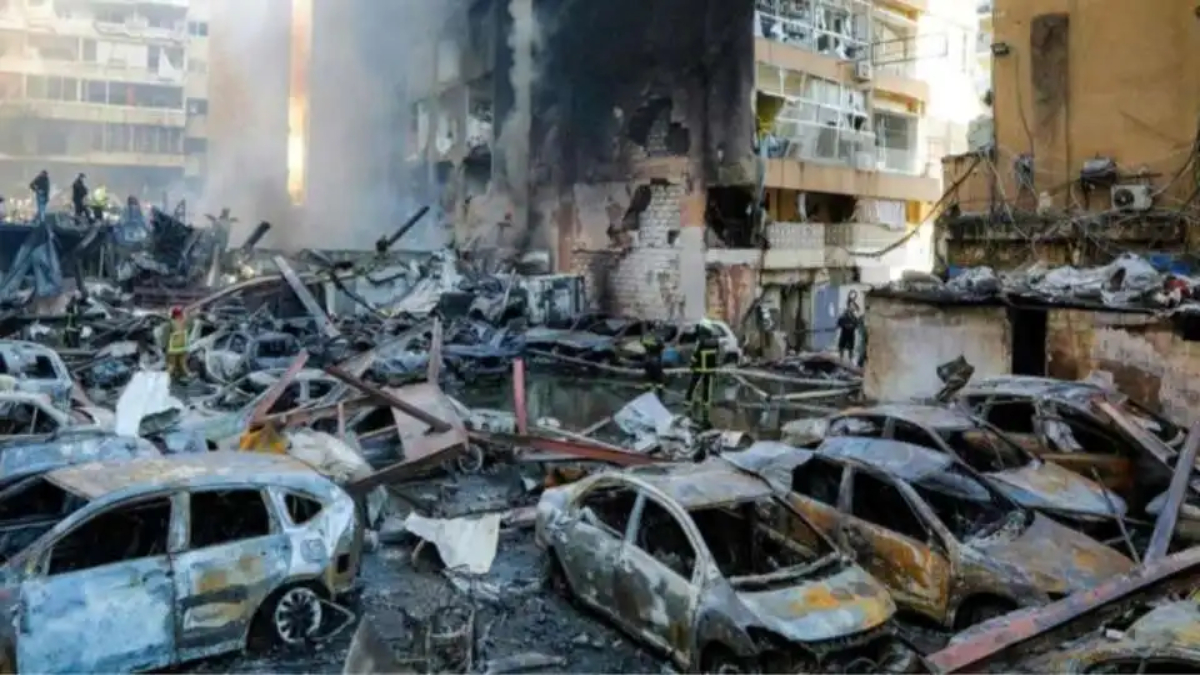
New Delhi, April 10, 2026 — A high-stakes diplomatic effort to end the 2026 Iran War is teetering on the brink of collapse this Friday. Just days after the United States and Iran agreed to a tentative two-week ceasefire, a massive wave of Israeli airstrikes across Lebanon has ignited a fresh crisis, threatening to derail face-to-face negotiations scheduled to begin today in Pakistan.
Operation “Eternal Darkness” Shatters the Calm
While the world watched for a de-escalation in the Persian Gulf, the Israel Defense Forces (IDF) launched Operation Eternal Darkness, described by observers as the most intense bombardment of Lebanon since the regional conflict ignited in February.
The strikes, which hit more than 100 targets in a span of just ten minutes, decimated neighborhoods in central Beirut, the Beqaa Valley, and the port city of Sidon. Lebanese health officials report a staggering toll:
- Fatalities: At least 303 people killed in the latest 48-hour window.
- Injuries: Upward of 1,160 wounded, flooding already strained medical centers.
- Displacement: Over 1.2 million people—roughly one-sixth of Lebanon’s population—are now displaced.
Israeli Prime Minister Benjamin Netanyahu has remained defiant, asserting that Lebanon was “never part of the ceasefire agreement” reached between Washington and Tehran. This stance stands in direct opposition to the framework proposed by the Pakistani mediators, who claimed the truce was intended to cover all regional fronts.
Tehran’s Ultimatum: “Negotiations are Meaningless”
The fallout from the Lebanon strikes has reached the highest levels of the Iranian government. In a post on social media, Iranian President Masoud Pezeshkian warned that continued Israeli aggression renders the upcoming diplomatic summit “meaningless.”
“Our hands remain on the trigger,” Pezeshkian stated. “Iran will never abandon its Lebanese brothers and sisters.”
The strategic consequences are already being felt at sea. Following the strikes on Beirut, Iran reportedly re-closed the Strait of Hormuz, a vital artery for 20% of the world’s oil and LNG supply. The move effectively nullifies a key pillar of the ceasefire agreement, which had promised the reopening of the waterway in exchange for a halt to U.S. and Israeli hostilities.
A Divided Washington: The “Low-Key” Approach
U.S. President Donald Trump, who initially signaled that the ceasefire did not apply to Lebanon, appears to be pivoting as the prospect of a total peace deal slips away. In a recent interview with NBC News, Trump indicated he had urged Prime Minister Netanyahu to “scale back” operations and “low-key it” to preserve the diplomatic track.
Despite the internal friction between Washington and Jerusalem, a high-level U.S. delegation led by Vice President JD Vance and special envoy Jared Kushner has arrived in Islamabad. They are set to meet with Iranian representatives for what is being called a “make-or-break” session for regional stability.
As the delegations sit down in Islamabad, the question remains whether a “comprehensive deal” can be salvaged while the skies over Lebanon remain filled with smoke and fire. For now, the “two-week peace” is a ceasefire in name only.