

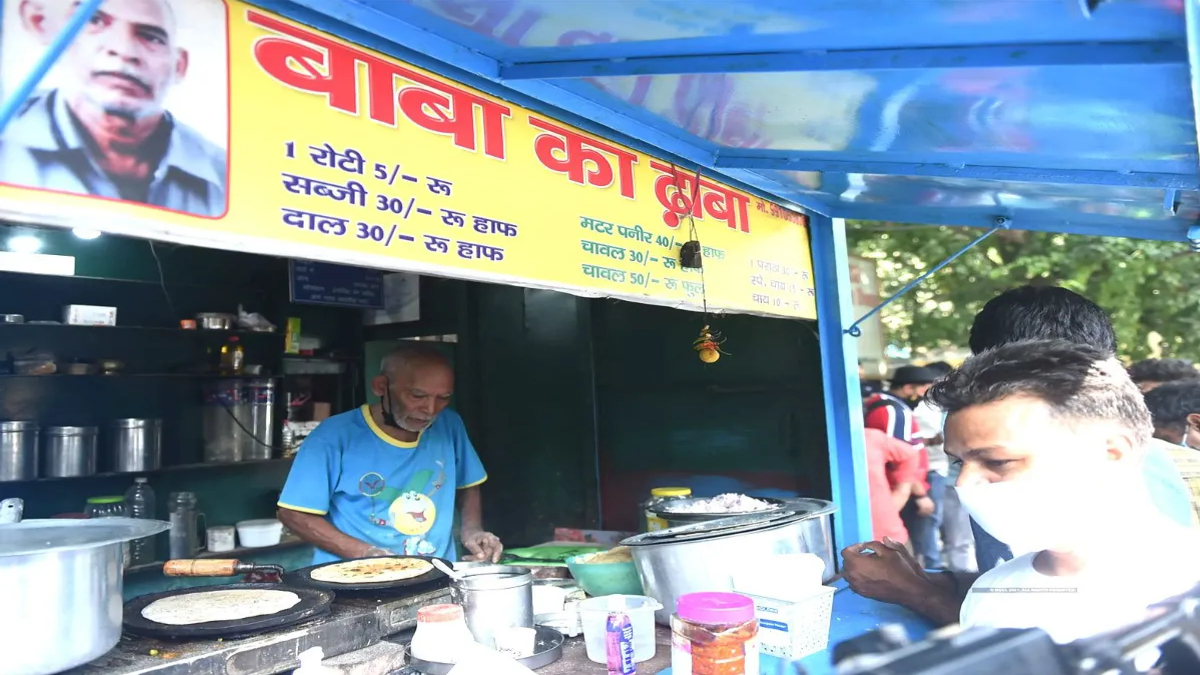
New Delhi, April 10, 2026: The story of “Baba Ka Dhaba” is one of the most poignant chapters in the history of Indian social media—a tale that began with a viral video of an elderly man’s tears and evolved into a complex narrative about fame, business, and the reality of the digital age.
If you are wondering what Kanta Prasad, the man behind the famous stall, is doing now in 2026, the answer is a sobering reminder that virality is often a fleeting guest.
From Roadside Stall to National Sensation
In late 2020, Kanta Prasad and his wife, Badami Devi, were struggling to sell even a plate of dal at their small kiosk in Malviya Nagar, Delhi. A video by food blogger Gaurav Wasan changed everything overnight. Within hours, thousands of people—from Bollywood celebrities to local foodies—lined up at the stall. Donations poured in, totaling nearly ₹42 lakh.
The Rise and Fall of the New Venture
With the newfound capital, Kanta Prasad attempted to scale up. In December 2020, he opened a full-scale restaurant in Malviya Nagar, complete with air conditioning, CCTV, and a staff of chefs. He transitioned from a street vendor to a business owner.
However, the transition was short-lived. By early 2021, the “viral crowd” had disappeared. High overhead costs, including a monthly rent of approximately ₹1 lakh and staff salaries, quickly drained the savings. By June 2021, the restaurant had permanently shuttered.
Where is Baba Now?
As of 2026, Kanta Prasad has come full circle. He is back at his original roadside stall in Malviya Nagar, where he first started.
- The Business: He and his wife continue to serve their signature home-style meals—dal, rice, and parathas—at the same modest prices.
- The Fallout: The era of heavy donations and media frenzy has long passed. While he initially faced a highly publicized legal dispute and a personal reconciliation with YouTuber Gaurav Wasan, the dust has settled on those controversies.
- A Quiet Life: After a traumatic period in 2021 that included a health crisis and a suicide attempt due to mounting stress and business failure, Prasad has chosen a quieter existence. He is focused on his daily work, reportedly stating that he is content with the kiosk that fed his family for decades before the internet ever knew his name.
The Lessons of “Baba Ka Dhaba”
For content creators and the public alike, the story of Baba Ka Dhaba remains a critical case study:
- Virality is Not Sustainability: A surge of internet traffic does not automatically translate into a successful long-term business model.
- The Weight of Fame: Sudden wealth and public scrutiny can be overwhelming for those unequipped to manage it, especially elderly citizens.
- Human Resilience: Despite the rollercoaster of becoming a “millionaire” and losing it all, Kanta Prasad’s return to his roots shows a remarkable resilience.
Today, if you visit Malviya Nagar, you won’t find a flashy restaurant or a media circus. You will find an 80-year-old man and his wife, working at their small blue-colored stall, proving that while fame is temporary, the dignity of labor remains constant.