

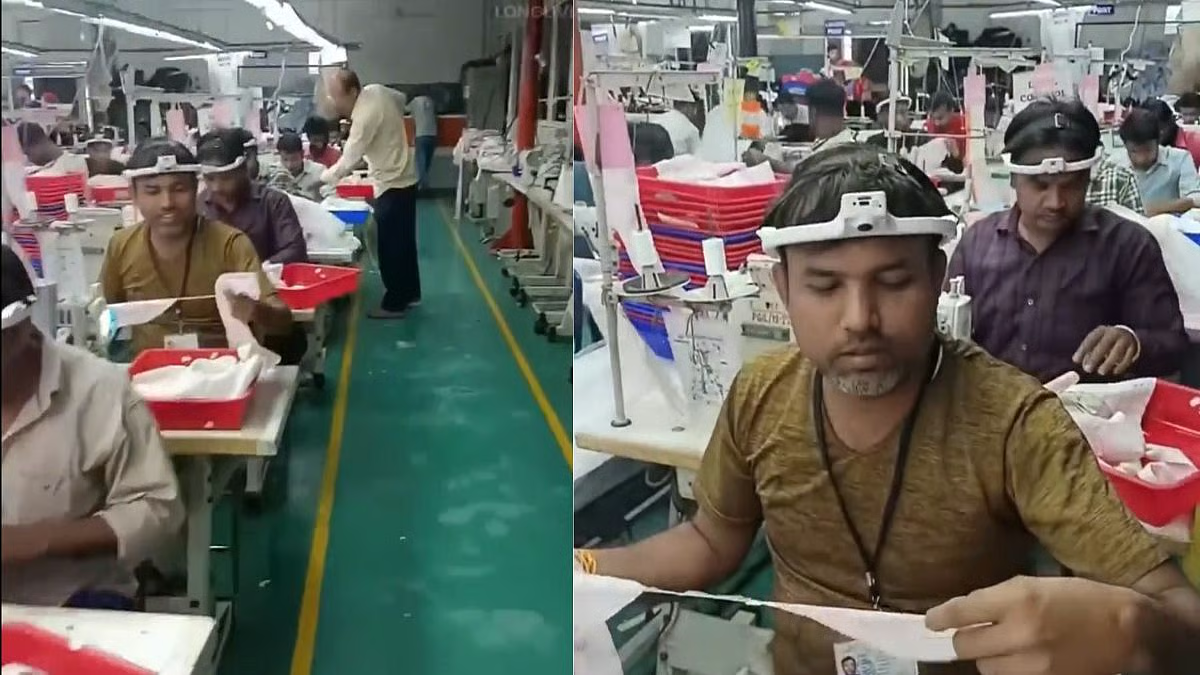
New Delhi, April 13, 2026: In recent months, viral videos originating from textile hubs like Tirupur and Bengaluru have flooded social media, showing rows of workers diligently stitching garments while wearing GoPro-like devices strapped to their foreheads. The footage has ignited a firestorm of debate, transforming a local industrial trend into a global symbol of “automation anxiety.”
As we move deeper into 2026, the story behind these cameras is not just about surveillance—it is about the “digitization of human skill” and the controversial race to build the next generation of humanoid robots.
The “Human-in-the-Loop” Revolution
To the casual observer, the cameras look like a tool for aggressive micromanagement. However, the reality is more complex and, for many, more unsettling. These workers are not just making shirts; they are providing first-person training data for Artificial Intelligence.
Manufacturing giants and AI startups are using this “egocentric” (point-of-view) footage to feed Large Behavior Models (LBMs). By recording exactly how a human hand maneuvers a delicate fabric or how a wrist flicks to align a seam, developers can teach robotic hands to replicate “fine motor skills”—the final frontier of automation that has historically eluded machines.
Why India?
India’s massive manufacturing sector offers a diverse “data library” of human movement. From intricate embroidery to high-speed assembly, the sheer variety of manual tasks provides the high-quality, high-volume data needed to train AI models like Claude Haiku 4.5 or specialized robotics frameworks.
The Growing Climate of Fear
The viral clips have triggered what experts call “Replacement Anxiety.” For decades, factory workers believed their jobs were safe because robots lacked the “touch” and “intuition” of a human. Now, workers are essentially being paid to document their own obsolescence.
“It’s like being asked to write the manual for the person who is going to fire you,” says one viral comment on Reddit’s r/Singularity community.
Critics argue that this creates a “double exploitation” scenario:
- Physical Labor: Workers continue their grueling shifts for standard wages.
- Intellectual Property: Their unique, lifetime-honed skills are being “harvested” as data, often without additional compensation or long-term job security.
Efficiency vs. Ethics: The Industry Defense
Industry leaders argue that this technology is essential for India to remain competitive against fully automated factories in China and the West. They frame head-mounted cameras as a tool for Quality Control and Skill Transfer.
| Feature | Claimed Benefit | Worker/Critic Concern |
| Data Capture | Preserves “master craftsman” techniques for future generations. | Used to train robots that will eliminate entry-level jobs. |
| Real-time Monitoring | Reduces errors and ensures 100% compliance with international standards. | Extreme pressure; “all-seeing” AI bosses flagging 30-second breaks. |
| Safety Training | Identifies dangerous hand movements to prevent workplace injuries. | Invasive surveillance that erodes dignity and privacy. |
In Bengaluru, some tech-forward factories have already integrated these cameras with AI monitors that track not just the work, but hygiene and “idle time.” While management calls this “optimization,” labor advocates call it a “digital sweatshop.”
The 2026 Outlook: A New Social Contract?
As the “India Smart Wearable Market” is projected to hit $3.62 billion this year, the use of industrial wearables is only going to expand. The conversation is now shifting from if this should happen to how it should be regulated.
Potential Solutions on the Horizon:
- Data Royalties: Some labor economists suggest workers should receive a “data dividend”—a small royalty every time the AI trained on their movements is used in a commercial robot.
- Skill Redirection: Using the same camera technology for Augmented Reality (AR) training, helping workers move from manual labor to “robot supervisor” roles.
- Privacy Laws: India’s evolving data protection framework may soon need to address “biometric movement data” to prevent companies from tracking emotional states or fatigue levels through head-mounted sensors.
The Bottom Line
The image of an Indian worker with a camera on their head is a stark reminder of the 2026 zeitgeist: the blurring line between human effort and machine learning.
While these cameras may indeed help produce “perfect” garments for the global market, they also capture the growing pains of a workforce standing at the edge of an automated cliff. Whether this leads to a more efficient “Human-AI” collaboration or a massive displacement of labor remains the defining question of the decade.