

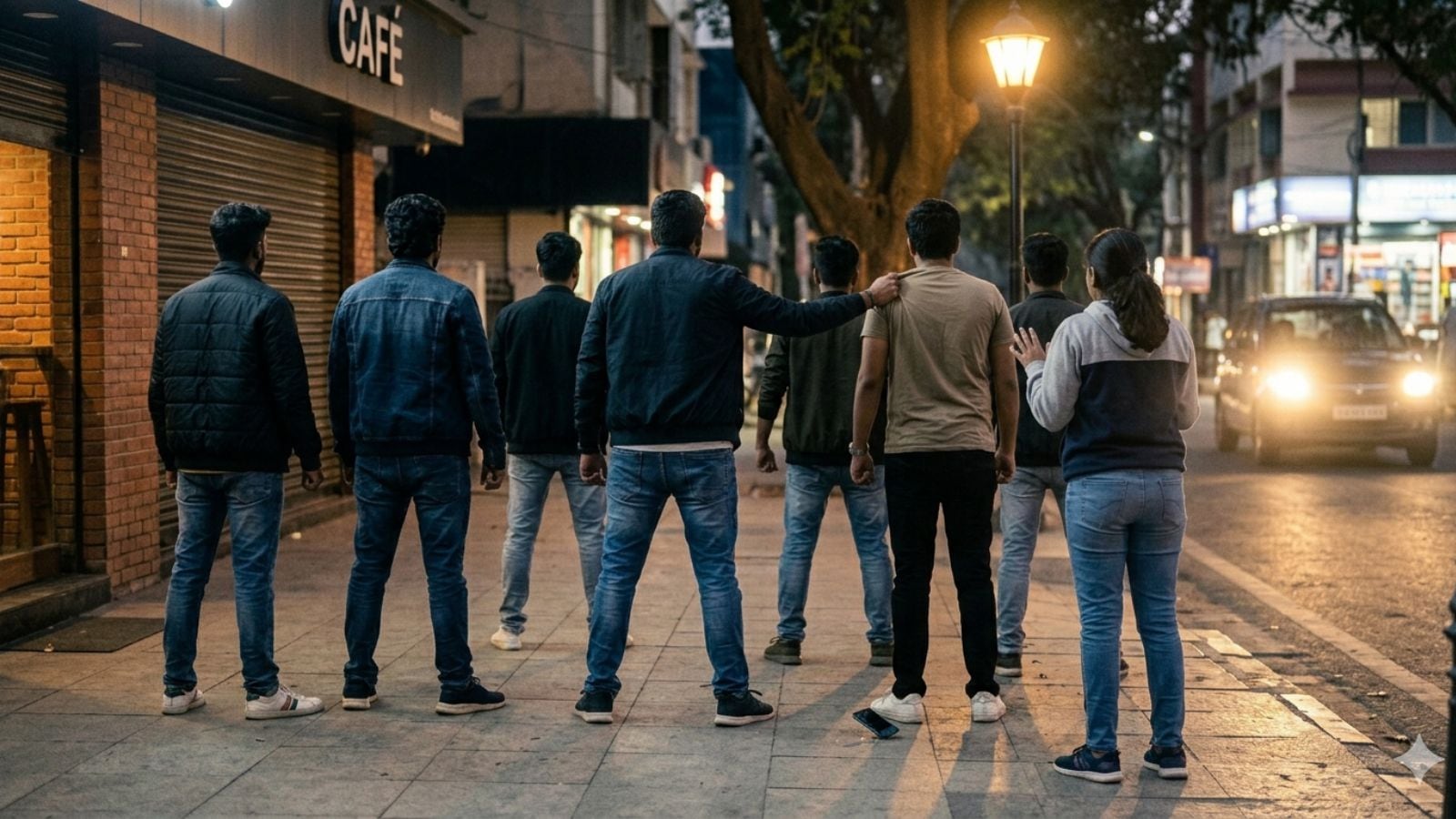
New Delhi, April 15, 2026: A shocking incident of mob violence was witnessed in the Kanaka Nagar area of Bengaluru recently, where a woman and two men were subjected to a physical assault by a group of local youths. The altercation is reported to have originated when the trio was observed smoking outside a cafe during the late hours of Sunday night. A viral video of the confrontation has since been widely circulated, depicting the group of seven to eight assailants chasing the victims onto the road and attacking them.
The footage, which was recorded by a nearby resident and shared on social media, shows the situation escalating rapidly from a verbal dispute to physical hooliganism. It is noted that the victims’ mobile phones were also allegedly smashed during the scuffle to prevent the recording of the event. This act of “moral policing” has sparked an intense debate regarding the safety of citizens and the limits of public interference in personal habits.
Police Intervention and Legal Action
Despite the absence of a formal complaint from the victims, a suo motu case was registered by the DJ Halli police on Monday following the widespread outrage triggered by the video. It is understood that the authorities are utilizing CCTV footage from the surrounding area to identify the individuals involved in the assault. The woman accompanying the two men was reportedly slapped during the chaos, though it is clarified that no serious injuries were sustained by the trio.
The police have emphasized that violence cannot be justified under the pretext of public decorum or religious sentiment. Efforts are currently being made to trace the accused, who are believed to be residents of the local neighborhood. The incident has been classified by law enforcement as a clear case of assault and criminal intimidation, regardless of the initial provocation cited by the mob.
Also Read: Stock Market LIVE Updates: Sensex Jumps 1,000 Points as US-Iran Peace Talks Spark Global Relief

The Digital Divide on Public Conduct
The viral nature of the clip has highlighted a significant divide in public opinion across various digital platforms. While the majority of users have condemned the brutality of the mob, it is observed that a section of the internet has attempted to justify the assault as a necessary measure against public smoking. These conflicting views have further fueled the conversation regarding the rise of vigilantism in urban spaces.
As the investigation progresses, the recovered electronic evidence is expected to provide a clearer sequence of the night’s events. The streets of Bengaluru, often regarded as a hub of modern values, are being scrutinized once again for the safety of its nightlife. It is concluded that while public smoking may be a matter of regulatory debate, the resort to mob violence remains an inexcusable violation of law and order.