

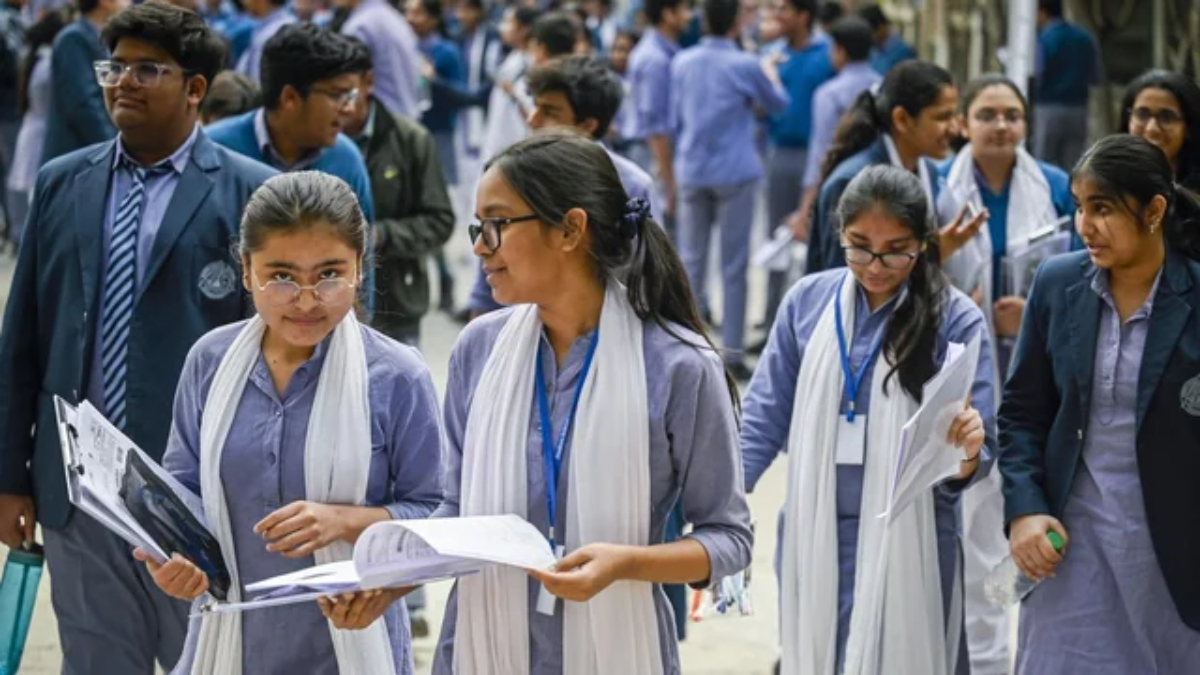
New Delhi | April 17, 2026 – As the dust settles on the CBSE Class 10 and 12 results for 2026, a familiar name sits perched at the top of the leaderboard. The Kendriya Vidyalaya Sangathan (KVS) has once again shattered expectations, recording a breathtaking 99.57% pass percentage.
While the national average saw a marginal rise to 93.70%, the “KVians” have maintained an eight-year streak of near-perfect scores. But beyond the statistics lies a more compelling story: a surge in high achievers, with thousands of students crossing the 90% and 95% thresholds.
What is the “Success Mantra” that keeps these government-run schools ahead of elite private institutions? We spoke to toppers, teachers, and administrators to decode the KV formula.
1. The “Back-to-Basics” Philosophy
In an era of expensive coaching modules and AI-driven private tutors, Kendriya Vidyalayas remain fiercely loyal to the NCERT curriculum.
“My secret wasn’t a 10-kilo stack of reference books,” says Rehan Shaikh, a topper from PM SHRI KV No. 1, Colaba, who scored 94.20%. “It was reading every single line of the NCERT textbook. The board exam doesn’t go outside that boundary; why should I?”
Teachers at KVS emphasize “Conceptual Clarity” over rote memorization. By ensuring that the foundational “Why” and “How” are answered in the classroom, students are better equipped to handle the competency-based questions that CBSE has increasingly introduced under the NEP 2020 framework.
2. The “Pre-Board” Pressure Valve
One of the most effective academic initiatives for the 2025-26 session was the KVS Academic Excellence Plan. This included a rigorous schedule of dual Pre-Board examinations designed to mimic the exact environment of the final boards.
- Error Analysis: After each mock test, teachers conduct “Post-Mortem” sessions where students don’t just see their marks, but analyze where they lost them—be it a calculation error or a lack of keywords.
- Topper Script Analysis: KVS schools often share the answer sheets of previous years’ toppers. This helps students understand the “Art of Presentation”—how to use bullets, diagrams, and underlining to make their papers examiner-friendly.
3. The “PM SHRI” Transformation
The 2026 results have seen a significant boost from schools upgraded under the PM SHRI (Schools for Rising India) scheme. These schools have received enhanced digital infrastructure, allowing for:
- Visual Learning: Complex science experiments and mathematical theorems are taught via high-quality video tutorials.
- Digital Resource Access: Students can access digital marksheets and study materials seamlessly through platforms like DigiLocker and the UMANG app, reducing administrative stress.
4. Holistic Discipline vs. Academic Burnout
KVS success isn’t just about 14-hour study marathons. Priyanka Kumari, who secured 90.83%, credits her balance of hobbies for her mental clarity. “I made time for drawing and singing every day. Studying was a passion, not a burden,” she shares.
The KVS ecosystem encourages:
- Physical Education: Regular sports periods to build “Brain Stamina.”
- Stress Management: Creating a “Zero-Stress” environment at home and school, where teachers act more as mentors than authoritarian figures.
The Success Mantra: A Summary Table
| Pillar | Actionable Strategy |
| Curriculum | 100% reliance on NCERT; no “outside” distractions. |
| Testing | Rigorous Pre-Boards followed by detailed error analysis. |
| Pedagogy | Transition from “What to learn” to “How to learn” (NEP 2020). |
| Wellness | Integration of music, arts, and sports to prevent burnout. |
| Digital | Effective use of AI and digital repositories for revision. |
5. Bridging the Regional Gap
While the Ernakulam and Vijayawada regions led the charts with a near-perfect 99.79%, the most heartening news comes from traditionally trailing regions. Places like Guwahati and Silchar have seen a steady climb in performance, thanks to the uniform implementation of academic support materials across all 1,254 KVs.
The Road Ahead
As the National Education Policy (NEP) continues to evolve, the KVS model serves as a blueprint for the rest of the country. It proves that with disciplined implementation, quality public education can not only compete with but outperform the private sector.
For the students of the 2027 batch, the message from this year’s toppers is clear: Trust your teachers, master your textbooks, and don’t forget to breathe.