

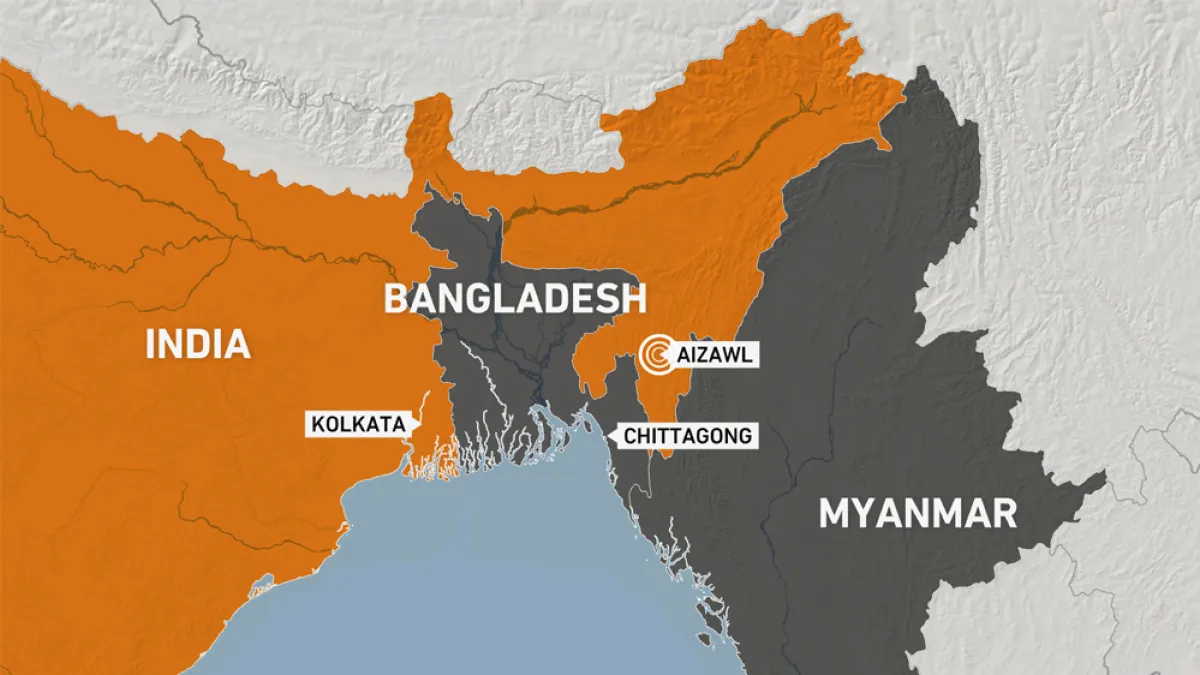
New Delhi, April 21, 2026 — Early on the morning of Tuesday, April 21, 2026, the border region between India and Myanmar experienced two distinct seismic events, sparking concern among residents and prompting monitoring by national agencies. According to reports from the National Center for Seismology (NCS), the tremors occurred within a short interval, highlighting the continued vulnerability of this seismically active zone.
Timeline of the Tremors
The first seismic activity was detected early Tuesday morning at 05:38 AM IST. This initial tremor, measuring a magnitude of 4.6 on the Richter scale, originated in the Sagaing region of Myanmar.
Shortly thereafter, a second, stronger earthquake struck India’s northeastern frontier. At 05:59 AM IST, a magnitude 5.2 earthquake was recorded with its epicenter in the Kamjong district of Manipur. Seismologists have noted that the tremor occurred at a depth of approximately 62 kilometers, a factor that likely helped mitigate the intensity of the shaking felt at the surface.
There have been no immediate reports of structural damage, casualties, or injuries resulting from these events. Local authorities and emergency response teams remain on alert, although the situation appears to be stable at this time.
A Region Known for Seismic Sensitivity
The northeastern region of India, including Manipur, is categorized as a high-risk seismic zone. Geologically, this area sits at the confluence of several tectonic plates, including the Indian Plate and the Eurasian Plate. The constant movement and collision of these plates make the region—and the adjacent border areas of Myanmar—highly susceptible to frequent tectonic shifts.
“This region is essentially a hotbed for seismic activity,” explained a geophysics analyst. “While events of this magnitude are not uncommon, they serve as a constant reminder of the geological fragility of the landscape. The depth at which these quakes occur is the primary variable that determines whether they are felt as minor vibrations or cause significant destruction.”
The proximity of the epicenters to the India-Myanmar border means that tremors in one country are often felt by communities in the other, necessitating cross-border communication and coordinated monitoring efforts.
Global Context: A Week of Seismic Unease
These tremors in the Northeast come amidst a period of heightened seismic monitoring globally. The event in Manipur occurred just one day after a powerful 7.5-magnitude earthquake struck off the coast of Japan on Monday, April 20, 2026. That significant event triggered tsunami warnings in Japan, with coastal areas recording wave activity.
While experts caution against drawing direct links between widely separated tectonic events, the sequence of global tremors has naturally heightened public awareness regarding earthquake preparedness. In addition to the Japan and India-Myanmar events, recent reports have also indicated seismic activity in South America, including a 5.4-magnitude earthquake in Colombia and Ecuador shortly after the Manipur event.
Safety Protocols and Preparedness
While the recent tremors caused only minor shaking, officials are using this opportunity to remind the public of the critical importance of earthquake safety.
Also Read: Controversy Reported Surrounding TMC MP Yusuf Pathan Relatives
Key Safety Reminders:
- Drop, Cover, and Hold On: If you feel the ground shaking, drop to your hands and knees, cover your head and neck with your arms, and hold on to a sturdy shelter (like a heavy table) until the shaking stops.
- Stay Clear of Hazards: Move away from glass, hanging objects, bookshelves, or large appliances that could fall.
- Avoid Elevators: Do not use elevators during or immediately after an earthquake.
- Emergency Kits: Ensure that households have an “earthquake bag” ready, containing essential items such as water, non-perishable food, a flashlight, a battery-powered radio, a first-aid kit, and important documents.
- Communication Plans: Establish a family communication plan so that all members know how to reconnect if cellular networks are temporarily disrupted.
Looking Ahead
As of mid-morning on April 21, daily life in Kamjong and the surrounding areas of Manipur appears to be continuing as normal. The lack of reported damage is a positive sign, but the government continues to monitor the region for potential aftershocks.
For residents in these high-risk zones, the events of this morning are a stark reminder of the unpredictable nature of our planet’s crust. Ongoing investment in early-warning systems, building code enforcement for earthquake resilience, and community awareness remains the most effective defense against the inevitable, if unpredictable, reality of seismic activity in the Northeast.