

New Delhi, April 21, 2026: In the world of professional chess, matches are typically confined to quiet rooms, intense clubs, or digital screens. But for Nigerian chess master Tunde Onakoya, the chessboard is a gateway to the world—and he is currently turning iconic global landmarks into his personal stage.
This week, social media erupted as footage of Onakoya playing chess at the Louvre Museum in Paris went viral. Clad in an elegant agbada—a traditional, flowing Nigerian garment—Onakoya sat near the museum’s famous glass Pyramid, calmly moving pieces across the board. The image was more than just a game; it was a powerful statement of culture, confidence, and global ambition.
“First Nigerian to play chess at the Louvre,” Onakoya captioned his post. “The world’s most prestigious museum. They should probably hang this Agbada in the Louvre as well.”
The video is just the latest in a series of high-profile “chess-at-landmark” clips that have captured the imagination of thousands online. From the hallowed halls of Harvard University to bustling markets in Dubai and the Hurtwood Park Polo Club in the UK, Onakoya is methodically weaving a narrative that connects his Nigerian roots with the global community.
A Mission Beyond the Board
While the videos are visually stunning, Onakoya’s motivation runs much deeper than social media clout. He is the founder of Chess in Slums Africa, an initiative that uses the game of chess as a tool for social change. For Onakoya, who grew up in the slums of Ikorodu, Lagos, chess was not just a hobby—it was his ticket to a new perspective on life.
“Finding chess gave me something,” he has often explained. “It gave me an identity, an intellectual one, and it made me believe that I could also be a thinker.”
Through his non-profit, he has dedicated his life to bringing that same opportunity to children in underserved communities. By teaching them chess, he helps them develop critical thinking, patience, and the belief that they, too, can conquer the world’s most complex challenges.
A History of Record-Breaking Impact
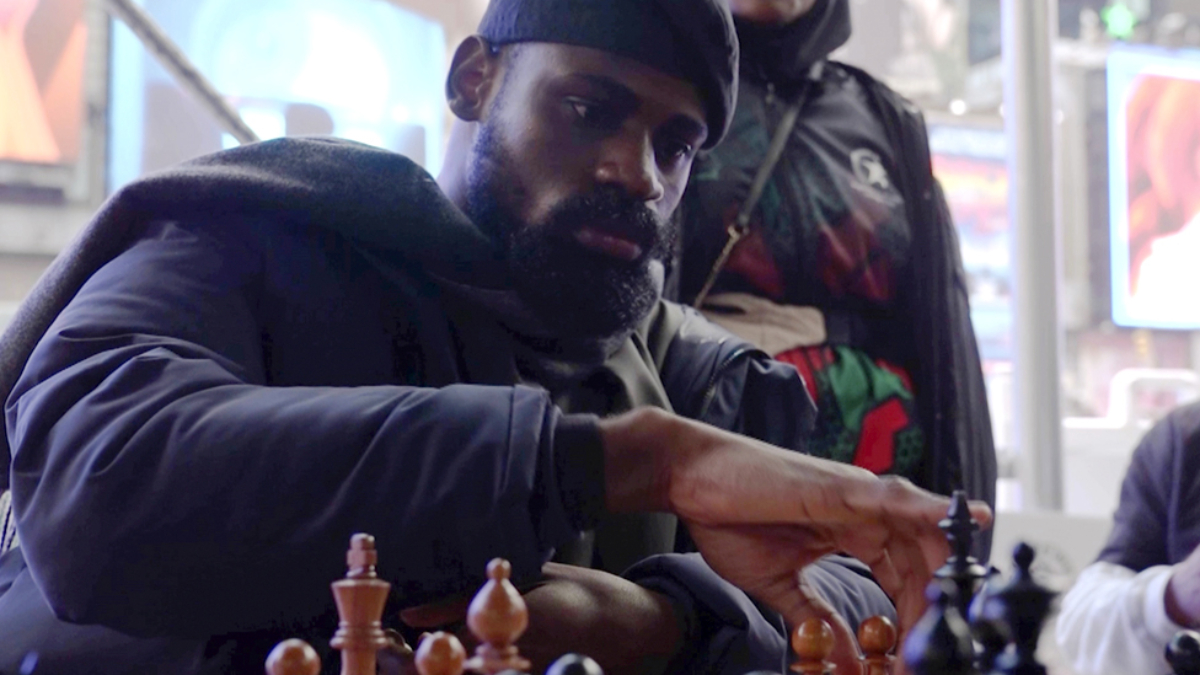
Onakoya’s viral moments at global landmarks are built on a foundation of intense dedication. He is a Guinness World Record holder, famously completing a 64-hour chess marathon in New York City’s Times Square alongside American chess master Shawn Martinez.
That record-breaking event was a physical and mental feat, designed to raise awareness and funding for his educational charity. It set a precedent for his current global tour: that he is willing to go to extreme lengths—whether it’s playing for 64 hours straight or traveling across continents—to put his cause on the map.
Why It Resonates
The reaction to his travels has been overwhelmingly positive. Nigerians and international observers alike have praised his approach, noting that he isn’t just playing a game; he is “exporting” Nigerian identity.
By wearing his traditional attire in the heart of European culture, Onakoya is challenging the idea of what a “global chess master” looks like. He is proving that culture and intellectual pursuit go hand-in-hand.
As one supporter put it on social media, “You’re putting us on the map.” Whether he is playing at the foot of an Egyptian statue or on the lawn of an Ivy League university, Onakoya is doing something that transcends the game itself. He is showing that brilliance can come from anywhere, and that with a chessboard and a dream, anyone can make a move that resonates across the globe.
The Next Move
As Tunde Onakoya continues his journey, his followers are left wondering where he will appear next. But regardless of the location, the message remains consistent: chess is a universal language. It is a tool for connection, a platform for storytelling, and a reminder that even from the most humble beginnings, one can move pieces on the world’s biggest boards.
For now, the world is watching, waiting to see where the next move—and the next agbada—will land.