

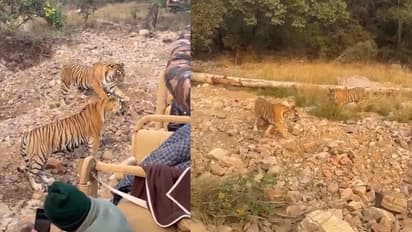
New Delhi, April 27, 2026: A startling video capturing a territorial fight between two tigers has surfaced on social media, sparking intense debate over wildlife tourism ethics and safety. The footage, which began circulating widely on April 26, 2026, depicts a fierce confrontation between the apex predators as they engage in a high-stakes battle for dominance. However, the focus of public concern has quickly shifted from the animals to the behavior of the safari crowd, as multiple jeeps are seen surrounding the fighting cats at a perilously close distance.
The interaction was highlighted by former Indian Forest Service officer Susanta Nanda, who shared the clip to warn against the dangers of “tiger-centric” tourism. In the video, several safari vehicles are observed inching forward to give tourists a better view, effectively cornering the tigers while they are in a highly aggressive state. It is noted by experts that such crowding disrupts the animals’ natural flight-or-fight response, potentially turning a natural wildlife event into a fatal situation for the human observers.
Disrupted Boundaries: The Danger of “Safari Jams” in Tiger Reserves
The reaction from the digital community has been one of collective anxiety and condemnation, with many calling for stricter enforcement of park regulations. It is argued that the current trend of “safari jams”—where vehicles create traffic-like conditions inside protected forests—is reaching a breaking point. On platforms like X and Instagram, the footage is being used to illustrate how the thirst for viral content and close-up photography often overrides basic safety protocols and respect for wildlife corridors.
The impact of such human intrusion on animal behavior is identified as a primary concern by conservationists. It is explained that when tigers are stressed by the proximity of idling engines and shouting tourists, their cortisol levels rise, which can lead to unpredictable and defensive aggression. The passive stance of some safari guides—who are seen allowing their drivers to maintain a narrow gap—has been criticized as a failure of professional responsibility that puts both the animals and the visitors at risk.
Also Read: Massive Pothole Found on New Delhi-Dehradun Expressway
Safety Demands: Authorities Urged to Enforce 500-Meter Distance Norms
Following the viral spread of the incident, a renewed demand for “responsible tourism” has been voiced by wildlife activists. It is suggested that a minimum distance of 500 meters should be maintained whenever a territorial fight or a mating pair is spotted. The passive hope for self-regulation among tourists is being replaced by calls for heavy fines and blacklisting of operators who encourage such dangerous proximity.
As of April 27, 2026, the video remains a top trending topic in the environmental news sector, serving as a grim reminder of the thin line between observation and interference. While the tigers in the footage eventually retreated into the bush, the potential for a catastrophic accident was clear to all viewers. For now, the story stands as a digital plea to respect the wild: a tiger’s territory should be a space for their survival, not a backdrop for a crowded photo opportunity.