

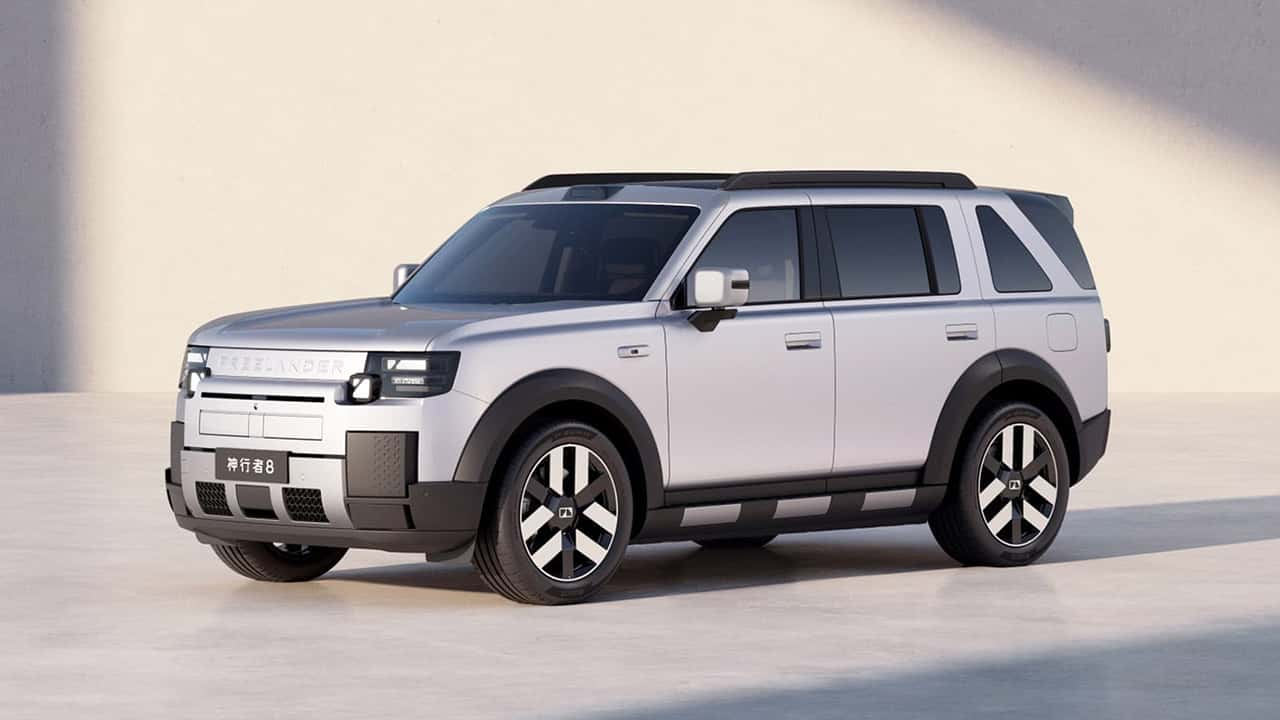
The automotive world is witnessing the return of an iconic nameplate, though perhaps not in the form purists might have expected. The Freelander brand has officially returned to the spotlight, not as a direct Land Rover model, but as a standalone brand born from a strategic joint venture between Jaguar Land Rover (JLR) and Chinese automaker Chery. The first fruit of this collaboration, the Freelander 8, has made its live debut, signaling a bold new direction for a nameplate that defined a generation of mid-sized SUVs from 1997 to 2014.
A New Era, A New Identity
The Freelander 8 is the production-intent evolution of the “Concept 97” revealed earlier this year in Shanghai. Its name—’97’—is a deliberate nod to the original Freelander’s launch year, bridging the gap between its historical heritage and its future-focused identity.
Operating independently from both the JLR portfolio (which houses Range Rover, Defender, and Discovery) and Chery’s existing brands (like Jaecoo and Omoda), Freelander is being positioned as a premium, technology-first SUV line. This isn’t merely a nostalgic reboot; it is a clean-sheet repositioning of the badge for the electric vehicle era.
Commanding Presence: Design and Dimensions
The Freelander 8 immediately makes an impression with its scale and stance. Measuring an impressive 5.1 meters in length, the vehicle moves firmly into the full-size SUV territory, far exceeding the dimensions of its predecessors. The design philosophy is centered on what the company describes as a “castle body” theme—a combination of a solid, robust lower structure and a refined, airy upper cabin.
Visually, the SUV retains a boxy, functional aesthetic that pays homage to the original Freelander, particularly through its signature rear-quarter window treatment. However, the execution is decidedly modern. The front fascia features an upright, confident appearance, equipped with distinctive lighting elements and bumper-mounted square air vents. The profile is marked by flared wheel arches, thick body cladding, and a high shoulder line that emphasizes its off-road-ready credentials.
Performance and Powertrain Flexibility
Under the skin, the Freelander 8 is engineered for versatility. It sits on a highly adaptable architecture that supports a wide range of electrified powertrains, including Battery Electric (BEV), Plug-in Hybrid (PHEV), and range-extender hybrid configurations.
The technical foundation is a state-of-the-art 800-volt electrical system, which enables rapid charging capabilities. For the BEV variant, the platform is designed to support DC fast charging of up to 350 kW, ensuring that long-distance travel remains practical. The vehicle also incorporates an intelligent all-terrain system (i-ATS), which utilizes air suspension and an electronic rear limited-slip differential to navigate everything from urban streets to rugged trails. This commitment to all-terrain capability is a direct carry-over from the brand’s Land Rover DNA, ensuring that the Freelander remains “at home” in the wild.
Cabin Innovation and Connectivity
Inside, the focus shifts to digital integration and passenger comfort. While the interior layout prioritizes a clutter-free environment, it is dominated by a dashboard-spanning Mini LED display. This interface merges navigation, entertainment, and vehicle status into a unified visual experience.
Safety and convenience are managed through an advanced driver assistance system (ADAS) developed in collaboration with technology partners, including Huawei. A roof-mounted LiDAR unit suggests a high level of autonomous driving capability. Passengers, meanwhile, are treated to elevated seating positions in the front and second-row “zero-gravity” seats, designed to minimize fatigue during long journeys. The initial configuration is expected to be a six-seater, prioritizing space and flexibility.
Market Strategy and The Road Ahead
The Freelander 8 is slated to hit showrooms in China in the second half of 2026, marking the start of a phased global rollout. The JLR-Chery partnership has confirmed an aggressive expansion plan: the Freelander brand will launch six new production models over the next five years, all of which will be SUVs.
By separating Freelander from the core JLR brand, the joint venture allows for a more focused approach to the competitive, tech-heavy SUV market, leveraging Chery’s manufacturing efficiency alongside JLR’s design and luxury engineering expertise. While it may not bear the traditional Land Rover badge, the Freelander 8 is clearly designed to evoke the spirit of adventure that made the original a household name, now powered by the latest in electrified innovation.
As production ramps up at the Changshu facility, the automotive industry will be watching closely to see if this “new-old” brand can carve out a successful niche in an increasingly crowded global SUV landscape.