

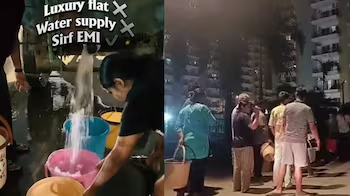
May 4, 2026 — A viral social media video has once again thrust the spotlight onto the persistent water crisis in Greater Noida. The clip, which shows residents of a prominent high-rise society queuing with buckets to collect water from a tanker, has ignited a fierce public debate about the reliability of basic amenities in the region’s rapidly developing residential sectors.
The video, shared by resident Aadhar Mehrotra, documents the frustration of families living at Panchsheel Greens II, who reportedly went without a functional water supply for two consecutive days. Captioned with the stinging critique, “Builder ne sapne beche, reality mein paani tak nahi!” (The builder sold dreams, but in reality, there isn’t even water!), the post has struck a chord with thousands of residents across the National Capital Region (NCR) who find themselves trapped in a cycle of inadequate infrastructure and failed promises.
A Pattern of Persistent Failure
While the scene at Panchsheel Greens II is the latest to go viral, it is far from an isolated incident. Throughout early 2026, residents across various sectors of Greater Noida have reported a series of infrastructure failures that are testing the patience of homeowners.
Earlier this year, the region faced a severe health scare when over 30 residents in Sector Delta 1 fell ill with symptoms like vomiting and diarrhea. The culprit was linked to aging, three-decade-old pipeline infrastructure that allowed sewage to contaminate the drinking water supply. Similarly, residents in Sectors Alpha, Gamma, and Beta 1 have voiced ongoing grievances regarding sewage overflows, blocked drains, and irregular water pressure.
“The disconnect between the lifestyle advertised by builders and the reality of daily life is staggering,” noted one social media user in response to the viral video. “We pay high maintenance charges for what? Basic services like water should be a non-negotiable right, not a luxury.”
The Multi-Faceted Crisis
The water shortage in Greater Noida is not driven by a single factor, but rather a perfect storm of challenges:
- Aging Infrastructure: Much of the water distribution network is struggling to keep pace with the massive, rapid urbanization of the past decade. Leaks, contamination, and insufficient pressure are common complaints.
- Groundwater Depletion: With water levels reportedly reaching depths of up to 600 feet in some areas, the reliance on borewells—often a last-ditch effort when official supply fails—is becoming increasingly unsustainable.
- Administrative Hurdles: The Greater Noida Industrial Development Authority (GNIDA) has been under pressure to address these issues. However, authorities often cite complex logistical challenges—such as the proximity of water pipelines to gas lines and sewer networks—as reasons for slow repair times.
- Fiscal Disconnect: Tensions have also risen over the financial management of utilities. In March, the GNIDA issued a stern warning to 29,000 households regarding ₹270 crore in unpaid water dues, threatening disconnections if bills were not cleared. This move sparked further debate, with residents questioning why they should pay premium rates for service that is neither consistent nor safe.
A Call for Accountability
The viral nature of these complaints highlights a growing shift in how residents engage with the authorities. When traditional grievance redressal mechanisms feel slow, residents are increasingly turning to digital platforms to document their struggles and demand accountability.
For the many families who invested their life savings into “premium” housing societies, the demand is simple: clear, consistent, and safe basic services. Experts argue that the solution lies in a holistic overhaul of the master drainage and sewer networks, along with stricter regulatory oversight of developers to ensure that the infrastructure promised in brochures actually matches the reality on the ground.
As the region moves into the peak summer months—when water demand traditionally spikes—the pressure on the Greater Noida Authority to provide long-term solutions rather than temporary, tanker-dependent fixes has never been higher.