

New Delhi, May 4, 2026: In the landscape of Indian luxury motoring, the concept of a convertible is often seen as a niche luxury—a bold statement of lifestyle over pure practicality. While many premium brands treat open-top cars as rare, limited-run halo products, the BMW Group—comprising both BMW and its retro-inspired sibling, Mini—is taking a distinctly different approach to this segment in 2026.
By navigating contrasting paths, both brands are successfully expanding the footprint of the convertible in India, catering to different psychographics of the modern Indian buyer.
BMW: The Pursuit of Performance and Sophistication
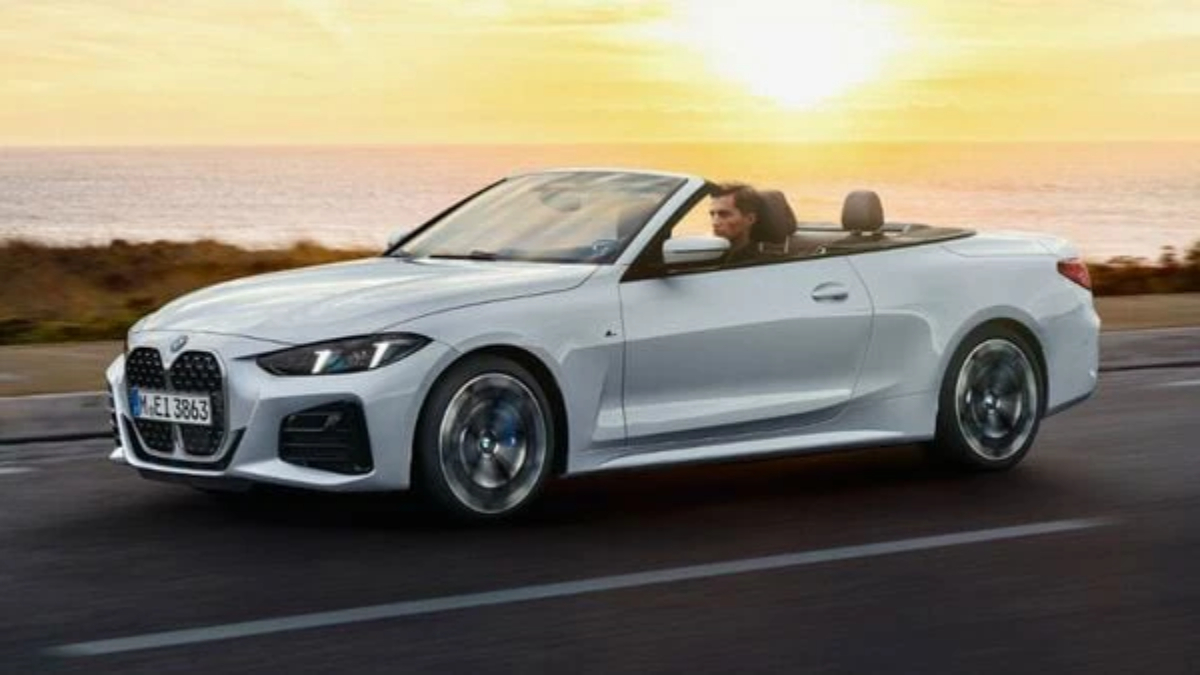
For BMW, the convertible is a sophisticated expression of its “Sheer Driving Pleasure” philosophy. The recent launch of the 2026 BMW M440i Convertible (priced at approximately ₹1.09 crore) serves as a testament to this strategy.
BMW’s route is one of precision, power, and grand touring. The M440i is not merely a car for the occasional sunshine; it is a performance machine built on the robust architecture of the M340i. Powered by an M-tuned, 369 bhp B58 six-cylinder engine, it is designed for those who view driving as an experience rather than a commute.
BMW’s strategy with the convertible is deeply tied to its brand positioning in India. It appeals to the high-net-worth individual who appreciates the technical prowess of M-branded hardware—the adaptive suspension, the precision braking, and the raw acoustic joy of a high-performance engine made more accessible by the open top. For BMW, the convertible is a product of status and mechanical excellence, targeted at a segment that demands high performance without compromising on the comfort and luxury expected from the German marque.
Mini: The Joy of Character and Personalization
In contrast, Mini is taking a path that leans heavily into emotion, lifestyle, and accessibility. While BMW targets the performance purist, Mini targets the individualist.
The Mini Cooper Convertible, priced significantly lower than the BMW counterpart (roughly ₹58.50 – 61.50 lakh), serves as a vibrant gateway into the luxury open-top world. Mini’s approach is defined by “bold personalization” and iconic, retro-modern aesthetics. It is not just about raw horsepower; it is about the “go-kart feel,” the nimble handling, and the undeniable charm that makes a Mini an identity, not just a vehicle.
As BMW Group India pushes to double its Mini sales volume by the end of 2026, the convertible acts as a vital “brand shaper.” It attracts a younger, fashion-conscious demographic—buyers who are looking to stand out in the urban landscape. By offering a product that feels approachable and fun, Mini successfully converts aspirational buyers into owners, effectively growing the overall BMW Group ecosystem.
The Synergistic Strategy
While their routes differ, the brands are cleverly utilizing a unified strategy. BMW and Mini are now increasingly co-located in shared showrooms across India. This proximity is a deliberate masterstroke:
- Cross-Pollination: A buyer entering a showroom to look at a BMW sedan might be drawn to the playful design of a Mini Convertible, and vice versa. This encourages cross-selling and allows the Group to capture a wider spectrum of the premium market.
- Service Integration: Both brands benefit from the same robust after-sales infrastructure, with BMW Group India providing service support through 52 touchpoints across 40 cities. This minimizes the “risk” of owning a niche vehicle, as the mechanical support is backed by the expansive reach of the BMW network.
- Market Expansion: With Mini’s aggressive expansion plan—moving into tier-2 and tier-3 cities like Jaipur, Jodhpur, Lucknow, and Ranchi—the brand is unlocking latent demand in smaller markets where a flashy but accessible convertible fits the evolving lifestyle of India’s new affluent class.
The Road Ahead
The convertible segment in India remains sensitive to factors like weather, road quality, and infrastructure. However, the success of the BMW Group lies in their ability to market these vehicles not just as “convertibles,” but as distinct experiences.
BMW is selling the thrill of the open road and engineering dominance, while Mini is selling a vibrant, customizable lifestyle. By maintaining these distinct identities while sharing the same operational backbone, the BMW Group is proving that there is no single “right” way to sell a convertible in India—as long as you give the customer a reason to let the top down.
As 2026 progresses, the dual-pronged attack—BMW’s high-performance M-series and Mini’s accessible, stylish urban runabouts—is set to redefine how the Indian luxury buyer perceives the convertible. It is no longer just a weekend car; it is a vital part of the brand’s mission to deliver “JOY” to the Indian driver.