

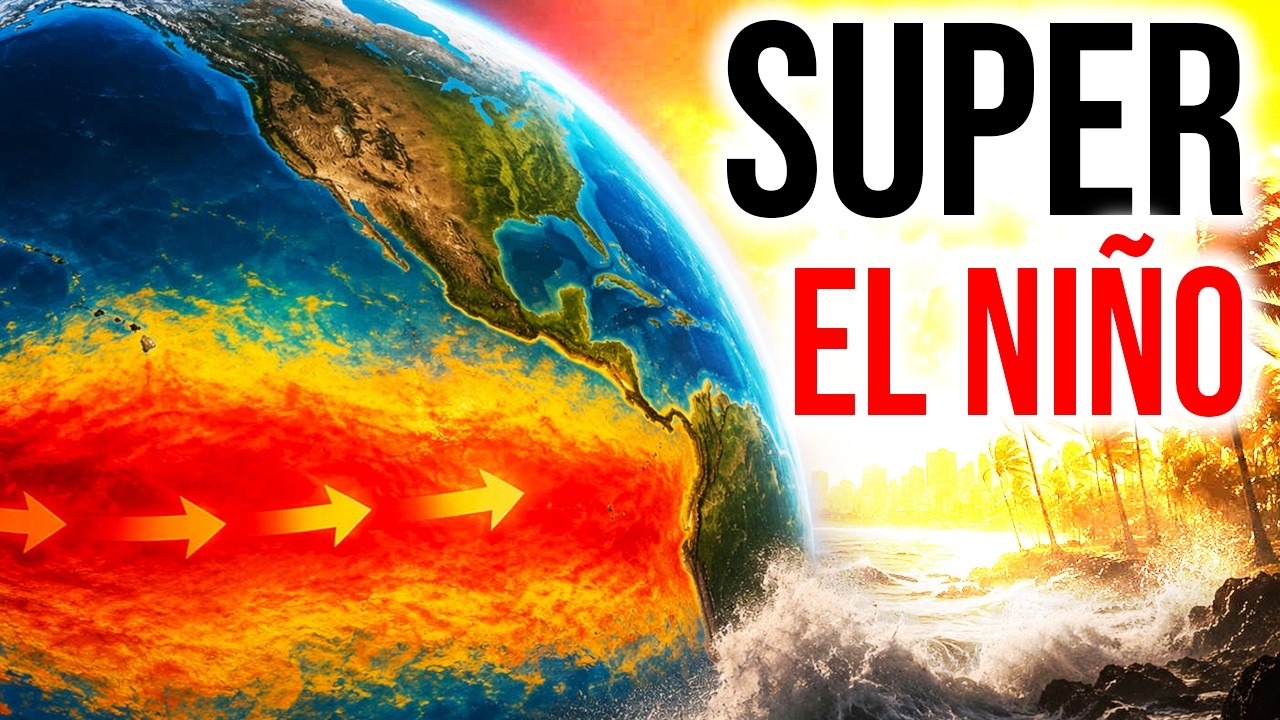
May 15, 2026 – As the summer of 2026 enters its most punishing phase, meteorological departments and climate scientists have sounded a nationwide alarm: a “Super El Niño“ is officially developing in the Pacific Ocean. Unlike a standard El Niño, this “Super” variant involves sea surface temperatures rising more than 2.0°C above average, a phenomenon that historically triggers catastrophic weather shifts across the Indian subcontinent.
With 98 of the world’s 100 hottest cities currently located within India, the stakes have never been higher. From the parched plains of the North to the water-stressed metros of the South, urban centers are bracing for a double-hit of record-breaking heatwaves and a severely weakened monsoon.
The “Super El Niño” Threat: Why 2026 is Different
El Niño is a natural climate pattern, but in 2026, human-induced global warming has supercharged its effects. The India Meteorological Department (IMD) has projected that this year’s monsoon rainfall could drop to 92% of the Long Period Average (LPA). For a country where agriculture and urban water supplies depend almost entirely on seasonal rain, this 8% deficit represents a potential national crisis.
Cities on the Frontline: The High-Risk Zones
While the entire country will feel the heat, certain urban hubs are categorized as “High Risk” due to their geography, population density, and existing water stress.
1. The Heatwave Hubs: Northern & Central India
Northern India is currently trapped under a “Heat Dome,” where high-pressure systems trap hot air over the Indo-Gangetic plains.
- Delhi-NCR: The capital is a primary victim of the Urban Heat Island (UHI) effect. With temperatures already touching 43°C in May, the Super El Niño is expected to push Delhi toward the 50°C mark. The lack of green cover and high density of concrete make night-time relief nearly impossible.
- Prayagraj & Banda (Uttar Pradesh): These cities have already recorded some of the highest temperatures in the country this year (up to 47.4°C). Under the influence of El Niño, these regions face “Severe Heatwave” alerts that could last well into late June.
- Rajasthan’s Desert Cities (Phalodi, Jaisalmer): Traditionally hot, these cities are now seeing “early onset” summer, with peak heat arriving weeks ahead of schedule.
2. The Water-Crisis Zones: Southern Metros
In the South, the threat isn’t just the temperature—it’s the dry taps.
- Bengaluru: Already struggling with groundwater depletion, Bengaluru faces a “Super El Niño” that could lead to widespread borewell failures. If the monsoon fails to recharge the Cauvery basin, the city’s water costs are expected to skyrocket.
- Chennai: Highly dependent on reservoir levels, Chennai is at risk of severe water restrictions. While El Niño sometimes brings erratic coastal rain, the predominant forecast for 2026 is a significant deficit in the Northeast monsoon as well.
- Hyderabad: The city’s inland geography makes it prone to “dry heat.” High evaporation rates from reservoirs like Himayat Sagar are already causing concern for the city’s drinking water supply.
3. The Agricultural Belt: Punjab, Haryana & Madhya Pradesh
- Indore & Gwalior: These cities in Madhya Pradesh are projected to receive significantly below-normal rainfall. This impacts not just the urban population but the vital soy and wheat belts surrounding them.
- Ludhiana & Ambala: As part of the “Granary of India,” these cities face a drop in groundwater levels as farmers are forced to pump more water to save crops from the El Niño-induced dry spells.
The Economic Ripple Effect: Food and Power
The impact of a Super El Niño extends far beyond a sweaty commute.
- Food Inflation: Production of staples like rice, pulses, and maize is under threat. Even commercial crops like mangoes are suffering; early flowering and heat stress are leading to smaller fruit sizes and premature drops in regions like Maharashtra and Karnataka.
- The Power Grid: With air conditioners running at full capacity, India’s power demand has hit record highs. Cities like Nagpur and Ahmedabad are seeing increased pressure on local grids, raising the risk of “load shedding” or scheduled blackouts during peak hours.
Vulnerable Populations: The Human Cost
The Super El Niño does not hit everyone equally.
- Outdoor Workers: Construction workers, delivery partners, and street vendors are on the frontlines. Experts warn that agricultural workers in India are now 35 times more likely to die from occupational heat exposure than those in other sectors.
- Urban Poor: For those living in informal settlements with tin roofs and no cooling infrastructure, the “Giant Concrete Oven” effect of the city is a literal matter of life and death.
Is There a Silver Lining?
While the forecast is grim, India is better prepared than it was during the last major El Niño in 2015-16.
- Heat Action Plans (HAPs): Over 250 cities and districts across 23 states now have operational Heat Action Plans. These include “Cool Roof” initiatives, rescheduled working hours for laborers, and the setup of “cooling stations” in public places.
- Reservoir Management: Current reports indicate that India’s reservoir storage is at roughly 127% of the normal level for this time of year. This “water bank” is the country’s primary defense against a failing monsoon.
Conclusion: A Call for Climate Resilience
The Super El Niño of 2026 is a stark reminder that extreme weather is no longer a “future” problem—it is a present reality. While cities like Delhi and Bengaluru face the immediate brunt, the solution lies in long-term urban redesign: increasing green cover, protecting wetlands, and implementing aggressive water harvesting.
As the IMD continues to monitor the Pacific, the message to citizens in high-risk cities is clear: stay hydrated, avoid peak sun hours, and prepare for a summer that will test the limits of India’s infrastructure and resilience.