

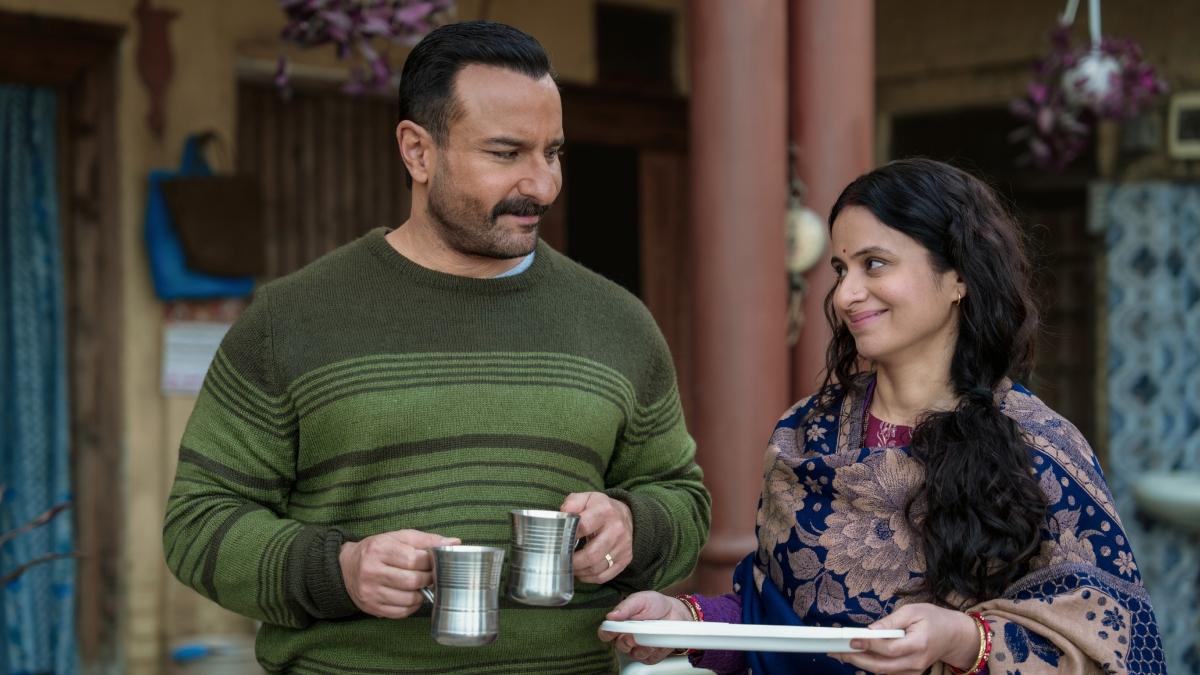
Friday, May 15, 2026: The “Godfather of Netflix India” is back. Eight years after he changed the digital landscape with Sacred Games, Saif Ali Khan returns to the streaming giant with Kartavya, a rural crime thriller produced by Red Chillies Entertainment. Directed by Pulkit (of Bhakshak fame), the film arrived on Netflix today, promising a searing look at the intersection of caste, crime, and conscience in the Indian heartland.
While Saif Ali Khan delivers a performance of remarkable restraint and depth, the consensus among critics suggests that the film—much like its protagonist—is held back by a system that refuses to let it roar.
The Plot: A Birthday Turned Nightmare
The film opens on a deceptively celebratory note. It is the 40th birthday of Pawan Malik (Saif Ali Khan), a Station House Officer in the fictional town of Jhamli, located on the volatile border of Haryana and Western Uttar Pradesh. Pawan is an honest cop who has learned to survive by keeping his head down, but his world is upended when a journalist under his protection is shot dead in broad daylight.
The murder isn’t just a professional failure; it’s a catalyst that exposes the rot in Jhamli. As Pawan races against a seven-day deadline to find the killers and save his career, he finds himself caught in a Chakravyuh (a multi-layered trap) involving:
- Anand Shri (Saurabh Dwivedi): A powerful, polished godman with a dark influence over the local youth.
- Caste Politics: A parallel track involving Pawan’s younger brother, who elopes with a girl from a different caste, triggering a Khap Panchayat’s demand for an “honour killing.”
- Generational Trauma: Pawan’s own father (Zakir Hussain), who prioritizes “family izzat” (honour) over his son’s life.
Performance Highlights: Saif’s Simmering Quietude
Saif Ali Khan’s portrayal of Pawan is the film’s strongest asset. Unlike the typical “super-cop” seen in commercial cinema, Pawan is exhausted, morally conflicted, and deeply human. Saif captures the psychological warfare of a man who knows exactly what is wrong with the world but feels paralyzed by his duty as both an officer and a son.
The supporting cast provides a sturdy foundation:
- Rasika Dugal plays Pawan’s wife with her signature grace, though critics noted she is somewhat underutilized.
- Sanjay Mishra delivers a sincere performance as a morally grey character, adding weight to the film’s philosophical undertones.
- Yudhvir Ahlawat is the breakout star, playing Harpal—a young shooter manipulated by the godman—with a chilling, restrained ease.
| Cast Member | Role | Key Takeaway |
| Saif Ali Khan | Pawan Malik | A masterclass in internal conflict and restraint. |
| Rasika Dugal | Pawan’s Wife | Reliable as ever, but deserves more screen time. |
| Sanjay Mishra | Ashok | Adds a layer of seasoned, cynical realism. |
| Saurabh Dwivedi | Anand Shri | A bold debut, though some found the casting meta-fictional. |
The “Rage” Factor: Why It Falls Short
Despite its strong premise, Kartavya has faced criticism for being “too polished.” Set in the gritty hinterlands of Haryana, the film’s cinematography (by Anil Mehta) and color grading have been described as overly aesthetic, sometimes feeling more like a high-end commercial than a raw crime drama.
The most recurring critique, however, is the film’s lack of visceral impact.
“The film stops itself from screaming when it should have roared,” writes one critic. “Had the story been messier and more fearless, Kartavya could have been a landmark in Indian noir.”
The screenplay, also written by Pulkit, attempts to tackle massive themes: child exploitation, phony gurus, and the deep-seated poison of casteism. While the dialogue is punchy and the Haryanvi accents are spot-on, the narrative often plays it safe, avoiding the raw, uncomfortable truths that made Pulkit’s previous work, Bhakshak, so haunting.
The Verdict: A Brave Effort That Needed More Grit
Kartavya is by no means a bad film. It is a thought-provoking, well-acted procedural that asks difficult questions about what it means to do one’s duty (kartavya) when the very definitions of right and wrong are blurred.
It succeeds as a character study of a modern-day Abhimanyu trapped in a societal maze. However, for an audience used to the gritty realism of Pataal Lok or the explosive energy of Sacred Games, Kartavya might feel like a tense ride that ultimately settles for a safe parking spot.