

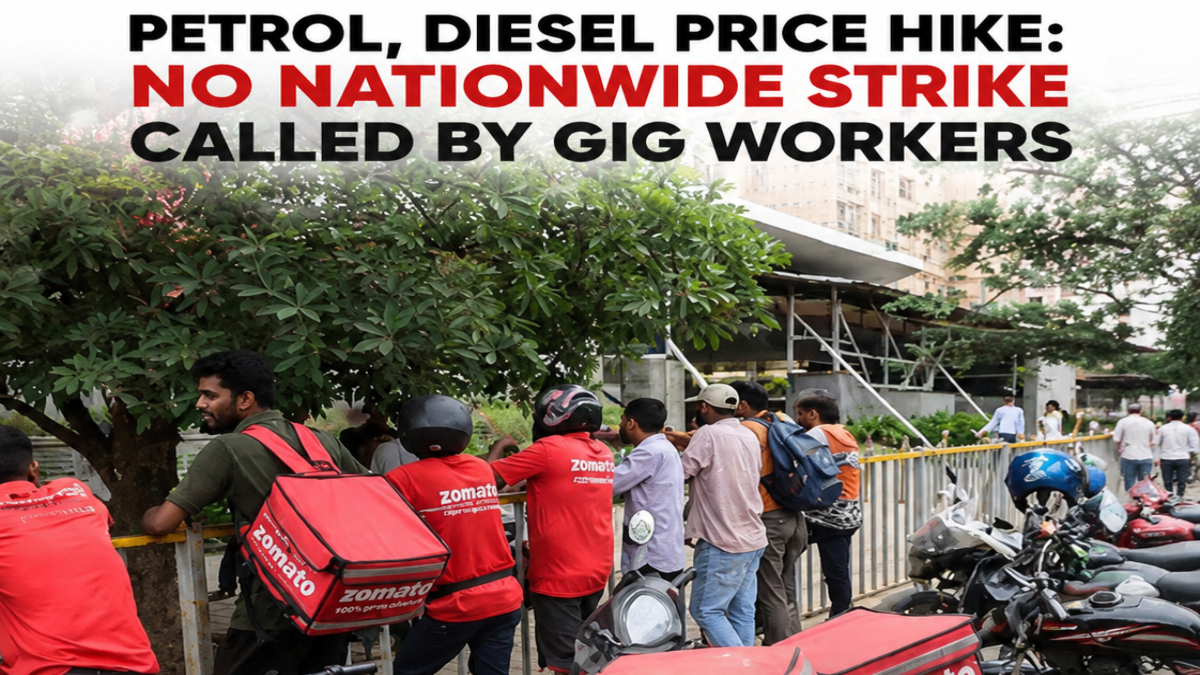
May 16, 2026 – On a sweltering Saturday, May 16, 2026, the familiar hum of delivery scooters that typically defines India’s urban landscape has fallen eerily quiet. In a massive display of collective frustration, approximately 1.2 crore (12 million) gig workers associated with giants like Swiggy, Zomato, and Blinkit have launched a nationwide shutdown to protest the sudden and sharp spike in petrol and diesel prices.
The strike, which officially began at 12:00 PM and is scheduled to last until 5:00 PM, has left millions of customers across the country staring at “service unavailable” screens or facing indefinitely delayed orders.
The Spark: A ₹3 Surge in Fuel Costs
The immediate trigger for this industrial action was the decision by oil marketing companies (OMCs) on May 15 to raise fuel prices by approximately ₹3 per litre. This marks the first significant nationwide hike in nearly four years, ending a long period of retail price stability.
In the national capital, petrol prices have now hit ₹97.77 per litre, while diesel is hovering around ₹90.67. In metros like Mumbai and Kolkata, the pinch is even tighter, with petrol crossing the ₹106 and ₹108 marks, respectively.
The government and OMCs have attributed the hike to escalating global crude oil prices, fueled by deepening instability in West Asia and shipping disruptions around the Strait of Hormuz. While the global geopolitical machine turns, it is the last-mile delivery partner—often navigating 45°C heat on a 150cc scooter—who is feeling the friction most acutely.
Key Demands: Beyond the Petrol Pump
The protest, spearheaded by the Gig & Platform Service Workers Union (GIPSWU), is not just about the ₹3 hike. It is a boiling point for long-standing grievances regarding the “gig” model.
1. Minimum Payout of ₹20 per KM
The union’s primary demand is a standardized minimum service rate of ₹20 per kilometer. Currently, most delivery partners earn significantly less after accounting for fuel, vehicle maintenance, and the “dead miles” spent returning from a delivery drop-off.
2. Automatic Fuel-Linked Revisions
“We cannot be expected to protest every time global oil prices fluctuate,” stated Seema Singh, President of GIPSWU. The union is calling for a transparent mechanism where payouts are automatically adjusted based on the current market price of petrol and diesel.
3. Social Security and Heat Protections
With India currently experiencing a severe heatwave, the union has also highlighted the lack of medical insurance, pension schemes, and “heat-break” protocols. Workers argue that the “partners” label used by platforms like Zomato and Swiggy is a convenient way for companies to avoid providing the benefits mandated for traditional employees.
Impact Across the Ecosystem
The shutdown has caused ripples across several sectors, proving just how much the modern Indian economy relies on this invisible workforce.
- Food & Grocery: Major apps like Swiggy and Zomato have seen a 70–80% drop in active delivery partners in cities like Bengaluru, Delhi, and Mumbai. Blinkit and Zepto, which rely on ultra-fast deliveries, have effectively suspended operations in many zones.
- Ride-Hailing: Drivers for Ola, Uber, and Rapido have also joined the fray in several regions, leading to skyrocketing surge pricing and massive wait times for commuters.
- Logistics: Services like Amazon Flex, Porter, and Dunzo are seeing significant backlogs as drivers refuse to log in.
The Corporate & Government Silence
As of Saturday afternoon, major platforms like Swiggy and Zomato have yet to issue a comprehensive plan for payout revisions. Most companies have issued generic statements acknowledging the “temporary inconvenience” to customers while emphasizing their “commitment to partner welfare.”
However, industry analysts suggest that the platforms are in a tight spot. Raising payouts would mean increasing delivery fees for customers, which could dampen demand in a price-sensitive market.
On the policy front, the strike puts renewed pressure on the Centre to finalize the Code on Social Security, which aims to bring gig workers under a formal safety net. Without a central law, gig workers remain in a legal gray area—neither fully independent contractors nor traditional employees.
What Happens Next?
The 5-hour “logout” is intended as a warning shot. GIPSWU has indicated that if a dialogue with the Ministry of Petroleum and the platform aggregators does not yield results within the next 48 hours, the shutdown could extend indefinitely.
For now, the “Quick Commerce” era is facing its slowest day in years. As the sun sets on this protest, the question remains: Can India’s digital economy survive if the people powering its engines can no longer afford the fuel?