

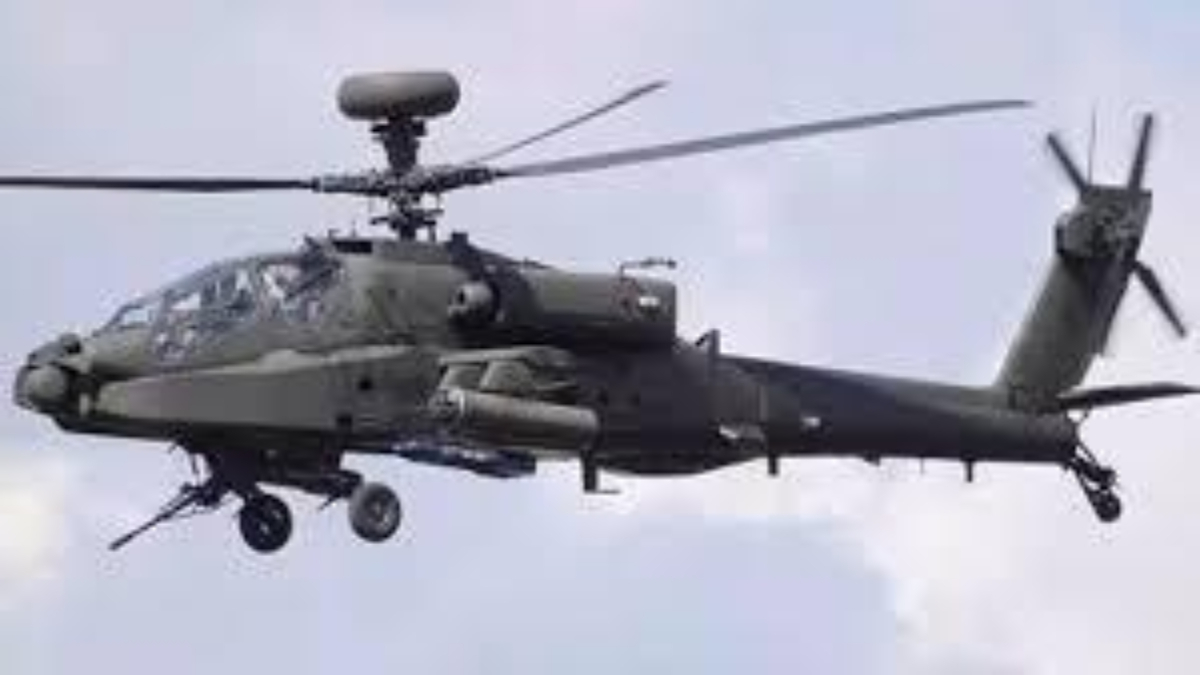
New Delhi, May 19, 2026: In a major move to strengthen bilateral military ties and enhance regional security, the United States State Department has approved two separate potential Foreign Military Sales (FMS) to India. Together, the two maintenance and logistics packages are valued at an estimated $428.2 million (over ₹3,500 crore).
Unlike traditional headline-grabbing arms deals that focus on purchasing new weapons, this comprehensive double-barrelled agreement is entirely dedicated to the long-term sustainment, engineering assistance, and operational readiness of critical frontline assets already in service with the Indian Armed Forces. The dual packages cover the Boeing AH-64E Apache attack helicopters and the BAE Systems M777A2 Ultra-Light Howitzers.
The defense approvals were formally made public via congressional notifications issued by the US State Department’s Bureau of Political-Military Affairs.
Keeping India’s Frontline Assets Battle-Ready
Modern military hardware relies heavily on a robust supply chain of original spare parts, consistent software updates, specialized technical data, and expert maintenance support. Without these, even the most sophisticated combat platforms risk being grounded.
Recognizing this operational necessity, the latest US authorization ensures that India’s premium attack helicopters and specialized mountain artillery guns remain optimally battle-ready to tackle current and future security challenges along its vast borders.
Here is a detailed breakdown of the two defense support packages cleared by Washington:
1. M777A2 Ultra-Light Howitzer Support Package ($230 Million)
The larger component of the dual clearance is valued at approximately $230 million. This package provides comprehensive, long-term sustainment support for India’s fleet of M777A2 Ultra-Light Howitzers.
According to official US communications, India requested a complete logistical and maintenance framework. The package includes:
- Spares and Ancillary Items: An uninterrupted supply of original spare parts to replace worn-out components during intense field deployments.
- Repair and Return Services: Structured channels to send major sub-assemblies for advanced repairs and have them integrated back into service.
- Technical Assistance & Field Representatives: Hands-on support from seasoned engineers who can troubleshoot complex mechanical or digital issues directly on-site.
- Depot Capability Support: Building domestic infrastructure and skill sets within India to handle advanced overhauls.
- Personnel Training: Specialized instruction for Indian Army technicians to master advanced diagnostic and servicing protocols.
Principal Contractor: BAE Systems, a major international defense and aerospace firm headquartered in the United Kingdom, will serve as the lead contractor for this artillery support initiative.
2. AH-64E Apache Helicopter Sustainment Package ($198.2 Million)
The second package is valued at an estimated $198.2 million and focuses entirely on follow-on support services for India’s fleet of AH-64E Apache attack helicopters.
The Indian government requested structured assistance to maximize the lifespan and efficiency of these formidable aerial platforms. This package includes:
- Engineering & Logistics Assistance: Direct technical backing from both the US Government and private defense contractors.
- Technical Data and Publications: Access to the latest maintenance manuals, flight safety updates, and hardware modifications.
- Crew and Personnel Training: Continuous training programs for pilots and ground crews to master the electronic warfare and weapon integration systems of the evolving platform.
Principal Contractors: US aerospace giants Boeing and Lockheed Martin will act as the primary contractors executing this heavy-duty aviation support program.
The Strategic Importance of the Platforms
Both the M777 howitzers and Apache helicopters play distinct, highly critical roles in India’s current military posture, especially along sensitive and disputed mountainous borders.
- The M777A2 Howitzer: This 155 mm towed artillery gun is celebrated globally for its advanced lightweight design. Constructed primarily from titanium, it can be easily transported via heavy-lift helicopters like the Chinook and deployed rapidly to high-altitude areas where heavier artillery guns cannot travel by road. The Indian Army has deployed these howitzers heavily along the Line of Actual Control (LAC) to act as a deterrent in rugged terrain.
- The AH-64E Apache: Renowned as one of the world’s deadliest multi-role combat helicopters, the Apache is a network-centric warfare machine. Equipped with a 30 mm chain gun, Hydra rockets, and AGM-114 Hellfire anti-tank guided missiles, it can execute high-precision strikes in all-weather conditions. Just last month, the Indian Army successfully demonstrated the Apache’s terrifying combat strength during the live-firing exercise ‘Brahmastra’ at the Pokhran Firing Range, emphasizing its vital role in modern tactical maneuvers.
Strategic Implications for the Indo-Pacific Region
In its official assessment, the US State Department strongly emphasized that these sales are directly aligned with Washington’s foreign policy goals and long-term national security objectives.
“This proposed sale will support the foreign policy and national security objectives of the United States by helping to strengthen the U.S.-Indian strategic relationship and to improve the security of a major defense partner,” the State Department noted in a press release. It further highlighted India as a vital force for “political stability, peace, and economic progress in the Indo-Pacific and South Asia regions.”
The Pentagon also expressed absolute confidence in the capabilities of the Indian military, asserting that India will have “no difficulty absorbing these articles and services into its armed forces.”
Over the past decade, defense cooperation between India and the US has undergone a massive transformation. The two nations have moved past a purely transactional buyer-seller relationship, signing several foundational defense pacts covering logistics sharing, secure communications, and high-level interoperability. Regular joint military exercises, such as Yudh Abhyas and the Malabar naval drills, continue to showcase their growing strategic alignment.
Balancing Foreign Support with Indigenization
While India continues to rely on foreign military sales for complex, imported platforms like the Apache, the defense establishment is also carefully balancing these purchases with its domestic Atmanirbhar Bharat (Self-Reliant India) initiative.
Due to the exceptionally high per-unit cost of crewed, heavy platforms like the Apache, Indian military planners have slightly scaled back initial acquisition projections to focus resources on cheaper, indigenous combat helicopters like the Light Combat Helicopter (LCH) Prachand. Furthermore, the lessons from modern global conflicts have prompted India to invest heavily in unmanned aerial vehicles (UAVs) and loitering munitions alongside its crewed fleets.
Nevertheless, maintaining the existing high-tier American assets at peak operational capacity remains an immediate priority. This fresh $428 million clearance ensuring consistent spare parts, depot updates, and technical training from Boeing, Lockheed Martin, and BAE Systems guarantees that India’s frontline defenses remain sharp, agile, and prepared for any sudden contingencies.