

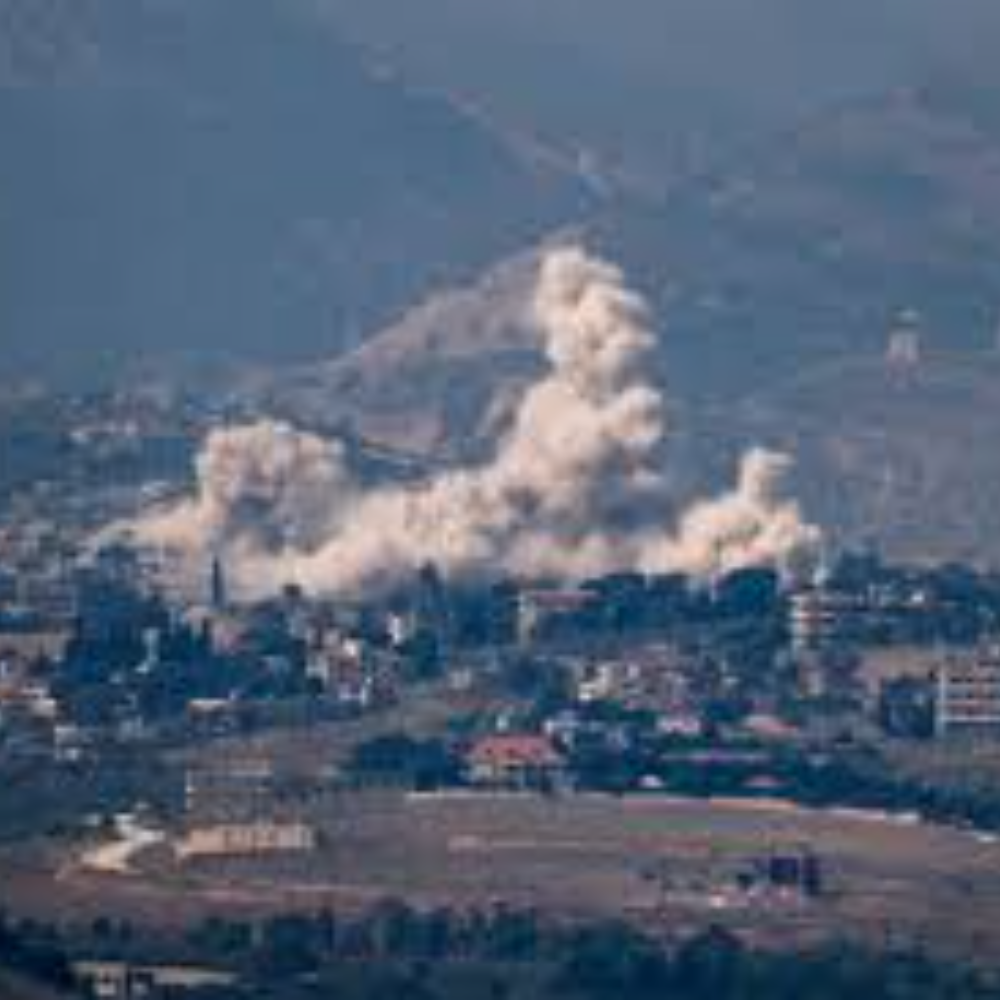
BENew Delhi, June 9, 2026 — Global energy markets reacted sharply on Monday as crude oil prices surged by more than $3 a barrel. The spike follows a wave of renewed Israeli airstrikes across Lebanon on Sunday, June 7, 2026. The sudden intensification of military activity has effectively shattered a fragile, days-old ceasefire agreement. It has also introduced fresh anxieties to a global energy sector already highly vulnerable to Middle Eastern instability.
By the close of morning trading, Brent crude futures—the international benchmark—had jumped $3.20, or 3.39%, to rest at $96.24 per barrel. Concurrently, U.S. West Texas Intermediate (WTI) crude futures rose $2.87, or 3.17%, reaching $93.41 per barrel. The sudden upward trajectory cleanly erased the market losses recorded on Friday, when speculative optimism regarding a potential diplomatic breakthrough had briefly pulled prices down.
The Breakdown of the Washington Ceasefire
The sudden outbreak of violence caught many diplomatic observers off guard. Just days earlier, on June 3, negotiators in Washington had proudly announced a hard-fought ceasefire between Israel and Lebanon. This agreement was intended to establish a durable cessation of hostilities. It aimed to cool down an active front line that has seen repeated escalations since regional conflict intensified earlier this year.
However, the truce proved incredibly short-lived. On Sunday, Israeli forces launched concentrated airstrikes targeting alleged strategic installations in Beirut and southern Lebanon. According to regional defense analysts, the strikes were a response to perceived mobilizations by Hezbollah, the Iran-backed political and military group operating within Lebanon.
The immediate fallout extended far beyond Lebanon’s borders. Within hours of the strikes on Beirut, Iran launched a retaliatory volley of missiles directed at Israeli military assets. Soon after, local media outlets in Iran reported the distinct sounds of powerful explosions in major domestic hubs, including Tehran, Tabriz, and Isfahan. While the exact damage of these subsequent blasts remains heavily disputed, the rapid chain reaction was interpreted by global financial markets as a clear warning sign. The region appears trapped in a highly dangerous escalatory cycle.
Chokepoints and Blockades: The Strait of Hormuz Crisis
For energy traders, the primary concern of this escalation is not the immediate geography of Lebanon, but the direct threat it poses to broader Middle Eastern oil logistics. Iran has consistently maintained that a comprehensive ceasefire in Lebanon is a mandatory precondition for any long-term peace agreement with Western powers.
With the peace talks falling apart, hopes have collapsed for a swift reopening of the Strait of Hormuz—the most critical maritime chokepoint in the global oil trade.
Iran has severely restricted transit through the Strait of Hormuz since the wider regional conflict began. This single narrow waterway handles roughly one-fifth of the world’s daily petroleum consumption. Because alternative pipeline routes are highly limited, the continued closure of Hormuz effectively keeps a massive volume of global crude isolated from international buyers. The situation is further complicated by a parallel maritime blockade enforced by Washington against primary Iranian export hubs, compounding the global supply squeeze.
OPEC+ Intervention Falls Flat
In an attempt to stabilize global energy markets and cushion the blow of the Middle Eastern supply crisis, the OPEC+ alliance held an emergency meeting on Sunday, June 7. The coalition agreed to implement its fourth consecutive monthly production increase. The deal was designed to inject hundreds of thousands of additional barrels into global circulation to help bring prices down.
However, commodity experts and financial institutions quickly dismissed the move as an empty gesture. Market data indicates that the physical impact of the OPEC+ decision will be virtually non-existent, primarily because the group lacks the functional logistics to deliver on its promises.
Global Financial Ripple Effects
The economic shockwaves originating in the Middle East quickly spread to global financial hubs on Monday morning, triggering a widespread “risk-off” sentiment among institutional investors. Rather than maintaining positions in growth-oriented assets, capital rapidly shifted toward safe-haven commodities, driving up oil, gold, and the U.S. dollar.
Technology sectors bore the brunt of the immediate equity sell-off. In Asian markets, South Korea’s Kospi index plunged by more than 8%. This drop was led by heavy losses from semiconductor giants Samsung, which plummeted over 10%, and SK Hynix, which shed 7.7% of its market value. Tokyo’s Nikkei index similarly dropped nearly 4%, while Hong Kong’s Hang Seng index closed down 1.2%.
Financial analysts explained that the combination of skyrocketing energy costs and sticky global inflation is raising fears of further central bank intervention. Investors are increasingly betting that the Federal Reserve and other monetary authorities will be forced to raise interest rates to combat energy-driven inflation, which naturally devalues the future earnings of high-growth technology corporations.
White House Diplomatic Pressure
As the military conflict threatens to spiral out of control, the diplomatic theater has turned into a high-stakes standoff between Washington and Jerusalem. U.S. President Donald Trump publicly addressed the crisis on Monday, insisting that despite the weekend’s heavy artillery exchanges, a comprehensive peace deal is still realistic.
In an interview, President Trump indicated that he had personally communicated with Israeli Prime Minister Benjamin Netanyahu, explicitly instructing him to halt further counter-escalations against Iranian targets to prevent a total regional war.
Despite the confident rhetoric from Washington, energy traders remain highly skeptical. The underlying reality on the ground is that oil prices have surged by over 50% since the initial phase of this conflict broke out. Until a verifiable, enforceable ceasefire is established in Lebanon and shipping routes through the Strait of Hormuz are completely cleared, the global economy will continue to face volatile energy costs.