

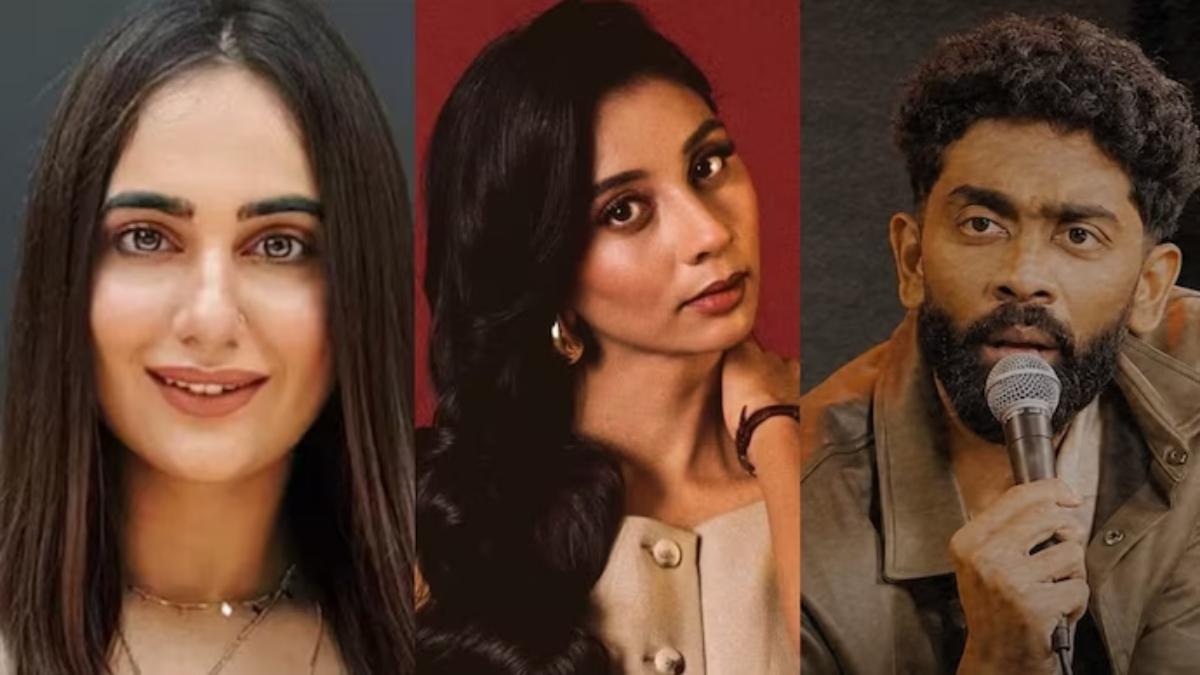
New Delhi, June 10, 2026: A massive digital storm has erupted across the Indian internet following a highly controversial segment from comedian Pranit More’s crowd-work comedy show. The viral clip features an audience member, identified as 23-year-old Himanshu Jangra, making deeply sexist and degrading remarks about a woman over a date that cost just ₹370. The incident has drawn fierce, widespread criticism from netizens, public figures, and prominent content creators, most notably digital icons and actors Kusha Kapila and Dolly Singh. The duo leading the charge slammed the behavior as “disgusting” and fiercely called out the deeply rooted misogyny masquerading as modern comedy.
The controversy began when a clip from Pranit More’s live crowd-work show was uploaded online. During the segment, Jangra stood up to share a story about a recent date. He explicitly stated that he spent ₹370 on a plate of chicken biryani for a woman and openly implied that because he spent that money, he was entitled to a “return” on his investment—suggesting sexual favors or physical intimacy.
Instead of shutting down or challenging the creepy and predatory premise, the comedian, Pranit More, was seen laughing enthusiastically, clapping, and even rising from his seat in amusement. More then egged the audience member on, asking for a recreation of the incident, demanding finer details, and treating the blatant disrespect toward women as prime comedic material. The video was edited, polished, and actively posted across social media channels to gain views and algorithmic engagement.
Kusha Kapila and Dolly Singh Lead the Outrage
As the clip began drawing heavy flak from social media users, Kusha Kapila and Dolly Singh used their massive platforms to speak out against the toxic environment the show promoted. Kusha Kapila, known for her sharp wit and roles in mainstream media like Maamla Legal Hai, posted a series of fiery Instagram stories. She refused to let the comedian hide behind the defense that it was just an “unfiltered audience reaction.”
Kusha later uploaded a video explicitly urging men to step up and voice their discomfort with these narratives, emphasizing that men shouldn’t stay silent when their peers reduce women to transaction commodities. Expressing a sense of relief that the public was finally pushing back against cheap shock-value content, she added sarcastically, “I feel amazing, it feels great to see this. I will order biryani with my own money and eat it tonight.”
Dolly Singh echoed her friend’s outrage with absolute candor, directly pointing out how Pranit More enabled and celebrated the toxic behavior instead of acting responsibly as a host. In a stark public post, Dolly criticized the gig heavily:
The Apologies and Backlash Aftermath
Facing intense public fury, both the audience member and the comedian issued statements to mitigate the damage, though the public remains largely unforgiving.
Himanshu Jangra, the audience member at the center of the storm, issued a formal apology for his dehumanizing remarks before entirely deleting his social media accounts to escape the thousands of angry comments heading his way. However, the real-world consequences caught up to him quickly. Jangra, who was employed at an agency called Starvik Design, was promptly terminated by his employer.
Vivek Vishwakarma, the founder of Starvik Design, released a public statement on Instagram validating the decision to fire him. He noted, “What happened outside the workplace has now affected the workplace, and I have a responsibility towards the company, our team, our clients, and the environment we create here. That is why we have decided to part ways with him.”
Simultaneously, comedian Pranit More released a text apology trying to distance his brand from the controversy. He claimed that the audience member’s views did not reflect his own personal ideology, admitting to a severe “lapse in judgment.”
However, creators like Kusha Kapila have strongly rejected this apology. Critics argue that crowd-work shows go through intensive multi-stage processes—from filming and audio balancing to editing, reviewing, and rendering—before being packaged into short-form content for Instagram Reels and YouTube Shorts. The decision to deliberately select, cut, and upload a clip where a woman is degraded over a ₹370 plate of food proves that the production team viewed misogyny as a viable tool for viral marketing.
A Larger Conversation on “Crowd-Work” Culture
The “₹370 Ki Biryani” incident has opened up a much larger, necessary debate about the current state of stand-up comedy in India, particularly the hyper-fixation on “crowd-work.” Over the last couple of years, many comedians have shifted heavily toward interacting with live audiences because it requires less scripted writing and generates quick, highly shareable snippets for social media algorithms.
However, as critics point out, this format has increasingly leaned on cheap shock value, targeting couples, asking intrusive questions about people’s private lives, and validating problematic, sexist, or deeply offensive biases just to get a quick roar of laughter from a live crowd.
The unified stand taken by Kusha Kapila, Dolly Singh, and thousands of internet users marks a turning point. It sends a loud and clear message to content creators: hiding behind the excuse of “organic audience interactions” will no longer shield comedians from accountability when they choose to amplify and profit from the degradation of women.