

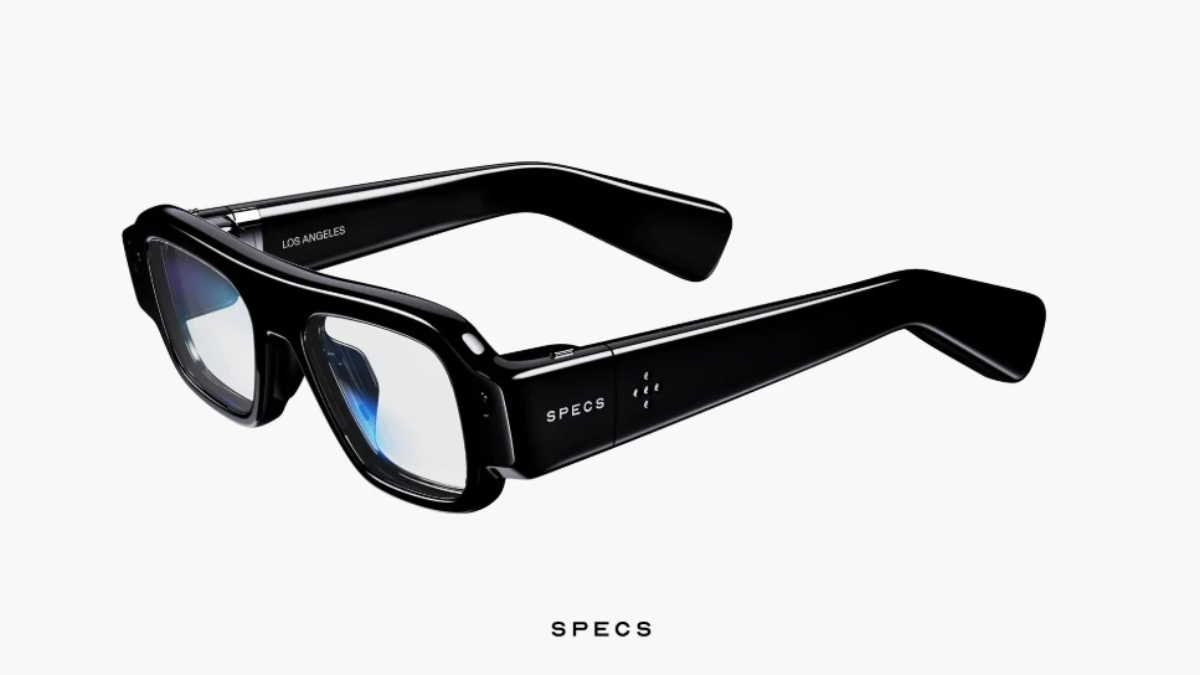
New Delhi, June 17, 2026 — Defying investor skepticism and carving out its own path in the spatial computing landscape, Snap Inc. has officially pulled back the curtain on SPECS, its first standalone, consumer-facing augmented reality (AR) glasses. Unveiled by CEO Evan Spiegel at the Augmented World Expo (AWE), the device represents a bold $3.5 billion bet on a post-smartphone future. Rather than functioning as a mere camera accessory or a tethered notification screen, SPECS operate as a fully untethered “face computer,” blending real-time artificial intelligence with an advanced optical display to fundamentally change how users interact with their environments.
Moving Beyond the Smartphone Screen
For years, technology giants have wrestled with a critical tradeoff: building AI glasses that are lightweight but limited, or developing mixed-reality headsets that are incredibly powerful but isolated and heavy. With SPECS, Snap aims to introduce an entirely new product category. Spiegel emphasized a growing societal fatigue with staring down at small, opaque smartphone screens—a habit that disrupts human connection and detaches people from their physical surroundings.
SPECS are engineered to let technology fade gracefully into the background. The device does not require a pocketed compute “puck,” physical cables, or a smartphone connection to operate. By packing all processing, battery life, and spatial sensors directly into the frame, Snap allows users to keep their heads up, interacting with digital elements that are securely anchored to the physical world around them.
Premium Hardware Beneath the Frame
To achieve a completely standalone experience, Snap utilized premium, high-performance materials and a dual-chip architecture. Crafted from lightweight Swiss TR90 polymer, the eyewear is available in two sizes—a 47 mm version weighing 132 grams and a 52 mm version weighing 136 grams. While they retain a slightly chunky, geometric profile to accommodate their massive technical stack, they are roughly 40% lighter than Snap’s previous developer prototypes, making them far more viable for extended daily wear.
The visual experience is anchored by Snap’s proprietary Liquid Crystal on Silicon (LCoS) miniature projectors and a completely redesigned optical waveguide system. This technology utilizes billions of microscopic nanostructures—thin enough that 10,000 can sit on the tip of a single human hair—to project vivid digital imagery with minimal distortion.
The resulting 51-degree diagonal field of view represents a 30% increase over previous generations. This enables a visual canvas that feels like a crisp 24-inch desktop monitor when sitting at a desk, or scales up to simulate a massive 115-inch home theater screen projected ten feet away. Furthermore, because real-world environments change, the glasses feature advanced electrochromic lenses. These lenses can automatically transition from crystal clear to a dark sunglass tint in just 10 seconds, ensuring optimal display contrast whether indoors or under direct sunlight.
Dual Processing and Spatial AI
The internal engine driving SPECS relies on two distinct Qualcomm Snapdragon processors dividing the computational heavy lifting. One processor is entirely dedicated to continuous computer vision and high-speed hand tracking, while the second chip handles the rendering of interactive AR “Lenses.” By separating these tasks, Snap has achieved an incredibly low 7-millisecond motion-to-photon latency. This means digital graphics update virtually instantly as the wearer moves their head, preventing the motion sickness often associated with early spatial hardware and making digital objects feel genuinely physical.
Operating on the newly upgraded Snap OS, interaction with the device relies entirely on natural human inputs: intuitive hand gestures and voice commands. This system allows generative artificial intelligence to transcend the traditional text box. Because the built-in cameras allow the AI to see exactly what the wearer sees, the device acts as a contextual assistant.
If a user is repairing a household appliance, instructions can appear floating next to the machine; if they are walking through a new city, navigation arrows map directly onto the pavement. Additional day-to-day applications include instant spatial measurements, real-time live translation during face-to-face conversations, and interactive learning tools.
Cultivating a Developer Ecosystem
Snap acknowledges that hardware is only as strong as the experiences built for it. Alongside the consumer rollout, the company launched a comprehensive suite of developer tools to accelerate the creation of spatial applications. Through an upgraded version of Lens Studio, creators can access agentic AI development platforms—including integrations with cutting-edge coding assistants like Claude Code and Cursor—to rapidly prototype, debug, and optimize new AR experiences.
Furthermore, Snap introduced a Native Development Kit (NDK), allowing software engineering teams to port their own existing code libraries directly into the Snap OS ecosystem. Hundreds of shared, multi-user Lenses are already available, allowing multiple people wearing SPECS to interact with the same digital objects simultaneously, whether playing a tabletop game or collaborating on a 3D design workspace.
Market Availability and Outlook
With a premium retail price of $2,195, Snap is intentionally positioning SPECS as a high-end vanguard device for tech enthusiasts, developers, and early adopters. Pre-orders have officially opened on the company’s website with a $200 refundable deposit, and the hardware is scheduled to begin shipping to customers in the United States, United Kingdom, and France later this year.
While competitors like Meta find massive commercial success with audio-only and notification-based smart glasses, Snap is taking the harder, more complex route of full environmental synthesis. By successfully combining standalone computing, physical comfort, and multi-modal AI into a single pair of glasses, SPECS clear a definitive path toward an era where our digital and physical realities exist seamlessly as one.